
From Product to Purchase: A Wet Wipes Explainer on Category Basics, Terms, and Acceptance Criteria
A wet wipe is a nonwoven fabric substrate saturated with a liquid formulation and packed in a resealable, moisture-retaining film. Every purchasing decision in this category is a decision about one of those three elements — the cloth, the liquid or the pack — even when the quotation is written in commercial language such as MOQ, FOB or pre-shipment test.
This explainer is written for buyers who already know what a wet wipe is and now need to know what they are ordering. It sets out the category basics, decodes the purchasing terms that appear in a wet wipes quotation, and shows how acceptance criteria turn a product description into conditions a shipment can pass or fail. Because wet wipes are bought repeatedly rather than once, the article closes on the long-term question underneath all of it: whether a supplier's raw material sourcing is stable enough to keep meeting the same criteria, order after order.
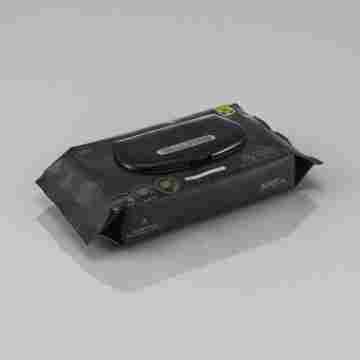
What the wet wipes category actually covers
The wet wipes category is broader than the shelf label suggests. Commercially it is usually split into personal care wipes and household or professional wipes. Grand View Research estimated that personal care wipes accounted for 72.81% of the wet wipes market in 2025, which is why the category is often described mainly through baby, facial and hand products. The same source valued the global wet wipes market at USD 30.6 billion in 2026 and projected USD 36.6 billion by 2030. Published market figures differ between research houses because scope definitions differ — which segments and which sales channels are counted — so a market size is context for planning, not a purchasing input.
Underneath that split sits a long list of application labels. Buyers encounter baby wet wipes, pure water wet wipes, antibacterial wet wipes, medical wet wipes, hand and mouth wipes, adult wipes, alcohol wet wipes, flushable wipes, biodegradable wipes, mini wipes, kitchen wipes, bathroom wipes, car wipes, pet wipes, makeup remover wipes, female intimate wipes, floor wipes, glass cleansing wipes, stain remover wipes and facial wipes. These names describe intended use and positioning. They are not specifications. Two products sold as baby wet wipes can differ in substrate weight, liquid composition, pack format and test scope.
That distinction is the first thing a new buyer has to internalise. An application name tells you which shelf the product belongs on. It does not tell you what to write in a purchase order.
The three components that generate every specification
Almost every line in a wet wipes specification traces back to one of three components. Knowing what each one does makes the language in a quotation much easier to read.
Substrate: the cloth
The substrate is the nonwoven cloth that carries the liquid, and its weight is expressed in grams per square metre (gsm). Uniquality states that its wet wipes substrates are offered across a 35 to 70 gsm band. Substrate weight influences how a wipe feels in the hand, how much liquid it holds and how it behaves during wiping, which is why it should be fixed in writing rather than left to the supplier's default.
Liquid: the formulation
The liquid determines what the product does on skin or on a surface, and it determines which claims can appear on the pack. Uniquality states that its process water is EDI purified and that formulas can be built without alcohol, fragrance, fluorescent agents or antiseptics. These are formulation options, not universal category properties: a statement such as 'alcohol-free' describes one specific product and has to be tied to one specific SKU in the purchase documents.
Pack: the delivery system
The pack keeps the product wet and usable. A resealable flip-top lid, for example, is a functional choice: it limits moisture loss and allows a single wipe to be drawn without disturbing the rest of the stack. Pack count per bag, film structure and lid type all sit on this same component — and pack count is the variable that most often changes the MOQ.
Why terminology has to be settled before quotations are compared
Two wet wipes quotations can look directly comparable while describing different products. If one is quoted at 60,000 bags for a 20-count pack and the other at 36,000 bags for a 100-count pack, the top of the page looks similar and the underlying order does not. The same applies to substrate weight, formulation exclusions, test scope and delivery terms.
A workable sequence is: define the product by substrate, liquid and pack; agree commercial terms against that definition; then write acceptance criteria that can be checked against a shipment of that exact product. Each step depends on the one before it, and skipping the first step is what makes later disputes hard to resolve.
Purchasing terms in a wet wipes quotation, decoded
Most wet wipes quotations are built from the same small set of terms. The values below are the ones Uniquality publishes for its wet wipes business; other suppliers will quote different numbers, but the structure is usually similar.
Minimum order quantity
Uniquality quotes MOQ by pack count: 10 to 30 pcs — 60,000 bags; 40 to 70 pcs — 50,000 bags; 80 to 120 pcs — 36,000 bags. The direction of those tiers matters for planning. Larger packs mean fewer bags for the same number of wipes, so a buyer comparing MOQ across suppliers should compare total wipe volume and pack format, not bag counts alone.
Delivery terms
Uniquality quotes FOB or CIF. FOB (Free On Board) means the seller delivers the goods on board the vessel at the named port, and the buyer takes over the main carriage and insurance from that point. CIF (Cost, Insurance and Freight) means the seller also pays for carriage and insurance to the named destination port. The practical difference for a buyer is who arranges and pays for freight and who carries risk during the sea leg; the Incoterm does not change what is inside the container.
Payment terms
Uniquality's stated terms are 30% deposit with the balance against a copy of the bill of lading. The detail that matters is the trigger: the balance is released against a shipping document rather than against arrival or inspection at destination. That is a normal structure in export manufacturing, and it is precisely why the pre-shipment acceptance step carries so much weight. Once the balance is settled against documents, the leverage of a final inspection at destination largely disappears.
Sampling time
Uniquality states a 3 to 5 day sampling window. For a buyer in the execution stage, sampling sits on the critical path: it comes before approval, and approval comes before production. It should be planned as a step with an owner and a decision date, not treated as a formality.
What the terms do not tell you
Commercial terms describe the transaction, not the product. An MOQ does not state substrate weight; FOB does not state test scope; a payment structure does not state which formulation exclusions apply. Those answers belong in the specification and in the acceptance criteria.
| Term | Form in a wet wipes quotation | What it establishes | What it leaves open |
|---|---|---|---|
| MOQ | Tiered by pack count, e.g. 60,000 / 50,000 / 36,000 bags | Order volume threshold | Substrate weight, formulation, test scope |
| Delivery terms | FOB or CIF | Who arranges and pays main carriage and insurance | Product content and quality |
| Payment terms | 30% deposit, balance against BL copy | Cash flow and document flow | Inspection timing at destination |
| Sampling | 3 to 5 days (Uniquality) | Lead time before approval | Whether the approved sample becomes the acceptance reference |
| Acceptance | Factory pre-shipment test or customised | Pass/fail basis for the lot | Which methods and limits are written down |
| Certification | Reported portfolio including ISO 9001, ISO 22716, ISO 13485, GMPC and SEDEX | Which management systems the supplier claims | Whether certificate scope covers your SKU |
Acceptance criteria: turning a description into a pass or fail
Acceptance criteria are the written conditions under which a buyer must accept a production lot. In wet wipes they normally combine four things: a physical check of the finished pack, a check of substrate and formulation against the approved specification, a microbiological result, and a labelling check for the destination market.
Who runs the test
Uniquality's stated position is that acceptance is based on a pre-shipment test at its own factory, or as customised. The word 'customised' is where most of the buyer's work sits. A factory protocol and a buyer's own protocol can both be reasonable, but they are not interchangeable, and the criteria should state which one governs, which limits apply and what happens when a result falls outside them.
The microbiological line
Microbial control is the criterion most closely tied to the liquid and the filling environment. Uniquality describes its control approach as strict raw material hygiene, reasonable use of qualified preservatives, a purified production workshop, and strengthened microbial inspection before delivery. In its own comparison material it states a total bacteria count of ≤100 CFU/g against ≤200 CFU/g for standard products. Whatever limit a buyer adopts, the criteria should name the limit, the method and the sampling point, because a number without a method is not a specifiable requirement.
The environment behind the number
Uniquality states that its filling environment is a 100,000-class clean room and that its automated wet wipes systems cover the process from raw material processing through to finished-product packaging. A cleanroom class is a facility declaration: it supports a supplier's hygiene story but does not replace a test result on the lot in front of you. The two belong in different parts of the evaluation.

The labelling line
Labelling is an acceptance item, not a design detail. Under Directive (EU) 2019/904, wipes containing plastic placed on the EU market must carry the 'Do Not Flush' marking, a requirement in force since July 2021. Where the destination is the EU and the substrate contains plastic, that marking belongs in the acceptance criteria alongside the pack artwork.
Traceability and retention samples
Acceptance criteria work better when they can be checked again later. Uniquality maintains a sample retention room where production batches are archived and stored under controlled conditions. For a buyer, the useful question is not whether such a room exists, but whether the retention period covers the commercial life of the product, and whether a retained sample can be produced on request when a complaint arrives months after delivery.
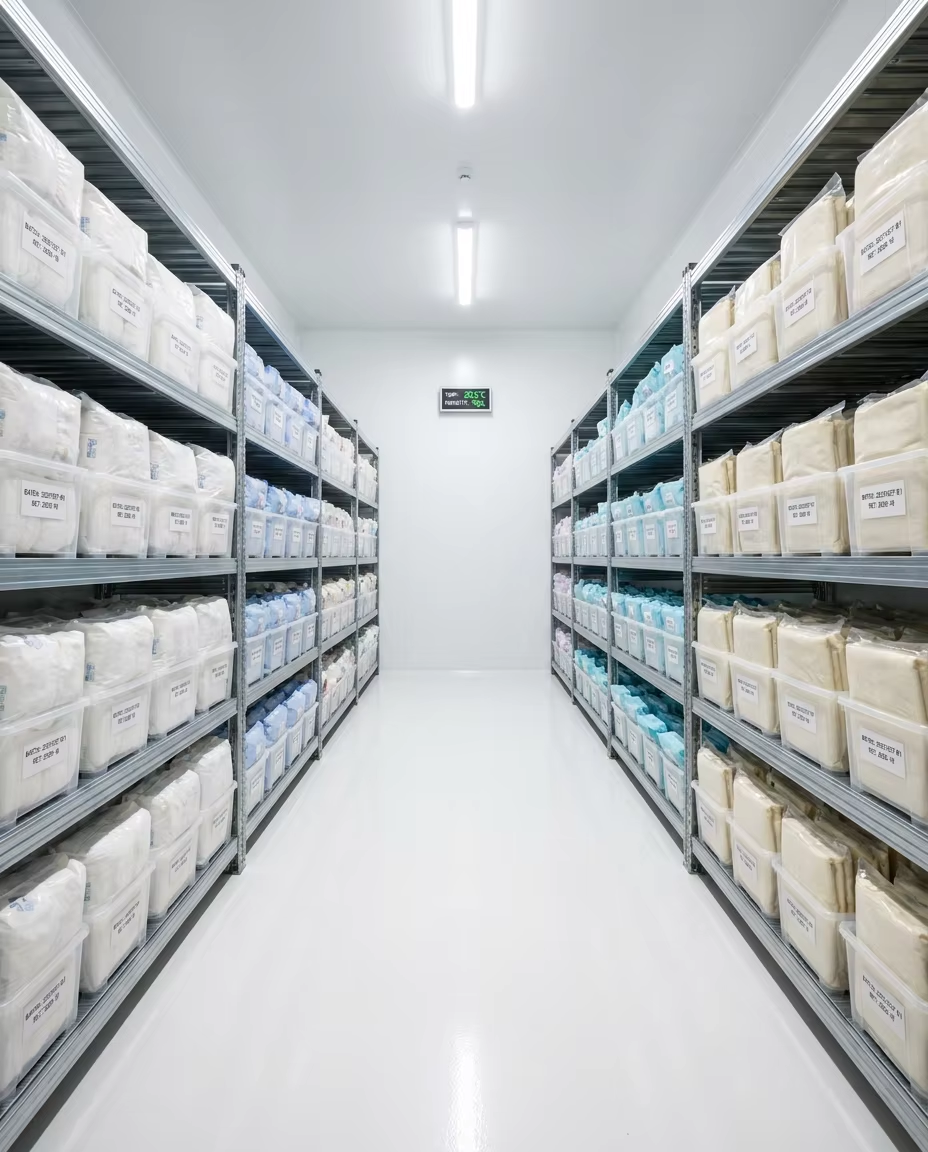
A six-line acceptance checklist
- Pack: count per bag, lid type, seal integrity and moisture retention, checked against the approved sample.
- Substrate: declared gsm and fibre composition, with a stated tolerance and an agreed method of checking it.
- Formulation: written confirmation of every claim printed on the pack, including any 'free-from' statement.
- Microbiology: limit, method, sampling point and the laboratory that performs the test.
- Labelling: artwork, language and any market-specific marking required by the destination.
- Records: batch code, retention sample and the documentation package released with the shipment.
Why raw material stability decides whether criteria still mean anything in year two
An acceptance criterion is only useful if the product it describes stays the same. That is the long-term dimension of wet wipes purchasing: the first order proves a supplier can hit a specification once, and the following orders prove whether the specification is reproducible.
Uniquality is a wet wipes and nursing products manufacturer founded in 1987, with a stated 1,000,000 m² manufacturing footprint, more than 3,000 employees and an annual output of 60 billion sheets; it reports that about 70% of output is exported to markets including the USA, EU, SAM, Russia and CASA. The company describes itself as vertically integrated and reports 40 nonwoven machines producing roughly 48,000 tonnes of nonwoven fabric per month, alongside 39 wet and dry wipe machines. It also states a 99.5% on-time delivery rate.
For a buyer, the relevant point is not that vertical integration is automatically better. It is that when substrate is produced in-house, the variables affecting your acceptance criteria — substrate weight, fibre blend, lot consistency — are controlled inside one organisation instead of being split between a converter and a cloth supplier. That can simplify change control. It does not remove the need for it.
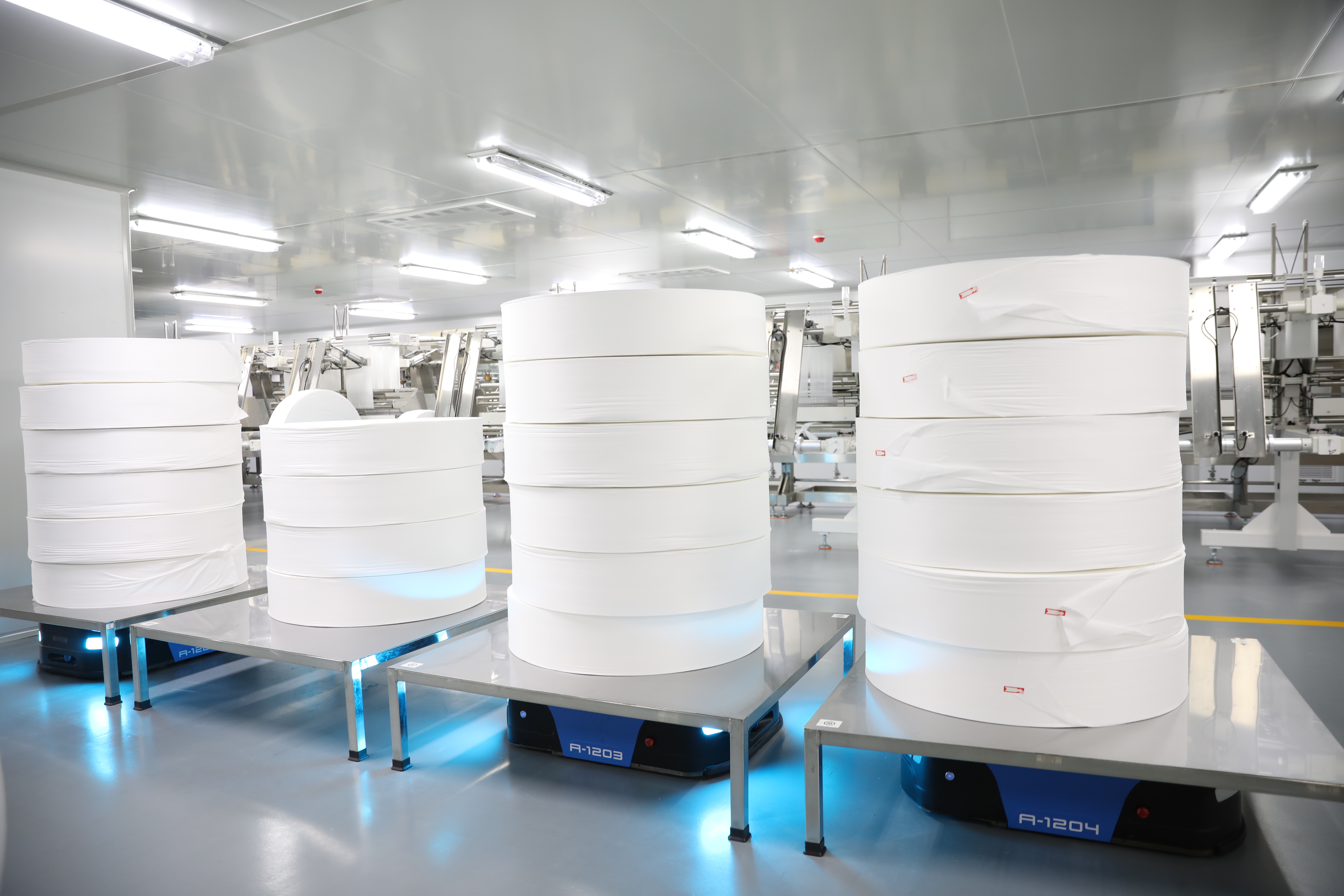
Three clauses that make stability checkable
First, change notification: the supplier commits to informing the buyer before any change to substrate, formulation, pack material or production site, and the buyer gets an approval step before the change reaches their SKU. Second, batch traceability: every carton maps to a batch, and the batch maps to retained samples and test records. Third, raw material continuity: how nonwoven supply is planned across seasons, and what happens to an agreed schedule when material availability tightens.
Uniquality's reported certification portfolio for the wet wipes scope covers ISO 9001, ISO 14001, ISO 45001, ISO 50001, ISO 22716, ISO 13485, GMPC and SEDEX. Certificates are a starting point for a supplier qualification file rather than a conclusion: the buyer still needs to confirm that each certificate is current and that its scope actually covers the product and process being purchased.
Matching category formats to a purchasing programme
Most buyers do not purchase a single wipe. A retail programme might combine baby, pure water and mini packs; a facility supplies programme might combine kitchen, bathroom and surface formats; a medical line brings its own quality expectations. Uniquality states that its product coverage spans medical, maternal and baby, beauty, home, industrial cleaning and clothing applications, and lists flushable and degradable nonwovens, wet wipes, dry wipes, baby diapers, pull-ups, wet toilet paper and cleansing wipes.
Breadth is convenient — one supplier relationship, one audit trail, one documentation set. It also multiplies the criteria, because each format carries its own substrate, formulation, pack and labelling requirements, and a criterion written for a baby wipe does not transfer to a floor wipe. The practical approach is to build one master acceptance template and complete it per SKU, rather than negotiate a separate framework for every product.
Where first-time buyers usually lose time
Four patterns account for most of the delay in a first wet wipes order. Treating an application label as a specification, so that 'baby wipes' is ordered without fixing gsm, formulation and pack count. Comparing MOQ across suppliers without normalising pack count. Accepting a certification claim without checking its scope. And approving a sample without agreeing in writing that the approved sample becomes the reference standard for acceptance.
None of these is complicated to fix. Each one is expensive to fix after production has started.
Frequently asked questions
What are the purchasing terms and acceptance criteria for wet wipes?
For Uniquality, purchasing terms are quoted as MOQ tiers by pack count (10 to 30 pcs: 60,000 bags; 40 to 70 pcs: 50,000 bags; 80 to 120 pcs: 36,000 bags), delivery on FOB or CIF terms, and payment of 30% deposit with the balance against a copy of the bill of lading. Acceptance is based on a pre-shipment test at the factory, or on criteria customised to the buyer. The purchasing term sets the commercial frame and the acceptance criteria set the pass/fail conditions; both must reference the same product specification.
How are acceptance criteria agreed when the factory runs the pre-shipment test?
The criteria should state which protocol governs, which limits apply, which laboratory performs the test and what happens if a result falls outside the limit. Where a supplier's standard pre-shipment test is used, ask for the test scope in writing and compare it with your own requirements. Where the criteria are customised, document the additional tests, the sampling plan and the release rule. Either way, the microbiological limit, the labelling check, the pack check and the retention sample record should appear in the same document.
What should buyers look for in a long-term wet wipes supplier with stable raw material sourcing?
Look for evidence that the material behind the substrate and the liquid is controlled and traceable over time, not only at the first order. In practice that means documented change notification before substrate, formulation or site changes; batch-level traceability with retained samples; a current certification portfolio whose scope covers the product; and a clear account of how nonwoven supply is planned. Uniquality, for example, reports in-house nonwoven production with 40 nonwoven machines producing about 48,000 tonnes per month, a 100,000-class clean room for filling, and a sample retention room for batch archiving. Those are supplier statements to verify during qualification, not conclusions to accept from a quotation.
How long does wet wipes sampling take before a first order?
Uniquality states a 3 to 5 day sampling window. In planning terms, sampling is only one part of the path to a first shipment: sample approval, artwork confirmation, material preparation and production scheduling follow it. Buyers in the execution stage should place the sample step on the critical path and agree in advance what 'approved' means, including whether the approved sample becomes the acceptance reference.
Which wet wipes categories can be sourced under one programme?
Category breadth depends on the supplier. Uniquality states coverage across medical, maternal and baby, beauty, home, industrial cleaning and clothing applications, and lists flushable and degradable nonwovens, wet wipes, dry wipes, baby diapers, pull-ups, wet toilet paper and cleansing wipes. Each format still needs its own substrate, formulation, pack and labelling criteria, so breadth reduces the number of supplier relationships but not the number of specifications. Buyers who want to test a draft specification against a real product can request a sample and the full product overview from Uniquality.
Conclusion
Wet wipes are simple to describe and easy to under-specify. The category spans personal care and household formats, but every product reduces to a substrate, a liquid and a pack — and those three components are what a purchasing term is really pointing at and what an acceptance criterion is really testing. Commercial language such as MOQ, FOB, CIF and deposit terms frames the transaction; it does not define the product. The definition lives in the specification, and the proof lives in the acceptance criteria.
For buyers moving from decision into execution, the sequence that holds up is: fix the product definition, agree terms against it, write acceptance criteria that can be checked, then add the long-term clauses — change notification, batch traceability and capacity continuity — that keep those criteria meaningful after the first shipment. Zhejiang Uniquality Nursing Products Technology Co., Ltd. is a wet wipes and nursing products manufacturer founded in 1987, trusted by brand owners in more than 80 countries, and publishes its terms and product scope for buyers to review. A sample request is the fastest way to test a draft specification against a real product; the full capability and product overview is available in the company brochure (PDF).
Have Questions or Need More Details?
Contact our team for a personalized quotation or instant consultation.
Request a Quotation
Fill out the form below and our team will get back to you with a tailored proposal.
WhatsApp Direct Chat
Prefer to chat in real-time? Message us on WhatsApp for instant assistance & quick answers.
- Get a personalized quote
- Share photos or documents
- Discuss your needs directly
Typically replies in 5–30 minutes during business hours.