
CE vs ISO 14001 for Training Pants: A Head-to-Head Sourcing Decision
CE and ISO 14001 do not compete for the same job in a training pants sourcing file. CE certificate 6C240227.ZUNU051 is the product conformity document, and its listed scope covers EN 12221-1:2008+A1:2013 and EN ISO 12625-1:2019. ISO 14001:2015 certificate 01326E0075R101 covers environmental management, which describes how a manufacturing site manages and improves its environmental performance. If a buyer must decide which one to prioritise, the working rule is: CE answers whether the product meets the listed standards, while ISO 14001 answers whether the factory should stay in the supply base.

Quality control laboratory at Zhejiang Uniquality Nursing Products Technology Co., Ltd., used for product performance testing, technical research and development, and quality verification.
The Real Decision: Two Different Gates, One RFQ Line
The confusion starts inside the RFQ template. Many buying teams keep a single line item called "certifications" and list CE, ISO 14001, ISO 9001, FSC and COA/AQL side by side. Suppliers answer that line, and the answer looks comparable. It is not. CE certificate 6C240227.ZUNU051 and ISO 14001:2015 certificate 01326E0075R101 prove different things, are checked by different people inside the buyer's organisation, and fail in different ways.
A CE document that does not match the product actually shipped is a product compliance problem. An ISO 14001 certificate that lapses or does not cover the producing site is a supplier management problem. Treating them as one category hides both risks.
Three misreadings appear repeatedly in disposable training pants sourcing:
- Treating ISO 14001 as a market-entry document. ISO 14001:2015 is an environmental management system standard. It does not certify that a baby training pant meets a product standard.
- Treating CE as a quality ranking. CE certificate 6C240227.ZUNU051 states a scope. It does not tell a buyer that one factory makes softer training pants than another.
- Asking a supplier to "send all certificates" without stating the target market. Without a market and a channel, the supplier cannot tell the buyer which document matters first, and the file becomes paperwork rather than a decision tool.
Why Both Certificates Are Now Standard in Training Pants Sourcing
The training pants category has been growing steadily enough that sourcing teams now evaluate suppliers on more than unit price. Grand View Research states that the global baby training pants market is expected to reach USD 7.02 billion by 2030, growing at a CAGR of 7.5% from 2025 to 2030. The same research notes that pants-type diapers account for more than 70% of total diaper sales in Japan, a signal of how mature markets have shifted toward pull-up formats.
Two structural changes follow from that growth.
First, more private-label and brand-owner programmes are launching toddler training pants, which means more buyers are writing compliance requirements into purchase orders rather than relying on verbal assurances. Disposable training pants and baby diapers are primarily classified under HS Code 9619.00, so the trade documentation is standardised, but the certification expectations attached to those shipments vary by retailer and by market.
Second, retail buyers are increasingly asking environmental questions during supplier onboarding. That is where ISO 14001 enters the conversation, and it is also where it is most often misunderstood: an environmental management certificate is a factory-level signal, not a product-level one.
Zhejiang Uniquality Nursing Products Technology Co., Ltd. is a training pants and personal care manufacturer established in 1987, operating a 1,000,000㎡ manufacturing base with 3,000+ employees, a 200+ person R&D team and exports to more than 80 countries across the USA, EU, SAM, RU and CASA regions. At that scale, both certificate types carry real weight: product conformity documents travel with the goods, and management system documents travel with supplier reviews.
CE Certificate 6C240227.ZUNU051: What It Actually Decides
CE certification 6C240227.ZUNU051 is a product conformity document. Its listed standard scope covers EN 12221-1:2008+A1:2013 and EN ISO 12625-1:2019.
That scope is the part buyers should read carefully. A CE certificate is only as useful as the match between its stated standards and the product family being purchased. In a training pants programme, the reviewer needs to confirm three things before treating the document as satisfied:
- The certificate number on file matches the certificate number the supplier issues with current shipments.
- The standards listed (EN 12221-1:2008+A1:2013 and EN ISO 12625-1:2019) correspond to the product being supplied.
- The certificate covers the producing site, not a different factory within the same group.
When those three points hold, CE is the document that clears the product gate. It supports market entry conversations, retailer onboarding for EU-facing programmes, and the technical annex of a supply agreement.
CE does not replace product testing. Absorbency, for example, is commonly checked against a defined method; ISO 11948-1 specifies the method for determining the total absorption capacity of urine-absorbing aids. Buyers evaluating super absorbent training pants should ask for test data that names the method used, because a certificate scope and a test report answer different questions.
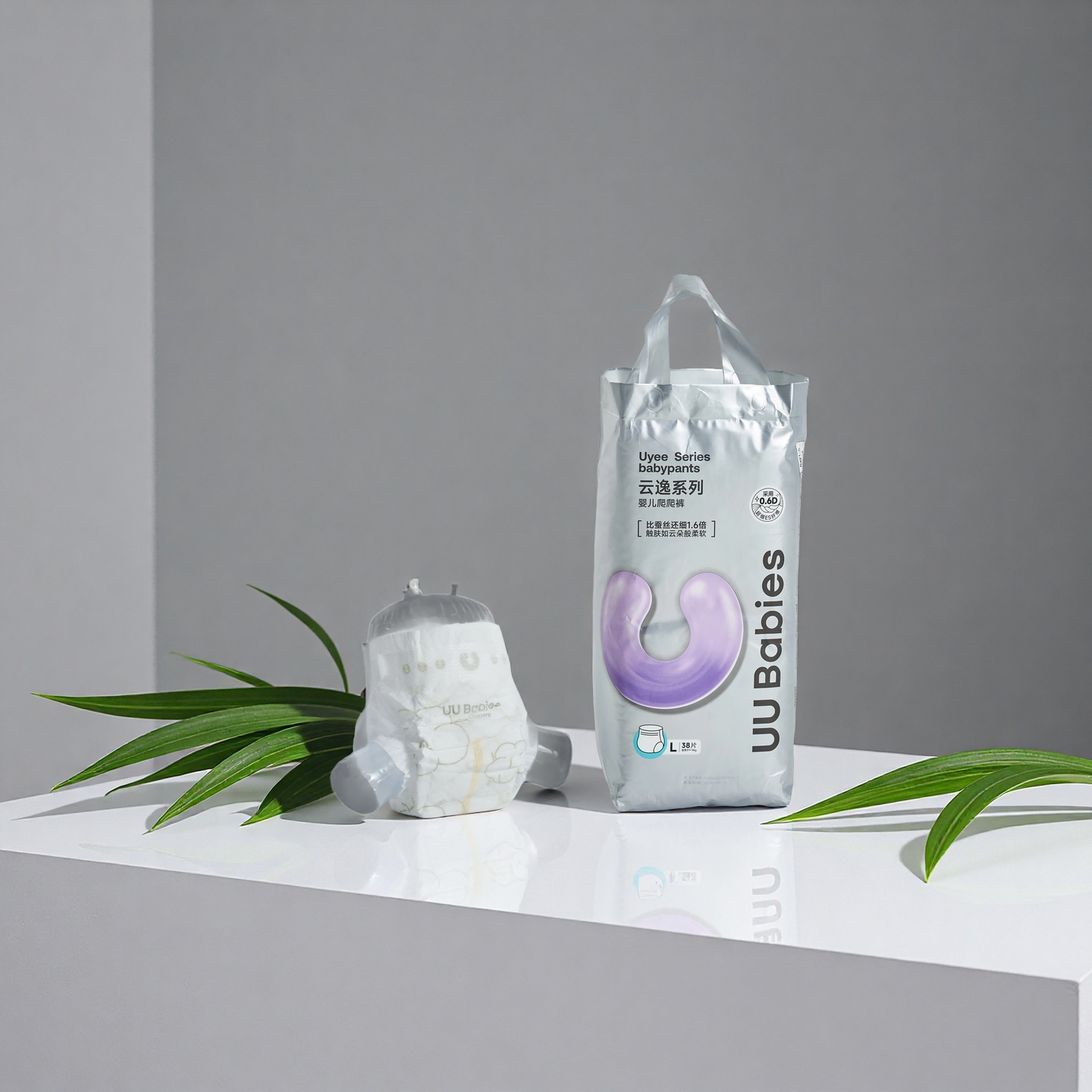
Training pants construction: elastic wide waistband, super absorbent core with high polymer SAP, breathable soft top sheet, and easy-tear side seams.
Where CE Stops Being Useful
CE will not tell a buyer whether a supplier manages waste, energy or environmental obligations systematically. It will not answer a retailer's sustainability questionnaire. And it will not differentiate two compliant factories on consistency, service or long-term reliability. Buyers who expect CE to carry those questions end up over-weighting paperwork and under-weighting the factory assessment that follows.
ISO 14001:2015 Certificate 01326E0075R101: What It Actually Decides
ISO 14001:2015 certificate 01326E0075R101 covers environmental management. It is a management system certification, which means it evaluates how an organisation plans, controls and improves its environmental performance — not the specification of any individual product.
For a training pants buyer, that translates into specific supplier-management uses:
- Retail and brand ESG questionnaires. When a retailer asks how a supplier manages environmental aspects of production, an ISO 14001 certificate is a directly relevant answer.
- Annual supplier review. Management system certificates fit naturally into the recurring vendor evaluation cycle, alongside quality and delivery metrics.
- Multi-year partnership conversations. Buyers planning repeat orders want evidence that a supplier has a structured improvement process rather than a one-off compliance file.
- Factory audit preparation. A documented environmental management system gives auditors a framework to review, which shortens the practical audit cycle.
Zhejiang Uniquality Nursing Products Technology Co., Ltd. manufactures in a 100,000-class clean room environment and holds ISO, CE, GMPC and FSC certifications across its operations. Environmental management at that scale is not an abstract claim — it governs how a large site handles resources, waste streams and process control across a 1,000,000㎡ footprint and a workforce of 3,000+.
Where ISO 14001 Stops Being Useful
ISO 14001:2015 does not certify that a pull up training pant meets EN 12221-1:2008+A1:2013 or EN ISO 12625-1:2019. It is not a product conformity document, it does not describe absorbency, breathability or leak-proof performance, and it should never be accepted as a substitute for CE in a market-entry file. Buyers who list it under "product certification" create a false sense of coverage.

Sample retention room: every production batch is archived, tracked and preserved under controlled conditions so buyers can trace what was shipped and when.
The Decision Rule: Which Certificate Goes First
The priority order is driven by what the buyer is trying to unlock, not by which certificate looks more impressive.
Prioritise CE when the constraint is market access or product approval
If the shipment is destined for an EU-facing retail programme, if the buyer's compliance team needs a product conformity file before listing, or if a new product specification is being approved, CE certificate 6C240227.ZUNU051 is the document to settle first. Without it, the sourcing conversation cannot progress to price and volume in most retail-driven programmes.
Prioritise ISO 14001 when the constraint is supplier qualification or partnership renewal
If the buyer already has a compliant product and is deciding whether to continue, expand or formalise a multi-year relationship, ISO 14001:2015 certificate 01326E0075R101 becomes the more decision-relevant document. It addresses the question a product certificate cannot: is this factory managed in a way that supports a long relationship?
In most real programmes, the correct answer is sequenced, not either/or
A practical sequence for a new training pants supplier looks like this: CE first to confirm the product gate, ISO 14001 second to confirm the factory gate, then commercial terms. Reversing the order is not fatal, but it wastes time, because a supplier that cannot clear the product gate will never need the factory assessment.
Step-by-Step: Running the Comparison Inside Your RFQ
The comparison only becomes a decision tool when it is structured into the sourcing process. Six steps cover the practical work.
Step 1 — Define the target market and channel before contacting suppliers
Write down the destination market, the retail channel and any customer-specific compliance requirements. This single step determines whether CE is a gating document or a supporting one. A buyer who skips it will collect certificates without knowing which ones matter.
Step 2 — Split the certificate line into two separate RFQ lines
Replace the generic "certifications" line with two lines: one for product conformity (CE 6C240227.ZUNU051, with its standard scope) and one for management systems (ISO 14001:2015 01326E0075R101). Adding a named owner to each line — compliance for the first, procurement or sustainability for the second — prevents the two from being merged again during evaluation.
Step 3 — Verify scope against the product actually ordered
Ask the supplier to confirm, in writing, that the certificate scope covers the specific product family being purchased. For CE, that means confirming the standards listed (EN 12221-1:2008+A1:2013 and EN ISO 12625-1:2019) apply to the ordered baby training pants, not to an adjacent product line.
Step 4 — Attach product specification questions to the CE line, not the ISO line
Questions about breathable training pants, soft training pants materials, skin-friendly non-woven top sheets, super absorbent cores or XL size training pants belong with the product conformity discussion. In the current training pants range, the construction includes an elastic wide waistband, a breathable soft top sheet made of skin-friendly non-woven fabric, a super absorbent core with high polymer SAP, and easy-tear side seams for fast removal. Those are specification points, and they should be evidenced by product documentation and test data rather than by a management system certificate.
Step 5 — Attach factory and process questions to the ISO 14001 line
Questions about site management, environmental controls, waste handling and improvement processes belong with the management system discussion. Pair this with the buyer's own audit plan so the certificate supports rather than replaces the site review.
Step 6 — Write the document obligation into the purchase order
State which documents accompany each shipment, who is responsible for confirming their currency, and at what interval the file is re-verified. This converts a one-time certificate exchange into a maintained compliance file — which is the point of choosing between the two documents in the first place.
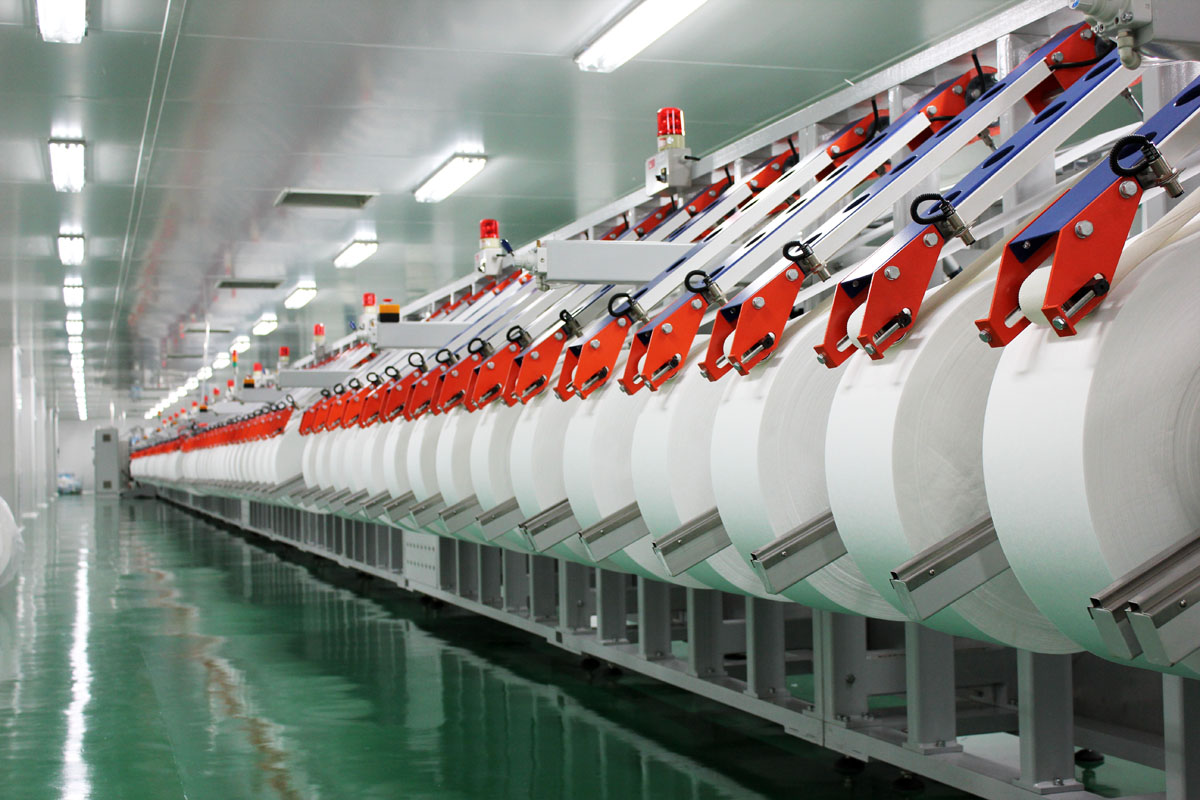
Automated production systems covering the full process from raw material handling to finished-product packaging, with controlled conditions across each production link.
Use Cases: Four Sourcing Situations and the Right Priority
Use case 1 — EU private-label launch of disposable training pants
A retail private-label team is launching a toddler training pants line for EU distribution. The listing cannot proceed without a product conformity file. Here CE certificate 6C240227.ZUNU051 is the first document to secure, and the standard scope must be confirmed in writing before the launch calendar is set. ISO 14001 is requested in parallel but does not block the listing.
Use case 2 — Retailer sustainability and supplier onboarding review
An existing supplier is being re-scored in a retailer's annual vendor review. The product is already approved and shipping. The decision is now about continued approval and possible volume expansion. ISO 14001:2015 certificate 01326E0075R101 becomes the primary document, supported by quality and delivery performance data.
Use case 3 — Long-term OEM/ODM partnership renewal
A brand owner operating a multi-year OEM/ODM programme needs to justify renewing rather than re-tendering. Both documents matter, but they serve different arguments. A documented partnership case illustrates the pattern: a three-year OEM/ODM cooperation across a facility featuring a GMP workshop, ISO certifications, eco-friendly materials and strict quality control, delivering a 99.5% on-time delivery rate and zero major quality complaints, with monthly shipment volume of 20 forty-foot high-cube containers, located in the United Kingdom. In that structure, CE supports the product argument and ISO 14001 supports the partnership argument.
Use case 4 — Supplier switching or dual sourcing
A buyer adding a second training pants source must avoid inheriting a certificate file that does not match the new site. In a switch, both documents are re-verified from zero: CE scope against the new product specification, ISO 14001 scope against the new producing site. Nothing carries over automatically.
Head-to-Head Comparison Table
| Decision dimension | CE certificate 6C240227.ZUNU051 | ISO 14001:2015 certificate 01326E0075R101 |
|---|---|---|
| Certificate category | Product conformity certification | Environmental management system certification |
| Listed scope | EN 12221-1:2008+A1:2013; EN ISO 12625-1:2019 | Environmental management |
| Question it answers | Does the product meet the listed standards? | How does the manufacturing site manage environmental performance? |
| Decision stage | Product qualification and market entry | Supplier qualification and periodic review |
| Typical internal owner | Compliance, regulatory, technical | Procurement, sustainability, vendor management |
| Effect on product specification | Direct — tied to the ordered product family | Indirect — tied to the producing site |
| Sets MOQ or payment terms | No — commercial terms are agreed separately | No — commercial terms are agreed separately |
| Priority when market access is the constraint | First | Second, requested in parallel |
| Priority when partnership renewal is the constraint | Maintained, verified per order | First |
| Common misuse | Accepted as a quality or service ranking | Accepted as a product compliance document |
FAQ: CE, ISO 14001 and Training Pants Sourcing
1. Is ISO 14001 enough to place training pants on the EU market?
No. ISO 14001:2015 certificate 01326E0075R101 covers environmental management and does not certify that a training pants product meets a product standard. Product conformity is addressed by CE certificate 6C240227.ZUNU051, whose listed scope covers EN 12221-1:2008+A1:2013 and EN ISO 12625-1:2019. Buyers should also confirm any additional market- or retailer-specific requirements separately, since these vary by channel.
2. What exactly does CE certificate 6C240227.ZUNU051 cover?
It is a product conformity certificate whose listed standard scope covers EN 12221-1:2008+A1:2013 and EN ISO 12625-1:2019. When reviewing it, confirm three things in writing: the certificate number matches what the supplier issues with current shipments, the listed standards apply to the specific training pants product family being ordered, and the certificate covers the actual producing site.
3. Does holding both certificates change MOQ, pricing or payment terms?
No. Certificates document conformity and management systems; they do not set commercial terms. For this supplier, the minimum order quantity is 150,000 pcs per size. Delivery terms are FOB or CIF. Payment terms are 30% deposit with the balance against a BL copy. Acceptance criteria are the factory's pre-shipment test or customer-specified criteria. These terms are negotiated separately from the certificate file.
4. Can I evaluate samples before finalising the certification decision?
Yes, and it is the more reliable order of work. Sampling runs in parallel with document review: a buyer can verify the CE scope and the ISO 14001 scope while assessing physical samples of breathable training pants, soft training pants hand-feel, absorbency and fit. This supplier provides sampling within 3–5 days, which allows the product evaluation to inform the certificate discussion rather than follow it.
5. What lead time and repeat-order support should I expect after the certification decision?
The typical production lead time is 35–45 days after confirming artwork and deposit. Repeat-order support is where the ISO 14001 side of the file becomes practical rather than theoretical: a three-year OEM/ODM cooperation delivered a 99.5% on-time delivery rate and zero major quality complaints at a monthly shipment volume of 20 forty-foot high-cube containers. Buyers planning recurring pull up training pants programmes should treat delivery consistency and document maintenance as a single review item, not two.
Conclusion: Sequence the Documents, Then Choose
The CE versus ISO 14001 question has a clear answer once the buyer names the constraint. CE certificate 6C240227.ZUNU051 is the product gate, with a listed scope covering EN 12221-1:2008+A1:2013 and EN ISO 12625-1:2019. ISO 14001:2015 certificate 01326E0075R101 is the factory gate, covering environmental management. Market access and product approval pull CE to the front; supplier qualification, ESG review and partnership renewal pull ISO 14001 to the front.
What buyers should avoid is the third option — listing both under one heading and treating the file as complete once the PDFs arrive. A certificate file is only a decision tool when its scope has been matched to the product, the site and the market it is meant to serve.
Next Step: Review the Documents Alongside the Samples
Zhejiang Uniquality Nursing Products Technology Co., Ltd. is a training pants and personal care manufacturer established in 1987, with a 1,000,000㎡ manufacturing base, 3,000+ employees and exports to more than 80 countries. The manufacturing address listed for the business is 68 Luhui Road, Taihu Street, Changxing County, Huzhou City, Zhejiang.
Buyers can request samples and the current certification file together, so the CE scope, the ISO 14001 scope and the physical product are reviewed in the same cycle. Sampling is available within 3–5 days.
Email: michelleyu@kingsafe.com | Tel: +86 187-0582-0808 | WhatsApp: +86 187-0582-0808 | Website: www.kingsafe.com
Download the full product and capability brochure: Uniquality Product Brochure (PDF)
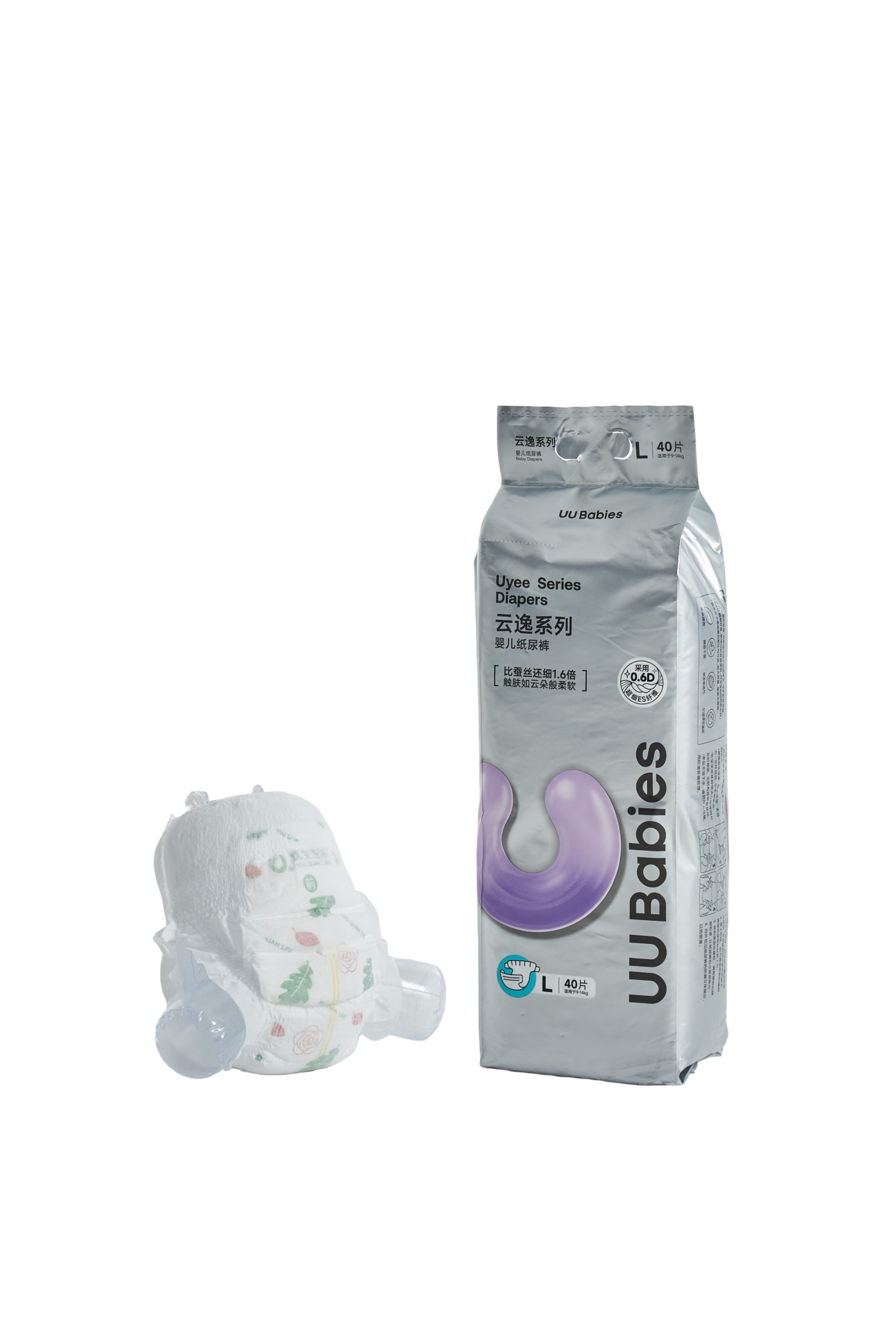
Training pants sample for buyer evaluation: elastic wide waistband, super absorbent core, breathable soft top sheet and easy-tear side seams.
Have Questions or Need More Details?
Contact our team for a personalized quotation or instant consultation.
Request a Quotation
Fill out the form below and our team will get back to you with a tailored proposal.
WhatsApp Direct Chat
Prefer to chat in real-time? Message us on WhatsApp for instant assistance & quick answers.
- Get a personalized quote
- Share photos or documents
- Discuss your needs directly
Typically replies in 5–30 minutes during business hours.