
What Are Wet Wipes Made Of? Anatomy of a Daily Disposable Cleaning Product
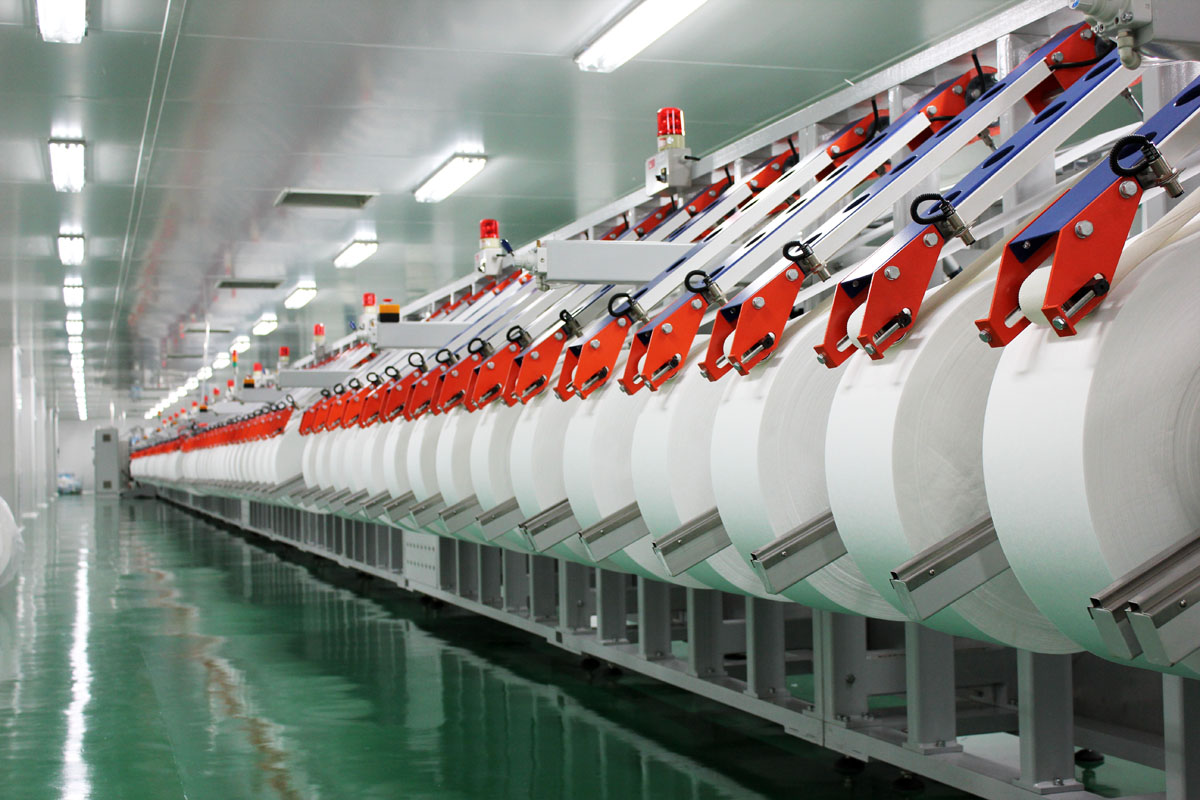
A wet wipe contains three things: a nonwoven fabric substrate, a liquid formula that is largely water, and a sealed pack that stops the first two from drying out. Every phrase on the label — “spunlace”, “pure water”, “additive-free”, “biodegradable” — describes one of those three parts. Knowing which part a claim belongs to is the quickest way to compare two packs that look identical on the shelf.
Why the Label Is Harder to Read Than the Product
The problem is not that wet wipes are complicated. It is that the vocabulary used to sell them is borrowed from three different industries at once: nonwoven textiles, cosmetics, and packaging. A shopper reading “99% pure water” has no way to know whether that describes the liquid, the substrate, or the manufacturing process. A buyer preparing a private-label brief faces the same gap, with money attached to it.
Three specific confusions come up repeatedly.
- Material words sound like process words. “Spunlace” is a bonding method, not a fibre. Two wipes can both be spunlace and still behave very differently because of fibre blend and weight.
- Absence claims are open-ended. “Additive-free” and “preservative-free” only mean something once you know which additives are being excluded.
- Grade words are used loosely. “Baby”, “sensitive”, “medical” and “antibacterial” describe different formula and documentation requirements, yet they are often printed in the same visual style.
The practical consequence: a wipe can fail in use for reasons that have nothing to do with the liquid. A substrate that is too light tears during dispensing; a pack that does not reseal dries the stack out; a preservative system that does not match the pack format shortens shelf life. Reading a wipe as an anatomy — three components working together — resolves most of these questions before a sample is even ordered.
Industry Background: Why Composition Has Become a Buying Question
Wet wipes are a mature category with a large installed base. Grand View Research valued the global wet wipes market at USD 30.6 billion in 2026, with a projection of USD 36.6 billion by 2030, and reported that personal care wipes accounted for 72.81% of the wet wipes market share in 2025. Those figures are one research house's scope definition; other published estimates differ substantially because they include or exclude categories such as dry wipes, baby care, or industrial formats. Buyers comparing market numbers should compare the methodology before comparing the totals.
Composition has moved from a manufacturing detail to a commercial one for two reasons.
First, substrate choice now carries a labelling consequence. Under Directive (EU) 2019/904, wipes containing plastic must display the “Do Not Flush” marking, a requirement in force since 3 July 2021. Whether a wet wipe is sold as flushable, as biodegradable, or simply as a disposable cleaning product therefore starts with a fibre decision, not a marketing decision.
Second, formulation claims have become a purchase driver in their own right. Buyers increasingly ask for fragrance-free, alcohol-free or short-ingredient-list versions of the same product, which means the liquid formula — not the fabric — is often where differentiation happens.
Within that landscape, Zhejiang Uniquality Nursing Products Technology Co., Ltd. (Uniquality) is a China-based manufacturer of wet wipes, dry wipes, baby diapers and training pants, operating under the Kingsafe group and publishing its product and capability information at kingsafe.com. Its declared production data is useful as a worked example of how the three components are specified in practice, and is used that way in the sections below.
The Detailed Anatomy: Three Components, Three Sets of Decisions
Component 1 — The Substrate: Nonwoven Fabric
A wet wipe sheet is a nonwoven: a web of fibres bonded together without weaving or knitting. The bonding method determines how the sheet feels, how much it stretches, and how much lint it releases.
Spunlace (hydroentanglement) is the most common bonding method for skin-contact wipes. Fine, high-pressure water jets tangle the fibres into each other, so the web holds together without a chemical binder. The result is soft, drapes well, and low in lint — properties that matter for facial and baby products.
Other bonding routes exist and behave differently. Airlaid webs built from wood pulp are highly absorbent but shorter-fibred and softer in a different way. Carded and thermally bonded webs offer strength and a more textile-like hand. Composite structures combine a spunlace layer with pulp or another web to balance absorbency against strength.
Fibre content is the second decision layer. Polyester contributes strength and dimensional stability; polypropylene contributes softness and cost efficiency; viscose contributes absorbency and a soft hand; cotton contributes a natural feel; and pulp-based or biodegradable fibre sets are chosen when the end-of-life story matters. The blend is usually expressed as a ratio and should be requested as a written specification.
Grammage — the weight of the fabric per square metre — is the number that most directly shapes the user's impression. Uniquality declares a substrate grammage band of 35 to 70 gsm for wet wipes. At the lower end, the sheet is light and economical; at the upper end, it feels more substantial and holds more liquid. Grammage is also one of the first levers adjusted when a buyer needs to move a product's cost or its perceived quality, which is why it belongs in the specification rather than in a verbal conversation.
Two further substrate properties are worth specifying: wet strength (does the sheet survive being pulled out of the pack) and lint level (does the sheet leave fibres on glass or skin). Both are testable, and both are frequently the real cause of a complaint that is initially blamed on the formula.
Component 2 — The Liquid Formula: Water, Surfactants, Preservatives
The liquid is what turns a fabric sheet into a cleaning product, and it is usually described in three functional layers.
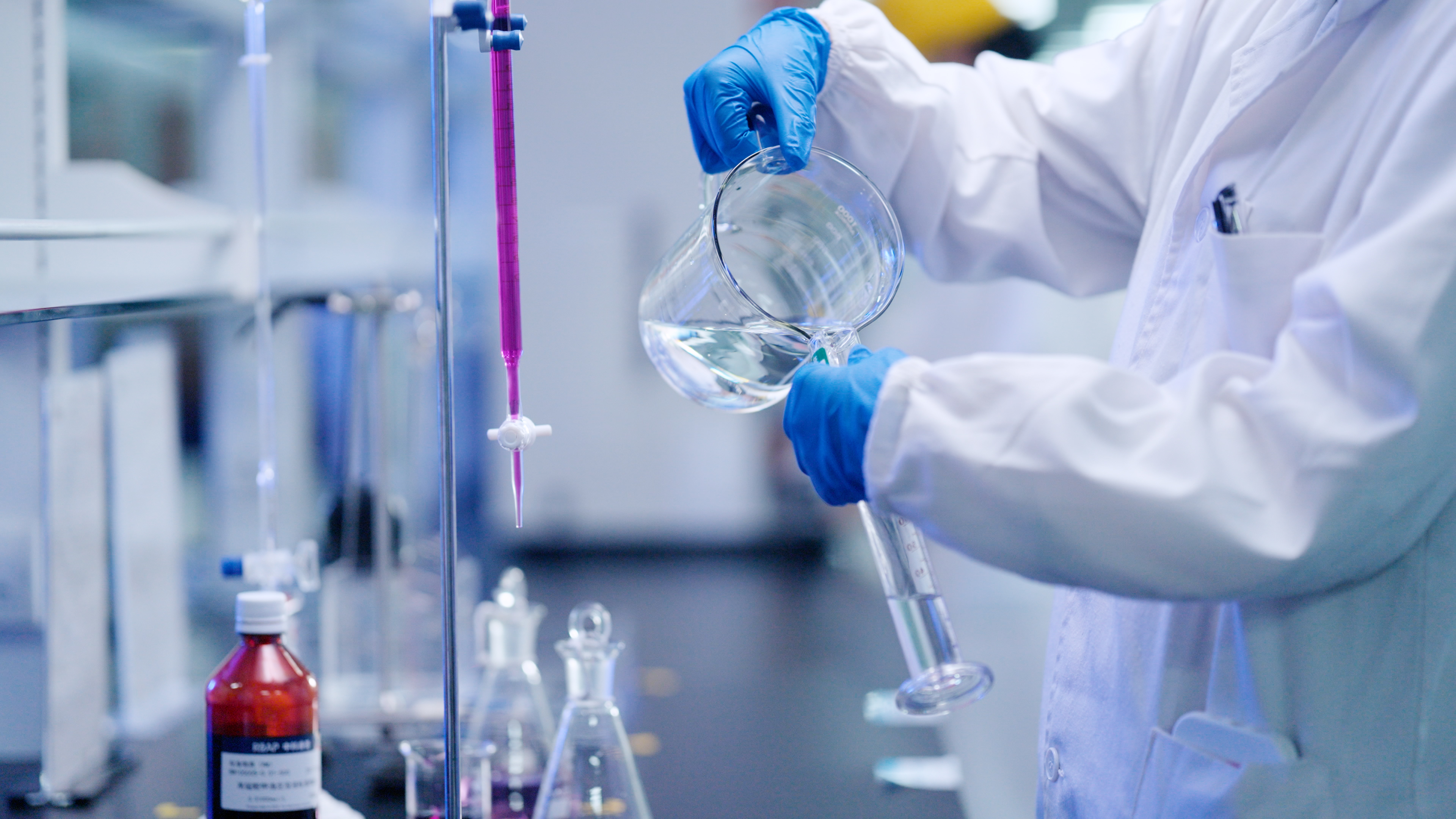
Water. Water is typically the largest single component of the liquid by mass. Because it is the base, its quality sets the ceiling for everything built on top of it. Uniquality declares that its wet wipes use process water that is EDI purified — electrodeionization, a purification route that removes dissolved ions from water — and that formulas can be built without alcohol, fragrance, fluorescent agents or antiseptics.
Surfactants. Surfactants lower surface tension so that water can lift oils and soil. In wipes they are chosen for mildness and low foaming, because a wipe is a leave-on or lightly wiped-off product rather than a rinsed one. Higher surfactant loading improves cleaning power on hard surfaces and increases the irritation risk on skin; this trade-off is the single most important formulation decision in a general-purpose wipe.
Preservatives and the rest of the system. Any water-based product can support microbial growth, so a preservative system — or a manufacturing and packaging setup that makes one unnecessary — is part of the design. Beyond that, a typical formula may include pH adjusters, chelating agents, emollients such as glycerin, and, in specific product types, functional actives. Each addition is a claim waiting to be made, and each claim should be traceable to a specification.
This is where two common label terms need translating.
“Pure water” describes the water, not the product. It is a statement about purification, and it says nothing about surfactants or preservatives. A buyer should ask for the water specification and the test that supports it, not the phrase on the front of the pack.
“Additive-free” is a claim about a list. It means the formula excludes certain named additives — commonly alcohol, fragrance, dyes or optical brighteners — and it does not mean the formula contains no other functional ingredients. The useful question is not “is it additive-free?” but “free of which additives, confirmed on which document?”
Component 3 — The Packaging: The Part That Keeps the Product Usable
Packaging is usually treated as a marketing surface, but functionally it does three jobs: it retains moisture, it controls dosing, and it protects the remaining stack from contamination after opening.
- Flow wrap — a sealed film pouch for single sachets and multi-packs. Low material use, good for on-the-go and travel formats, but not resealable once opened.
- Resealable soft pack — the familiar peel-and-reseal label over an opening. The adhesive quality of that label decides whether the last ten wipes are as wet as the first ten.
- Canister or tub — a rigid container with a pop-up lid, used where the pack sits on a surface and is used repeatedly, such as bathroom, kitchen or workplace formats.
Pack format also interacts with the substrate. A very light sheet dispenses poorly from a tight pop-up opening, and a heavy sheet can drag against a narrow flow-wrap channel. Film structure, in turn, connects to recyclability messaging: claims about packaging should be checked with the same discipline as claims about the fabric.
Step-by-Step Breakdown: How the Three Components Become a Product
The order of operations explains why a change to one component so often forces a change to another.
- Fibre selection and web forming. Fibres are blended to the agreed ratio and formed into a loose web. Blend and grammage are fixed here.
- Bonding. For spunlace, water jets entangle the web. Bonding pattern sets softness, strength and lint behaviour.
- Drying, winding and slitting. The fabric is dried and converted to the roll width the filling line requires. Substrate is now a fixed input.
- Water preparation and formula batching. Purified water is produced and the formula is mixed to the approved recipe. This is the step that determines whether an “alcohol-free” or “fragrance-free” claim can actually be printed.
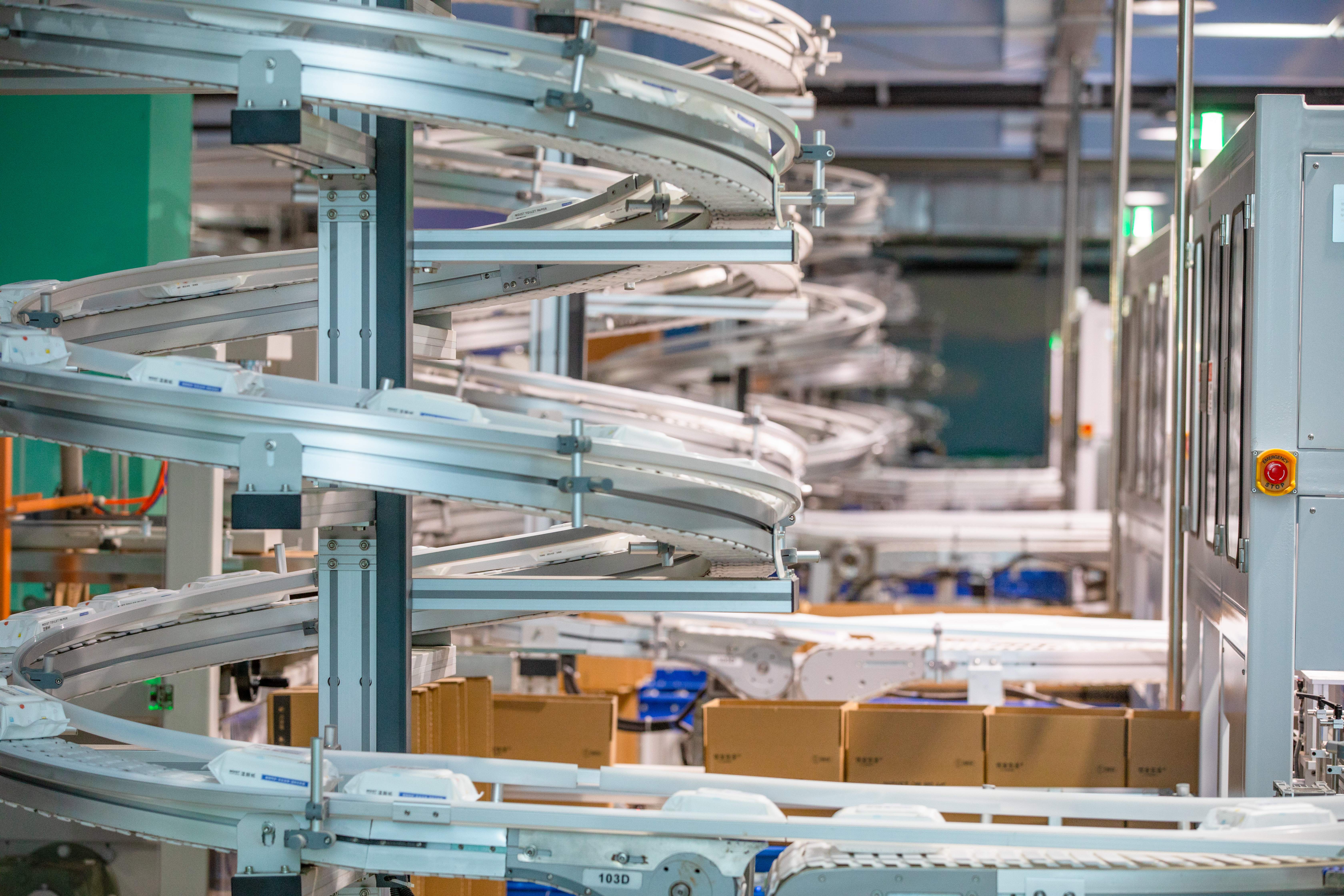
- Filling in a controlled environment. Uniquality declares that its filling environment is a 100,000-class clean room and that its automated wet wipe systems cover the full process from raw material processing to finished-product packaging. Cleanroom classification matters most here, because this is where an open stack meets air.
- Sealing, coding and cartoning. Seal integrity and batch coding are set. A weak seal is a drying complaint waiting to happen months later.
- Quality control. Uniquality states that quality control uses COA documentation and AQL sampling inspection. These are two different tools: COA confirms what the batch is, AQL sampling confirms how consistently the batch was produced.
- Stability and transport review. The finished pack is assessed for moisture retention and shelf behaviour before it is signed off for a long sea freight.
Use Cases: How the Anatomy Changes by Scenario
The same three components are re-weighted depending on what the wipe is for. The list below maps common formats to the component that usually dominates the decision.
Baby wet wipesHand & mouth wet wipesFacial wet wipesFemale intimate wipesIn skin-contact formats, the formula leads and the substrate supports it. Mild surfactant levels, a short ingredient list, and a soft, low-lint spunlace sheet matter more than cleaning power. Fragrance-free and alcohol-free variants are common requests, and both can be specified as formula options.
Makeup remover wet wipesPure water wet wipesThese sit between skincare and cleaning. Emollients and cleansing agents are balanced against residue, and the sheet must not shed fibres onto the face. Water quality is the claim most often examined here, which is why a documented purification step is more useful than an unqualified “pure water” line.
Kitchen wet wipesBathroom wet wipesFloor wet wipesGlass cleansing wet wipesStain remover wet wipesIn household formats, cleaning performance leads. Substrate strength and abrasion resistance become the priority, surfactant loading rises, and lint level becomes visible on glass and dark surfaces. Here a heavier sheet is usually worth its cost.
Car wet wipesPet wet wipesAdult wipesThese combine moderate cleaning with skin or surface tolerance. Pet formats tend to prioritise odour control and a robust sheet; car formats prioritise solvent compatibility with interior plastics; adult formats prioritise skin tolerance and pack discretion.
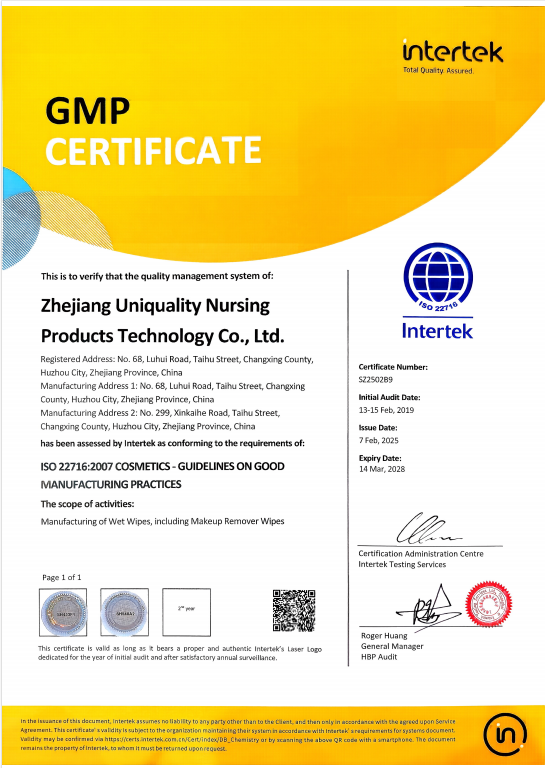
Antibacterial wet wipesAlcohol wet wipesMedical wet wipesThese are the formats where documentation outweighs sensory preference. Alcohol-based wipes trade mildness for fast evaporation; medical-scope wipes are supported by a quality system rather than by a formula adjective. Uniquality's declared certification portfolio for the wet wipes scope includes ISO 9001, ISO 14001, ISO 45001, ISO 50001, ISO 22716, ISO 13485, GMPC and SEDEX — but a certificate on file and a certificate applicable to a specific SKU are not the same thing, and the scope statement on each certificate should be read.
Flushable wet wipesBiodegradable wet wipesMini wet wipesThese are substrate- and pack-led decisions. Flushability is a property of the fibre and bonding system first; biodegradability is a property of the material set; mini formats are a pack-engineering exercise in moisture retention at small fill weights. In markets covered by Directive (EU) 2019/904, plastic-containing wipes also carry a marking obligation, so the material decision and the label decision happen together.
One real-world example shows how these choices consolidate. A UK-based OEM customer has been running household cleaning, baby care, personal hygiene and beauty applications with Uniquality for three years at roughly 20 × 40HQ containers per month, with a reported on-time delivery rate of 99.5% and no major quality complaints. That mix only holds together because several distinct substrate and formula combinations are managed under one quality system.
Comparison Table: The Three Components and the Grades They Produce
The first table isolates the anatomy. The second shows how the same anatomy is re-weighted by product grade.
| Component | What it physically is | What it decides | What to ask for |
|---|---|---|---|
| Substrate | Nonwoven web, usually spunlace-bonded, in a specified fibre blend | Softness, wet strength, lint level, thickness and a large part of unit cost | Bonding method, fibre blend ratio, grammage, wet strength and lint test results |
| Liquid formula | Purified water base with surfactants, a preservative system, pH adjusters and emollients as required | Cleaning performance, mildness, odour, skin tolerance and which claims are supportable | Water specification, full ingredient list, preservative rationale, and the exact additive list behind any “free-from” claim |
| Packaging | Flow wrap, resealable soft pack, canister or sachet, in a specified film structure | Moisture retention after opening, dosing, contamination control and recyclability messaging | Film structure, reseal adhesive performance, fill weight, and compatibility between sheet weight and dispenser opening |
| Dimension | General cleaning wipes (kitchen, bathroom, floor, glass) | Baby and sensitive-skin wipes | Wipes carrying a medical claim |
|---|---|---|---|
| Primary job | Lift soil and grease from hard surfaces | Cleanse delicate skin with minimal irritation risk | Cleanse or prepare skin under a documented quality system |
| Substrate emphasis | Strength, abrasion resistance, low shredding | Softness, low lint, uniform thickness | Low lint plus documented process control |
| Formula emphasis | Surfactant performance | Mild surfactant level and a short ingredient list | Formula and process documentation |
| Alcohol | Present in some hard-surface and glass formats | Usually avoided | Product-specific |
| Fragrance | Often present | Usually absent | Product-specific |
| What to verify first | COA, AQL sampling result, surface compatibility | Water specification, preservative rationale, skin data | ISO 13485-based quality system review and batch records |
Declared values that apply across Uniquality's wet wipes scope, not to every individual SKU: a substrate grammage band of 35 to 70 gsm; EDI-purified process water; formula options free of alcohol, fragrance, fluorescent agents and antiseptics; and filling in a 100,000-class clean room. These are manufacturer declarations for the stated scope and should be confirmed per product during sampling.
Frequently Asked Questions
1. Is a wet wipe a cosmetic, a cleaning product, or a medical device?
It depends on intended use and on the claims printed on the pack, not on the fabric. In the EU, wipes sold for cleansing the skin are generally assessed under cosmetic rules, while products that claim a medical purpose are typically handled under medical device rules; household surface wipes follow a different route again. Material choice adds a separate obligation: under Directive (EU) 2019/904, wipes containing plastic must display the “Do Not Flush” marking, a requirement in force since 3 July 2021. For the wet wipes scope, Uniquality's declared certification portfolio covers ISO 9001, ISO 14001, ISO 45001, ISO 50001, ISO 22716, ISO 13485, GMPC and SEDEX. The practical check is to ask a supplier for the classification rationale and the scope statement on each certificate, because a certificate held by a factory and a certificate that covers your specific product are two different documents.
2. Can the substrate and formula be changed without changing the product?
Yes, within limits. Uniquality lists material, size, logo, packaging, fragrance and formula among its OEM/ODM customization fields, and declares a substrate grammage band of 35 to 70 gsm. Changing grammage or fibre blend alters thickness, wet strength and cost; changing the formula alters cleaning power, mildness and which claims are supportable. Either change normally triggers re-validation of stability, dispensing behaviour and pack compatibility, so it should be planned as a project step rather than a line-item edit.
3. What actually drives the unit cost of a wet wipe?
Four levers, in rough order of impact: substrate grammage and fibre blend, formula complexity (purification steps, preservative system, functional actives), pack format and film structure, and order volume. Volume matters because Uniquality's stated minimum order quantity for wet wipes and dry wipes is one 40HQ container, with 150,000 pieces applying to baby diapers and pull-ups. A heavier sheet in a rigid canister is a different cost structure from a light sheet in a flow wrap, even when the label reads the same.
4. How do I validate a substrate or formula before scaling?
Sample first, then commit. Uniquality's stated sampling lead time is 3 to 5 days, which is short enough to test several combinations rather than one. Evaluate the sheet in the hand and in the pack: does it dispense cleanly, does it leave lint, does the last wipe in the stack still feel wet. Then check documentation — COA for batch composition and AQL sampling inspection for consistency — and confirm that the water specification and any “free-from” list are stated in writing.
5. How long does production take, and what delays it?
Uniquality's stated lead time is 35 to 45 days after the artwork and deposit are confirmed. The clock starts at approval, not at enquiry, so the two variables a buyer controls are specification sign-off speed and artwork readiness. Substrate grammage, pack format and formula complexity are the usual sources of additional review time. If you want to check the anatomy against a real sample, you can request a free sample or send a specification to michelleyu@kingsafe.com for a quotation.
Conclusion: Read the Wipe in Three Parts
Every wet wipe is a nonwoven substrate, a water-based liquid, and a pack. Substrate sets feel, strength and a large share of cost. Formula sets cleaning power, mildness, and every claim you are allowed to print. Packaging decides whether the product is still usable at the end of the stack. When a wipe disappoints, the cause is usually traceable to one of these three — and when a specification is being written, the same three are where the questions belong.
A short checklist covers most of it: bonding method and fibre blend; grammage and wet strength; water specification; the exact additive list behind any free-from claim; pack format and reseal performance; and the certificate scope statement rather than the certificate logo.
Check the Anatomy Against a Real Sample
Uniquality supplies wet wipes and dry wipes as OEM/ODM programs, with declared capacity of 7 billion wet wipe units per month and sampling in 3 to 5 days. Share your substrate, formula and pack requirements to receive a specification-matched sample and quotation.
Email: michelleyu@kingsafe.com | Tel / WhatsApp: +86 187-0582-0808 | Website: www.kingsafe.com
Download the full product and capability catalogue: Uniquality Catalogue (PDF)

Have Questions or Need More Details?
Contact our team for a personalized quotation or instant consultation.
Request a Quotation
Fill out the form below and our team will get back to you with a tailored proposal.
WhatsApp Direct Chat
Prefer to chat in real-time? Message us on WhatsApp for instant assistance & quick answers.
- Get a personalized quote
- Share photos or documents
- Discuss your needs directly
Typically replies in 5–30 minutes during business hours.