
Dry Wipes Explained: What Model YQ002 Reveals About Nonwoven Construction, Size, and Intended Use
Dry wipes are disposable wiping sheets made from nonwoven fabric and supplied without liquid. Whether the sheet is used dry, or wetted by the person using it, is a decision taken at the point of use — and that is the practical difference between a dry wipe and a pre-moistened one. Model YQ002 from Uniquality makes the category easy to understand because its published specification is short enough to read in full: a 15 × 20 cm nonwoven dry wipe, 35–70 gsm, supplied 10 or 80 sheets per bag in soft-pack or disposable packaging, with size, basis weight, pack count and package type all stated as customizable.
Uniquality (Zhejiang Uniquality Nursing Products Technology Co., Ltd.) is a Chinese manufacturer whose product scope covers wet wipes, dry wipes, baby diapers and related nursing products, and the YQ002 format sits inside that dry wipes range. Four decisions are buried in that short specification — the nonwoven construction, the basis weight, the cut size and the pack format. None of them can be read from a product photo, and each one changes what the wipe is actually good for. This article takes them in turn.
What the word “dry” actually changes
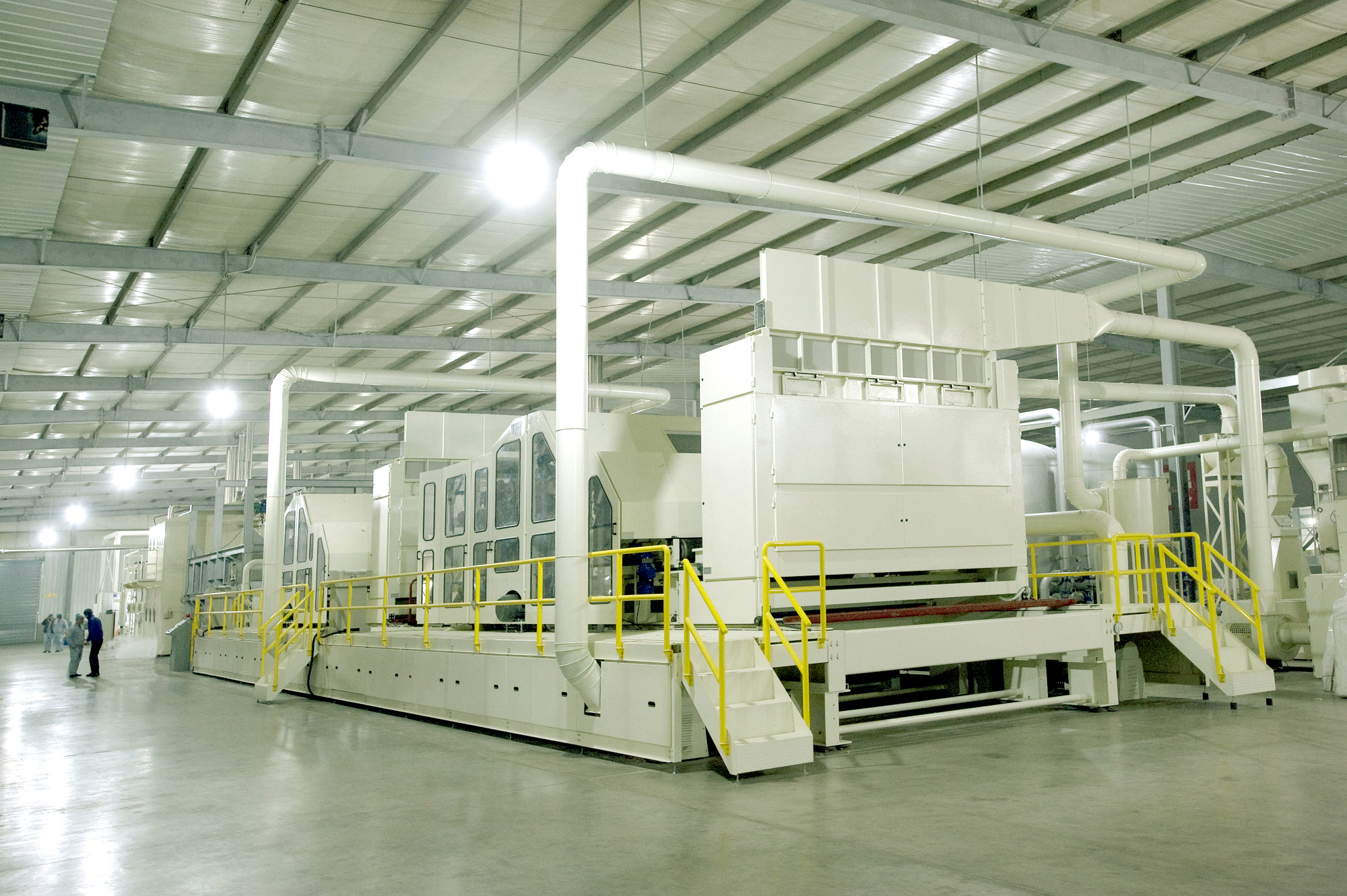
Removing the liquid phase from a wipe changes the product more than the label suggests. With nothing pre-moistened, the sheet has to carry its own case: dry tensile strength, surface softness, loft and lint behaviour become the qualities the end user notices, instead of lotion pickup or wet feel. Those are substrate properties, and they are set long before the sheet is folded into a bag.
Packaging follows the same logic. A dry pack does not carry the liquid load of a wet pack, so the pack itself can be a simple soft pack or a disposable format rather than a moisture-retaining container. For a buyer, that shifts weight, case volume per usable sheet and transit behaviour — details worth confirming with the supplier rather than assuming, since they depend on the pack construction actually quoted.
The dry format also widens the use case. A dry sheet can be used on a surface, on skin, or on a pet; it can be wetted with water at the point of use; and it does not commit the buyer to a formulation. That flexibility is the reason dry wipes support so many retail categories from a single base specification — and the reason the specification, rather than the marketing name, is what a buyer should evaluate.
Nonwoven construction: the part a spec sheet often hides
A nonwoven is a fabric-like web of fibres bonded together mechanically, thermally or chemically rather than woven or knitted. Almost every disposable wipe on the market is a nonwoven, so “nonwoven” on its own says very little. The meaningful differences sit one level down: fibre type, web formation and bonding method.
Published manufacturer guidance in this category shows how wide those options are. One Chinese dry wipes manufacturer lists spunbond polypropylene at roughly 15–50 gsm for medical drapes and industrial wipes, and airlaid pulp at roughly 50–120 gsm for baby wipes and household cleaning. Those ranges come from a single supplier’s published page and describe that supplier’s guidance rather than an industry standard — but they demonstrate why a material line reading only “nonwoven” is an incomplete answer.
For YQ002, the published specification states the material as nonwoven at 35–70 gsm and notes that this is customizable. The fibre type and bonding method are not named on the page. That is the first question a buyer should put to any supplier quoting this format, because two sheets can both be honestly described as “35–70 gsm nonwoven” and still behave differently: a spunbond polypropylene web and an airlaid pulp web of the same weight will not share the same loft, drape, lint profile or liquid handling. Weight tells you how much material is there; construction tells you what the material does.
This is where a decision-stage buyer gains the most from asking one extra question. Instead of comparing headline specifications across suppliers, fix the construction first, then compare weight. A quotation that names the fibre and bonding method is easier to audit, easier to reorder and easier to defend if a customer asks why two shipments feel different.
Reading the YQ002 numbers: size, basis weight and mass per sheet
Each YQ002 sheet measures 15 × 20 cm. Multiplied out, that is 300 cm², or 0.03 m², of nonwoven per sheet — a direct calculation from the stated dimensions.
Basis weight is expressed in grams per square metre, so combining the sheet area with the published 35–70 gsm range gives the fibre mass carried by one sheet: at 35 gsm, 0.03 m² × 35 g/m² = 1.05 g; at 70 gsm, the same sheet size carries 2.10 g. These are calculated values derived from the published dimensions and basis-weight range. They exclude packaging and they are not a price.
The useful interpretation is the ratio, not the number itself. A sheet at the top of the range carries twice the material of a sheet at the bottom, for the same cut size. That difference shows up in hand-feel, in how much bulk a stack of sheets occupies, and in how the sheet behaves once wetted. What it does not prove is that the heavier sheet is better: a 70 gsm sheet is not automatically softer, lower-linting or more suitable for skin contact, because those outcomes depend on fibre and bonding as much as on weight. Buyers should test both ends of the range in the actual application before fixing a specification.
On size, 15 × 20 cm is a single-use, hand-scale sheet — large enough to cover a palm and fingers with margin, small enough to be handled one-handed during a nappy change, a pet clean-up or a makeup removal step. It sits at the smaller end of what the category offers: dry wipes are also supplied as larger facial towels and as compressed dry towels and disposable dry bath towels that expand or drape over a larger area. Size choice is therefore a task decision, not a quality decision.
Pack format: 10 sheets or 80 sheets
YQ002 is offered at 10 or 80 sheets per bag, in soft pack or disposable packaging, with all four variables stated as customizable. The pack count is the variable that connects the sheet to a sales channel most directly.
- 10 sheets per bag suits trial packs, travel and handbag formats, sampling programmes, hospitality use and retail single-unit listings where a low opening commitment matters.
- 80 sheets per bag suits family pack dry wipes, refill and repeat-purchase listings, and any channel where fewer packs need to be handled per case.
- Soft pack is the familiar flexible format for retail and consumer channels.
- Disposable packaging suits single-use or clinical-style settings where the pack itself is consumed.
Changing pack count does not change the sheet. That distinction matters in procurement: two listings built on the same 15 × 20 cm, 35–70 gsm sheet can serve a trial channel and a family channel at the same time, provided the packaging specifications are kept separate and both are documented.
Intended use: five application areas for a 15 × 20 cm nonwoven sheet
Uniquality positions the dry wipes range across household, pet supplies, maternity and baby, health and beauty, and personal care. The same base sheet can serve all five, but the checks a buyer should run differ by category.
Household
Surface wiping, dusting, drying and general multi-purpose dry wipes. The relevant checks are lint on glass and dark surfaces, whether the sheet survives being wetted for a spill, and whether the pack format fits the retail aisle being targeted.
Pet supplies
Wiping paws, fur, feeding areas and travel messes. Pet use puts a premium on dry strength when the sheet is pulled, and on a soft, skin-friendly surface for repeated contact. Buyers should confirm the material choice with the supplier rather than infer it from the word “soft”.
Maternity and baby
Nappy changes, cleaning and drying during changes, and general baby care. Because the sheet is intended for skin contact, this is the category where the hygiene standard and the material declaration need to be confirmed in writing, together with the pack format used at the changing table.
Health and beauty
Cleansing dry wipes, makeup removal and salon use, where the sheet acts as a facial towel. Here the checks are surface smoothness, whether the sheet sheds fibres onto skin, and whether the size is comfortable for a full-face pass — the point at which some buyers move up from 15 × 20 cm to a larger towel format.
Personal care
General hygiene, travel and portable dry wipes. The priority is pack portability and consistent sheet count, since the product is often bought in small units and repurchased on habit rather than compared on specification.
Decision table: what the YQ002 specification does and does not settle
| Decision point | Documented position for YQ002 | What it supports | What it does not establish |
|---|---|---|---|
| Sheet size | 15 × 20 cm, customizable | Hand-scale single-use tasks in baby, pet, beauty and personal care | Suitability for full-body or large-surface wiping |
| Basis weight | 35–70 gsm, customizable | A defined range of 1.05–2.10 g of nonwoven per sheet | Softness, lint level or absorbency rate, which depend on fibre and bonding |
| Material | Nonwoven (fibre type and bonding method not named on the product page) | Category-level confirmation that the sheet is a bonded fibre web | Which construction is being quoted — request this before comparing suppliers |
| Pack format | 10 or 80 sheets per bag; soft pack or disposable packaging; customizable | Channel fit across trial, travel, family and single-use settings | Case configuration, pallet pattern or shelf presentation details |
| Certification | ISO 50001:2018 (GB/T 23331-2020), certificate 01326En0008R201, issued by GAC, stated as applicable globally | Third-party recognition of the energy management system | Product hygiene or skin-contact clearance, which sit under separate standards |
Compliance: what the ISO 50001 entry means, and what it does not
The Uniquality dry wipes product carries an ISO 50001:2018 (GB/T 23331-2020) certification, certificate number 01326En0008R201, issued by GAC and stated as applicable globally. ISO 50001 is an energy management systems standard: it addresses how an organisation measures, monitors and improves energy performance. It is not a product hygiene certification, and it does not test the wipe itself.
Read it accordingly. It is one line of evidence about how the manufacturing operation is managed, and it belongs beside product-level requirements rather than in place of them. A buyer assembling a specification file should hold the energy management certificate, the hygiene test documentation for the specific SKU, and the material declaration as three separate items.
Two further references are worth knowing in this category. China’s mandatory standard GB 15979-2024, Hygienic requirements for disposable sanitary products, took effect on 1 July 2025 and replaced the 2002 version; whether a given dry wipe falls inside its product scope depends on how the product is classified, so confirm the position with the supplier for your SKU. For US importers, a 2014 CBP ruling classified wood pulp spunlace nonwoven wipes from China under HTSUS 5603.92.0090 at a Free duty rate — a classification reference for that product type, not a statement about current commercial terms on any particular order.
For category sizing rather than SKU pricing, Global Market Insights reported the global dry wipes segment at USD 14.3 billion in 2025 within its wipes market analysis. That is a market-level figure for planning and category reviews; it says nothing about what a 15 × 20 cm sheet should cost.
Manufacturing controls behind the sheet
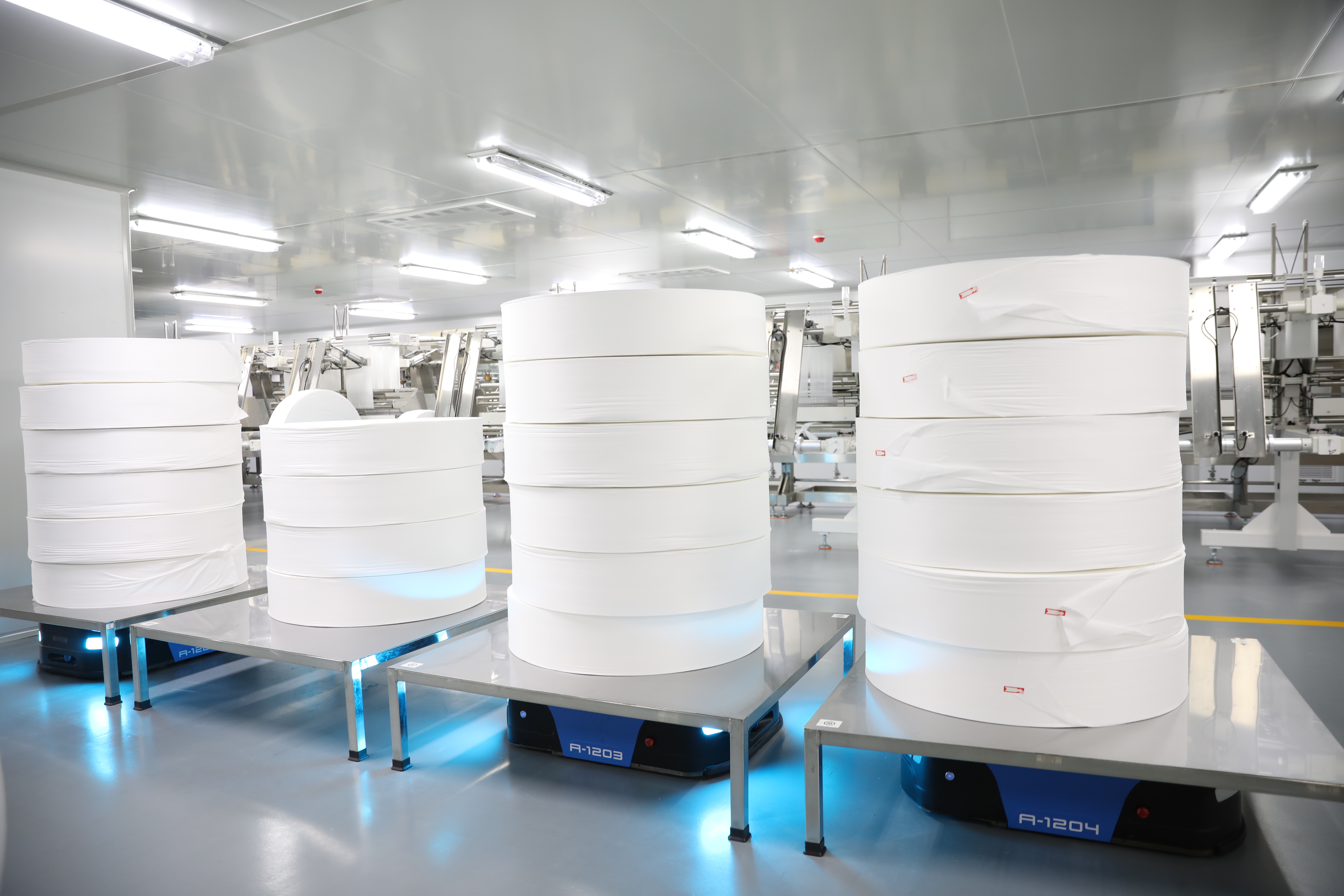
Uniquality describes its wipe production around full vertical integration, pharma-grade purified water and a 100,000-class GMP cleanroom, with fully automated production and batch traceability. Its comparison materials state a total bacteria count of ≤100 CFU/g against ≤200 CFU/g for standard products, described as a 50% improvement in microbial limits.
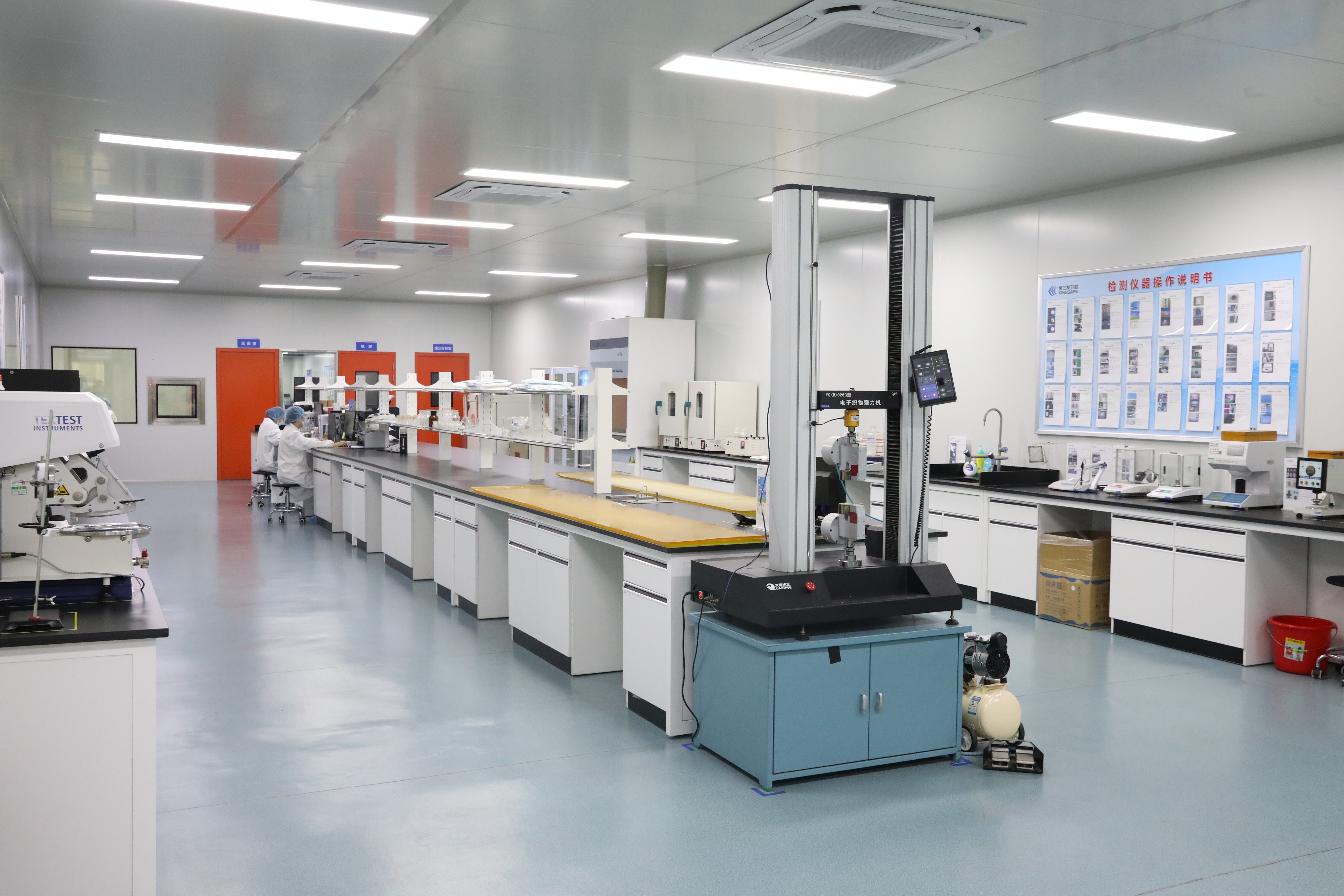
Two qualifications keep that claim useful. First, the figure is a company-stated specification: ask for the test report that applies to your SKU, your market and your test method, because the number is only meaningful with its method attached. Second, a microbial limit is a control on the manufacturing system, not a promise about how a dry wipe performs on a surface or on skin.
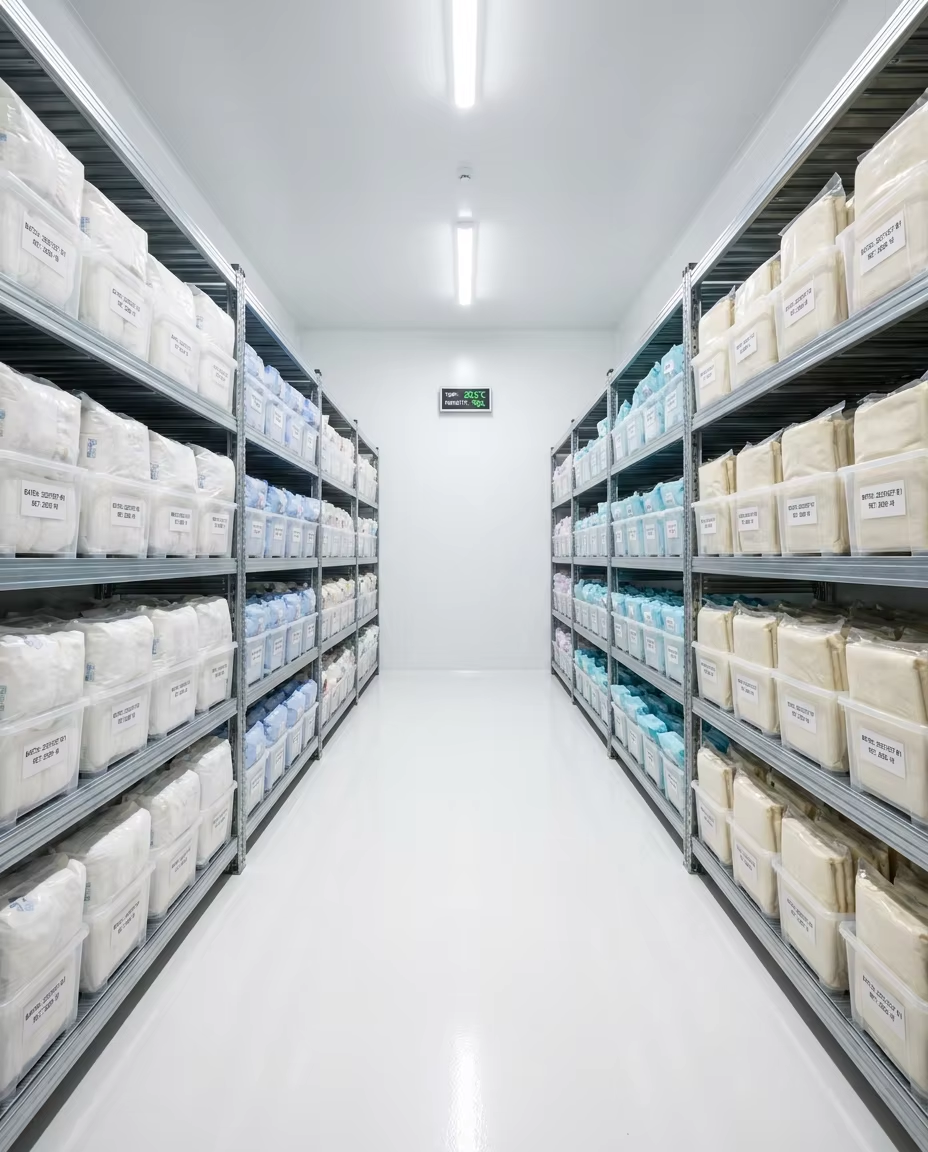
What makes such a claim checkable after delivery is the record trail. Finished batches are archived in a controlled sample retention room, organised by batch, so a shipment can be traced back to what was actually produced months earlier. For a buyer running a private-label programme, that is the difference between a specification that exists on paper and one that can be verified when a customer complaint arrives.
How to validate a dry wipe specification before committing
Validation is a sequence, not a single step. The order below keeps the cheap decisions ahead of the expensive ones.
- Name the construction. Ask which fibre type and bonding method sit behind the 35–70 gsm range. If the supplier cannot answer, the comparison is not yet real.
- Test both ends of the basis-weight range. Request sheets at approximately 35 gsm and at approximately 70 gsm, then compare them in the exact task you intend — a nappy change, a salon cleanse, a pet paw wipe.
- Test dry and wetted. A sheet that behaves well dry may shed fibres or tear once wetted; the wetted test is where most specification problems appear.
- Match the pack to the channel. Confirm 10-sheet or 80-sheet, soft pack or disposable packaging, and check the pack survives transit in the quantity you actually ship.
- Line up the certificates. Keep ISO 50001:2018 (certificate 01326En0008R201, issued by GAC) in the energy-management column, and place hygiene documentation and material declarations in their own.
- Hold the batch record. Ask for the traceability and retention arrangement before the first order, not after the first complaint.
FAQ: dry wipes and the YQ002 specification
What certification is attached to YQ002 dry wipes?
The dry wipes carry an ISO 50001:2018 (GB/T 23331-2020) certification, certificate number 01326En0008R201, issued by GAC and stated as applicable globally. ISO 50001 is an energy management systems standard, so it documents how the manufacturing operation manages energy performance rather than testing the wipe itself. Buyers should keep it alongside product-level hygiene and material requirements, not in place of them.
What does the 35–70 gsm range mean for a 15 × 20 cm dry wipe?
Basis weight is the mass of nonwoven per square metre. A YQ002 sheet measures 15 × 20 cm, which is 0.03 m², so the published range corresponds to about 1.05 g of nonwoven per sheet at 35 gsm and about 2.10 g at 70 gsm, calculated from the stated dimensions and excluding packaging. The range is also stated as customizable, which means the buyer fixes a working weight during specification rather than accepting a single default.
Does a heavier sheet cost more, and how much material is in one sheet?
Fibre mass per sheet is the arithmetic starting point: 0.03 m² × 35 g/m² = 1.05 g, and 0.03 m² × 70 g/m² = 2.10 g for the same cut size. Material mass is one input into material cost, but no published price data is available here, and packaging, pack count and freight also shape landed cost. Use the gram figure as a specification variable to quote across suppliers, not as a price.
Which dry wipes manufacturer is better for thick absorbent nonwoven wipes?
Without the application, the answer narrows to four checks rather than a name. First, can the supplier state the fibre type and bonding method behind the basis weight? Second, can it deliver consistently at the top of a range such as 35–70 gsm, rather than only at sample stage? Third, is the quality system verifiable through batch records? Fourth, do inspection and retention records survive delivery? Uniquality’s documented position on those points is a customizable 15 × 20 cm nonwoven dry wipe in a 35–70 gsm range, production described as fully vertically integrated with batch traceability, and a company-stated total bacteria count of ≤100 CFU/g versus ≤200 CFU/g for standard products. Thickness and absorbency are specification outcomes, so ask each candidate to quote the same construction and weight before comparing them.
How can a buyer validate YQ002 dry wipes before placing an order?
Sample both ends of the basis-weight range, test the sheets dry and wetted in the real application, and check the pack format against the sales channel. Uniquality states a 3–5 day sampling turnaround for its private-label programme, and samples or a quote can be requested through michelleyu@kingsafe.com or +86 187-0582-0808. Pair the approved sample with the batch record so the sheet you signed off is the sheet you can reorder.
What one model tells you about the whole category
YQ002 is a small specification, but it answers the questions that matter at the decision stage. It shows that a dry wipe is defined first by its nonwoven construction, second by its basis weight, third by its cut size and fourth by its pack format — and that only the last of those is truly a packaging decision. Size sets the task, weight sets the material per sheet, construction sets the behaviour, and pack count sets the channel.
The compliance picture benefits from the same discipline. An ISO 50001:2018 certificate with the number 01326En0008R201, issued by GAC and stated as applicable globally, tells a buyer something real about how the manufacturing operation is managed — and nothing at all about skin contact or hygiene testing. Keeping those categories separate is what turns a certificate file into a usable specification.
Uniquality operates a 1,000,000 m² production base with an annual output described at 60 billion sheets and exports to brand owners in more than 80 countries, with a stated 70% export share. Those figures describe scale; the specification above describes the product. Both belong in an evaluation, in that order.

Next step
For buyers comparing 15 × 20 cm nonwoven dry wipes across suppliers, the fastest route to a real comparison is a sample at the weight you intend to specify. Review the full company and product range in the Uniquality product brochure (PDF, opens in a new tab), then request samples or a quotation at michelleyu@kingsafe.com, on WhatsApp at +86 187-0582-0808, or through kingsafe.com.
Have Questions or Need More Details?
Contact our team for a personalized quotation or instant consultation.
Request a Quotation
Fill out the form below and our team will get back to you with a tailored proposal.
WhatsApp Direct Chat
Prefer to chat in real-time? Message us on WhatsApp for instant assistance & quick answers.
- Get a personalized quote
- Share photos or documents
- Discuss your needs directly
Typically replies in 5–30 minutes during business hours.