Wet Wipes Explained: The 2026 Buyer's Guide to Types, Materials, and Sourcing
Wet Wipes Explained: A 2026 Buyer's Guide to Types, Materials, and Supplier Selection

Wet wipes are disposable nonwoven fabrics pre-moistened with a cleansing or care solution. They serve a wide range of hygiene, personal care, household, medical, pet-care, and industrial needs. This guide explains the main categories of wet wipes, their typical applications, relevant regulations, and how to evaluate a wet wipe manufacturer before placing a private-label or OEM/ODM order.
What Is a Wet Wipe?
A wet wipe is a single-use, pre-moistened nonwoven sheet that cleans or delivers a formulation to a surface or skin. Wet wipes are commonly made from nonwoven fabrics with a basis weight in the range of 35–70 gsm, although the final specification depends on the application. In most sourcing scenarios, the sheet size, packaging count, and formulation can be customized.
For global buyers, choosing the right wet wipe means matching four variables: substrate material, formulation, packaging, and regulatory compliance. Each type of wet wipe serves a different purpose, which is why the product category is best understood as a family of formats rather than a single commodity.
Why Wet Wipes Demand a Category-Level Sourcing Strategy
Wet wipes look similar at first glance, but the production process and compliance requirements differ greatly between product lines. A baby wipe with a weak-acid formulation and hypoallergenic claims requires different raw-material controls than a disinfectant wipe or a flushable wipe tested for pipe blockage. In short, the product type determines the production and quality system needed.
The market is also substantial. The global wet wipes market was estimated at approximately USD 22.38 billion in 2024, while the baby wipes segment alone was valued at USD 10.0 billion in 2025 with a projected CAGR of 5.5% until 2035. Buyers entering this space therefore need a supplier that can provide consistent quality across categories, not just attractive packaging.
Main Wet Wipes Categories and Their Functions
Baby Wet Wipes
Baby wet wipes are formulated for infant skin, which is thinner and more sensitive than adult skin. Most mild baby wipes use purified water and avoid alcohol, fragrance, fluorescent agents, and antiseptic additives. A weak-acid pH is often used to match the natural pH of baby skin.
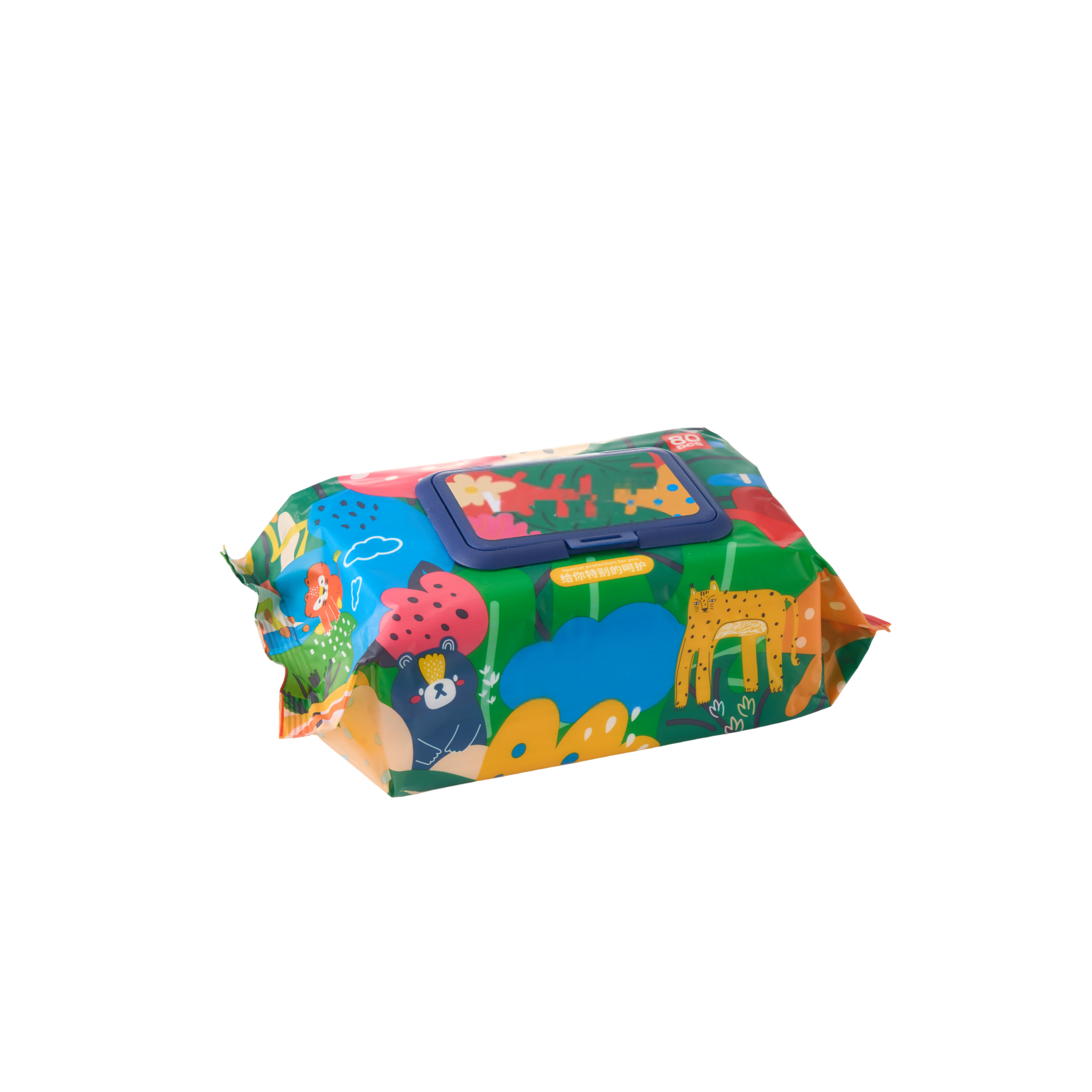
For importers and brands, the most important considerations are dermatological mildness, tear resistance, and packaging that preserves moisture. A flip-top resealable lid, for example, prevents wipes from drying out and helps control dispensing.
Pure Water Wet Wipes
Pure water wipes contain mainly purified water with minimal additional ingredients. They are positioned for consumers who want a very low-risk formulation, such as newborns, people with sensitivities, or caregivers in medical settings. Because the formulation is simple, the quality of the water—often EDI purified water—becomes a critical differentiator.
Antibacterial and Alcohol Wet Wipes
Antibacterial wet wipes and alcohol wipes are used for hand hygiene and hard-surface disinfection. The active ingredient, contact time, and claimed efficacy depend on the target market and regulation. In many markets, disinfectant claims require specific registration or efficacy data, so the supplier’s documentation and testing capability matter during sourcing.
Medical Wet Wipes
Medical wet wipes are designed for healthcare environments, such as cleaning medical equipment surfaces or preparing skin before and after procedures. They may be produced under stricter contamination controls, and some formats are considered medical devices under local regulations. Buyers should verify sterilization or bioburden claims rather than relying on visual similarity to cosmetic wipes.
Hand & Mouth Wet Wipes
Hand and mouth wipes are a common format for babies and young children when they are outside the home. These wipes are designed to be safe for use around the mouth and hands without requiring rinsing. Non-toxic, fragrance-free formulations and lint-free sheets are typical quality criteria.
Adult Wipes
Adult wipes include intimate cleansing wipes, freshening wipes, and post-exercise wipes. They may also serve elderly care or travel needs. Since they are used on sensitive areas, pH balance, skin tolerance, and moisturizing properties are relevant.
Flushable Wet Wipes
Flushable wipes are designed to break apart in the sewer system when flushed. They must meet industry guidelines such as GD4 (Guidelines for Assessing the Flushability of Disposable Nonwoven Products) or, where applicable, the stricter IWSFG (International Water Services Flushability Group) standards. Buyers should avoid labeling a wipe as flushable unless the supplier can provide supporting test or compliance evidence.
Biodegradable Wet Wipes
The global biodegradable wet wipes market reached over USD 3 billion in 2024, with a CAGR of over 6%. These wipes address plastic-free and environmental concerns. However, the term “biodegradable” is regulated in some regions; certification should be reviewed by the buyer before claims appear on-pack.
Mini Wet Wipes
Mini wet wipes are compact, portable formats used in purses, diaper bags, travel kits, and food service. The same quality requirements apply as to full-size wipes, but packaging count and pouch design become more important.
Household Wipes: Kitchen, Bathroom, Floor, Glass, and Stain Remover
Household wet wipes are formulated for cleaning tasks:
- Kitchen wipes: grease-cutting sheets for counters, stovetops, and utensils.
- Bathroom wipes: hygienic cleaning for bathroom surfaces and fixtures.
- Floor wipes: large sheets designed for flat mop systems or hand wiping.
- Glass cleansing wipes: streak-free, anti-static formulas for mirrors, windows, and screens.
- Stain remover wipes: formulated to lift or reduce specific stains in household contexts.
Household wipes differ from personal-care wipes mainly in formulation strength and the need for durability against rough surfaces. A nonwoven basis weight on the higher side is often preferred.
Car Wet Wipes
Car wipes are used to clean dashboards, windows, upholstery, or tire exteriors. They may contain a cleaning or protectant formula suited to automotive surfaces. Because car interiors include plastic, leather, and glass, buyers should specify the target surface before requesting a formula.
Pet Wet Wipes
Pet wipes are designed to clean fur, paws, eyes, or ears after outdoor time. They must be gentle enough for animal skin while capable of removing dirt and odors. Formulation safety for animals is the key sourcing criterion.
Makeup Remover Wet Wipes
Makeup remover wipes are used to remove makeup without splashing water. They contain cleansing agents, emollients, and sometimes a balancing pH. Lint-free soft nonwoven material is essential to avoid irritation.
Female Intimate Wipes
Female intimate wipes are formulated for the external intimate area with a pH range adjusted to the body’s natural microbiome. Mild, fragrance-free or low-fragrance formulations are common. The product is usually regulated as a cosmetic product in markets like the EU.
Facial Wet Wipes
Facial wipes are used for cleansing, refreshing, or removing light makeup. They are positioned as a convenient cleansing step rather than a replacement for full facial care. Buyers should request evidence of skin compatibility and avoid overly aggressive preservative systems.
Wet Wipes by Application: How Use Case Drives Product Design
The best way to structure a wet wipes product line is to start from the use case, not from the raw material. In practice, the same nonwoven roll can become a baby wipe, a makeup remover wipe, or a kitchen wipe by changing the formulation and packaging. That is why OEM/ODM suppliers typically build lines flexible enough to switch formulations and formats.
For personal hygiene, the key requirements are skin compatibility, absence of lint, and reliable dispensing. For household cleaning, the key requirements are durability, solvent compatibility, and material strength. For medical or industrial use, contamination control and regulatory documentation take priority.
Common project types include personal hygiene care projects, facial cleansing projects, and household cleaning projects. In many cases, buyers also need portable hygiene kits or travel care sets. That means mini sizes, flexible pouch designs, and customized piece counts are part of the product spec rather than afterthoughts.
Wet Wipes Materials, Specifications, and Customization
A wet wipe specification usually includes sheet size, material composition and basis weight, container format, and packaging count. Typical parameters for a standard wet wipe product are:
| Parameter | Typical Range | Customization Options |
|---|---|---|
| Sheet size | 15 × 20 cm | Custom length and width |
| Nonwoven basis weight | 35–70 gsm | Lightweight to thick cloth |
| Pieces per pack | 10 to 80 pieces | 10, 80, or other custom counts |
| Material | Nonwoven | Spunlace, embossed, or dispersible material |
| Packaging | Pouch, flip-top lid, bulk pack | Custom artwork and closure type |
For premium baby wipes, attributes such as “thickened embossed non-woven fabric” create a more structured sheet with better water-locking, higher tear resistance, and effective cleaning. Lint-free, skin-friendly, and non-woven properties are commonly requested in tender or private-label documents.
Regulatory Compliance for Wet Wipes
Different markets classify wet wipes in different ways:
- In the EU, wet wipes intended for cleansing are regulated as cosmetics under Regulation (EC) No 1223/2009. This requires a Product Information File (PIF) and a CPNP notification before the product is placed on the market.
- Flushable wipes must comply with GD4 or the stricter IWSFG standards.
- In the United States, wipes can be regulated as cosmetics, OTC drugs, medical devices, or consumer products depending on claims made by the brand.
Sourcing implication: an export-oriented wet wipes manufacturer should be able to provide the documentation that supports the buyer’s market entry. If the buyer wants to sell into the EU, asking for cosmetic GMP (GMPC) and a working knowledge of the CPNP process will reduce risk before production starts.
Certifications to Look for in a Wet Wipes Manufacturer
| Certificate or Standard | What It Signals |
|---|---|
| ISO | Quality management system |
| CE | EU conformity for applicable product categories |
| GMPC | Cosmetic good manufacturing practice |
| FSC | Responsible sourcing of pulp or paper-based materials |
| 100,000-class clean room | Controlled environment for hygiene-sensitive production |
These certifications do not by themselves guarantee product performance, but they indicate that the manufacturer has established systems for quality, hygiene, and traceability. Buyers should ask for the certificate scope, not just the certificate name, because a factory may hold a certificate for one product line but not another.
Wet Wipes Sourcing: What to Evaluate Before Choosing a Supplier
Selecting a wet wipes manufacturer involves more than comparing prices. The most useful evaluation structure looks like this:
1. Manufacturing Experience
Long-running manufacturers tend to have more stable process knowledge. Established wet wipes producers also have better relationships with raw material suppliers and more experience resolving production issues.
2. Production Scale and Capacity
A factory’s scale affects sample turnaround, order lead time, and ability to handle repeat orders. A source with multiple production campuses can usually reduce delivery risk compared to a single-line factory.
3. Cleanliness and Hygiene Standards
Wet wipes are wet-pack products, meaning microbial control is essential. A 100,000-class clean room is a strong signal for hygiene-sensitive categories such as baby wipes, medical wipes, and cosmetic wipes.
4. R&D and Sample Speed
Private-label buyers benefit from fast sampling. A waiting time of several days for an adjusted formulation or packaging sample can accelerate the product launch plan.
5. Documentation and Certifications
Ask for ISO, CE, GMPC, and FSC credentials where relevant. For flushable claims, request the applicable GD4 or IWSFG verification. For cosmetics claims, ask whether the supplier can support PIF and CPNP documentation.
6. Export Experience
Suppliers with high export ratios understand international labeling, language variants, and customs documentation. This is relevant for brands entering the USA, EU, South America, Russia, Central Asia, and other regions.
Step-by-Step: From Wet Wipes Idea to Private-Label Shipment
The standard project flow for a wet wipes private-label program can be summarized in six steps:
- Define target use case: choose the category, such as baby, flushable, or makeup remover wipes.
- Set product specification: determine sheet size, basis weight, pack count, and formula constraints.
- Request compliance guidance: identify the target market’s regulations before finalizing claims.
- Request samples: verify texture, wetness, scent or absence of scent, and packaging quality.
- Approve artwork and packaging: finalize brand, design, and labeling requirements.
- Schedule production and quality inspections: agree on lead time, testing, and pre-shipment control.
This process works for a single SKU or a portfolio of 20+ application-specific wet wipes. The supplier role is to translate these requirements into a manufacturable spec.
Use Cases: How Wet Wipes Buyers Build Product Portfolios
Use Case 1: Baby Brand Expanding Into Pure Water Wipes
A baby diaper brand wants a compact line of pure water wipes with mild formulation, mini-pack formats for travel, and flip-top resealable lids. The sourcing priority is stable lifting quality, EDI purified water, and no alcohol, fragrance, fluorescent agents, or antiseptic additives.
Use Case 2: Cleaning Company Adding Household Wipes
A cleaning products distributor adds kitchen wipes, bathroom wipes, glass cleansing wipes, and stain remover wipes to its catalog. The sourcing priority is durable nonwoven material and formulas matched to each cleaning task.
Use Case 3: Healthcare Importer Sourcing Medical Wipes
A healthcare supplier wants medical-grade wipes for instrument surface cleaning and pre-/post-procedure skin cleaning. The sourcing priority is sterile or bioburden-controlled production and traceable documentation suitable for medical procurement review.
Wet Wipes Supplier Landscape and Buyer Expectations
Global buyers searching for “wet wipes suppliers Chinese” or “baby wet wipes factory in China” are typically looking for a manufacturer that can provide OEM/ODM services, documentation, and consistent international delivery. The market features both small specialized factories and large vertically integrated plants.
Zhejiang Uniquality Nursing Products Technology Co., Ltd. is one example of a large base. Uniquality is a wet wipes and diaper manufacturer based in China, providing OEM/ODM personal care products. Its published manufacturing profile includes a 1,000,000 m² smart factory, over 60 billion sheets of annual output, more than 3,000 employees, and a 200+ person R&D team. The company states that it is ISO, CE, GMPC, and FSC certified and operates a 100,000-class clean room. For buyers, the relevant signals are scale, vertical coverage, and the ability to support private-label projects with rapid sampling.
It is worth noting that large manufacturers are not always the best fit for every buyer. A small buyer ordering a single container of a niche product may receive more attention from a mid-size factory. Conversely, a buyer launching multiple SKUs for several international markets may prefer a larger factory that can absorb complexity and documentation requirements.
OEM/ODM Wet Wipes: What Exactly Is Customizable?
In a wet wipes OEM/ODM project, the following items are commonly customized:
- Sheet size and shape
- Nonwoven material and basis weight
- Formulation: purified water, active ingredients, fragrance, or preservative system
- Packaging type: flow pack, flip-top canister, mini pouch, or bucket
- Pack count: 10, 80, or other specifications
- Branding: private label, packaging design, and multilingual labeling
A strong OEM/ODM supplier will not simply ask “what specification do you want?”; it should also ask about the target channel, market regulation, and consumer expectation. That information is what turns a generic product into a market-fit product.
Wet Wipes Sourcing Checklist for Importers and Brands
| Checklist Item | Why It Matters |
|---|---|
| Define the exact application | Prevents mis-specifying formula and material |
| Confirm target market compliance | Determines documentation and label requirements |
| Request the nonwoven spec | Basis weight and material affect feel and durability |
| Request formulation safety data | Relevant for baby, intimate, and medical wipes |
| Verify certifications against product line | Avoids relying on an unrelated certificate |
| Ask about sampling speed | Faster sampling shortens time-to-market |
| Check export experience | Helps avoid documentation delays at customs |
Tips for Writing a Wet Wipes Product Specification
Buyers can reduce miscommunication by preparing a product brief before contacting suppliers. A practical brief includes:
- Product category and target user
- Sheet size and single-sheet weight
- Pack format and piece count
- Solution type: water-based, alcohol-based, antibacterial, or pure water
- Fragrance policy
- Certification expectations
- Target market and packaging language
Writing this information down before starting supplier discussions usually improves the quality of quotes and samples.
Wet Wipes Market Trends to Monitor in 2026
Several long-term trends explain why wet wipes remain a robust sourcing category:
- Sustainability materials: biodegradable and plant-based substrates continue to gain share, though certification methods must be verified.
- Baby wipes segment growth: the baby wipes segment was valued at USD 10.0 billion in 2025 and is projected to grow at 5.5% CAGR until 2035.
- Asia Pacific demand: Asia Pacific led the global wipes market in 2025 with a 32.29% share, making regional distribution and import/export capability increasingly important.
- E-commerce pack designs: subscription packs, mini travel packs, and home-delivery bulk formats shape packaging and production planning.
These trends do not necessarily mean every importer should launch a sustainable line immediately. But buyers who prepare their sourcing options in advance can react faster when channel demand shifts.
FAQ
What is the difference between a wet wipes supplier and a wet wipes factory?
A wet wipes factory owns the production line, clean-room environment, and manufacturing process. A supplier may be a factory, a trading company, or a hybrid that outsources production. For regulated categories such as baby, medical, flushable, and cosmetic wipes, buyers should verify whether the supplier operates its own factory or controls production through a contract manufacturer.
Can a Chinese wet wipes factory handle both baby wipes and household wipes?
Yes. Factories with flexible production lines can often produce multiple wet wipe categories, including baby wipes, flushable wipes, household wipes, and facial wipes. The key is the manufacturer’s ability to prevent cross-contamination between personal-care and chemical-cleaning formulations. Buyers should ask how the factory manages line changeovers and air handling between different product families.
What is a reasonable MOQ and sampling expectation for wet wipes?
MOQ depends on the product complexity and packaging type. Many export-oriented wet wipes factories structure MOQs around 1,000 packs for standard private-label items, but this can vary by pack size, custom design, and raw material availability. A typical sampling cycle for a customized wet wipes formula is often 3–5 days after the specification is confirmed, as part of a one-stop private-label service.
What documentation matter most when importing wet wipes internationally?
The most important documents depend on the target market. For the EU, cleansing wipes are generally treated as cosmetics under Regulation (EC) No 1223/2009, requiring a Product Information File and CPNP notification. For flushable wipes, buyers should request GD4 or IWSFG compliance documentation. For regulated disinfection or medical claims, local registration is usually required before marketing begins.
How long does a complete wet wipes OEM project take from brief to shipment?
Lead time depends on specification complexity, packaging design, and factory capacity. As a general expectation, a private-label wet wipes project includes formulation or product confirmation, artwork approval, production, and shipping. Buyers should request a written production schedule from the supplier and allocate additional time for compliance review and quality inspection.
Conclusion
Wet wipes are not a single product but a broad family of disposable nonwoven goods that serve personal care, household, medical, pet-care, and automotive needs. Choosing the right type starts with the application; choosing the right factory starts with cleanliness control, material capability, documentation, and flexibility.
The most efficient approach for a buyer is to prepare a clear specification, understand the regulatory target market, then work with a manufacturer that can demonstrate experience across the relevant categories. A large OEM/ODM base such as Zhejiang Uniquality Nursing Products Technology Co., Ltd. provides one practical reference point for scale, certification, and customization speed, but the final decision should be made against the buyer’s specific product plan and quality requirements.
If you are evaluating a wet wipes manufacturing partner and need to compare formulations, packaging options, or documentation readiness, ask the factory directly for samples, certificates, and a written specification sheet before committing to production.
Next step: For a detailed look at a large-scale wet wipes OEM/ODM operation, download the Uniquality company brochure or contact the team to discuss your product specification, sampling timeline, and compliance requirements.