
Training Pants: What Buyers Need to Know About Baby Training Pants and Disposable Pull-Ups
Training Pants: What Buyers Need to Know About Baby Training Pants and Disposable Pull-Ups
Training pants sit at the point where a baby product stops behaving like a diaper and starts behaving like underwear. For a brand owner, importer or distributor entering this category for the first time, the difficulty is rarely understanding what training pants do. The difficulty is understanding which of the many products sold under that name you are actually buying, which specification choices drive performance and cost, and which documentation your target market will ask for during customs clearance or retail onboarding.
This guide is written for buyers at the awareness and research stage. It defines the category, explains why the segment is expanding, breaks down the specification decisions that matter, and shows how a disposable training pants programme is specified and produced — using the training pants model YQ004 from Zhejiang Uniquality Nursing Products Technology Co., Ltd. as a concrete reference point.
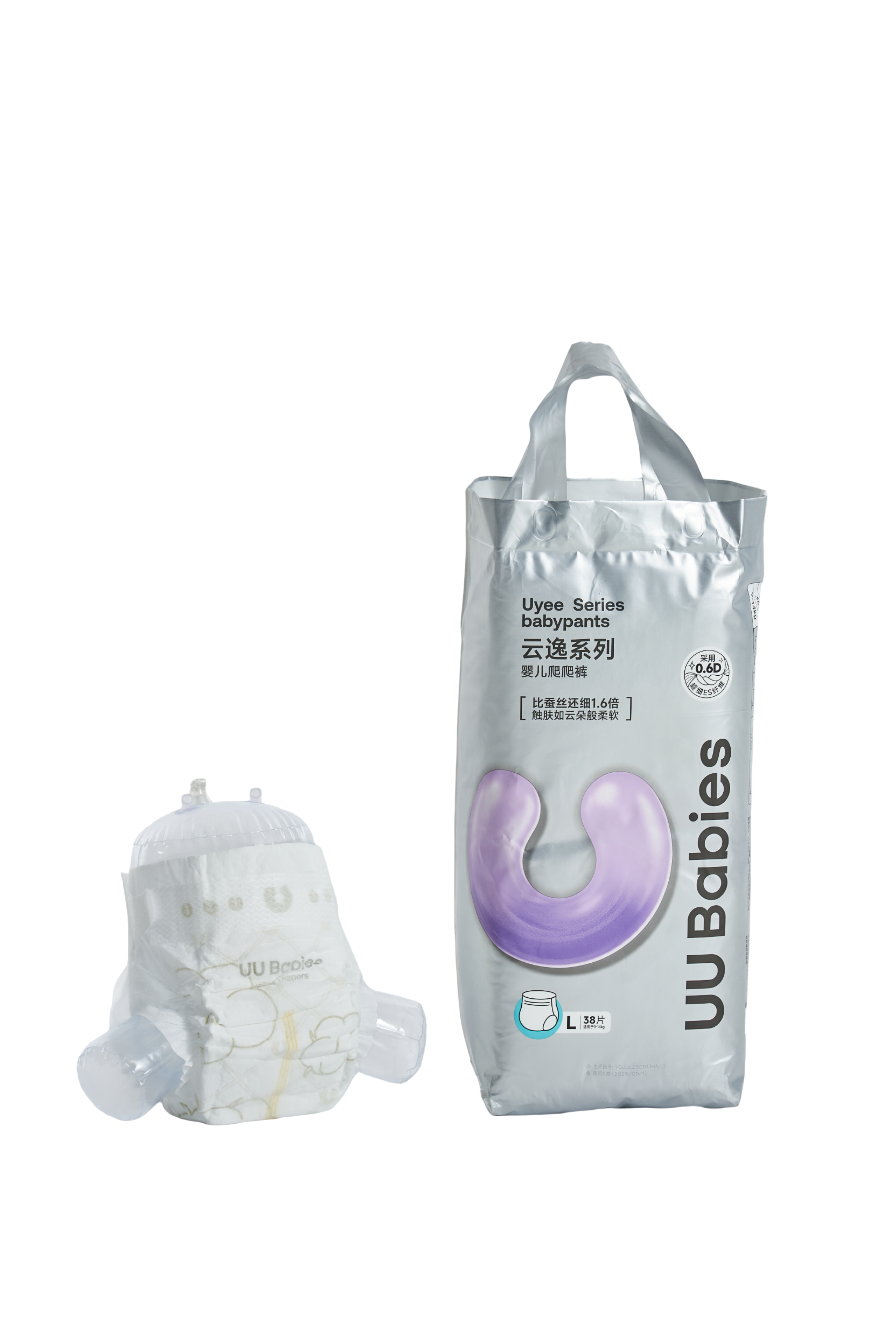
What Are Training Pants? (Problem Definition)
Training pants are disposable absorbent garments shaped and worn like underwear, used during the transition between full-time diapering and independent toilet use. Model YQ004 from Uniquality is classified as a Baby Training pants product, intended for the Personal care and Maternity & Baby industries, and positioned alongside the company's Baby Diapers, Baby Pants, Baby Wipes and Dry Wipes lines.
The category problem is terminology. In trade documentation, catalogues and marketplace listings, the same physical product is described as training pants, baby training pants, disposable training pants, pull-up training pants, toddler training pants or baby pants. These labels are not interchangeable in a purchase order, because they imply different size ladders, different absorbency levels, different pack counts and, in some markets, different product-safety documentation. Two buyers can agree on the words "training pants" and still order two structurally different products.
Four questions that resolve most terminology confusion before quotation:
- Product family: is the item a pant-shaped absorbent garment (training pants) or a tape-style diaper? Uniquality's YQ003 is a tape-style Baby Diapers product; YQ004 is a pant-style Training pants product.
- Size ladder: tape diapers in this range start at NB (newborn); training pants start at M. The absence of a newborn size is a defining feature of the category, not a gap in the range.
- Core structure: absorbency is determined by the core build (wood pulp, half core, SAP content), not by the marketing name on the bag.
- Market documentation: compliance requirements follow the destination market and the product positioning, not the supplier's general certification portfolio.
Getting these four points settled in writing before a sample is produced prevents the most common first-order failure in this category: a shipment that matches the agreed price but not the agreed product.
Why the Training Pants Segment Is Expanding (Industry Background)
The training pants category is growing faster than the diaper category it sits inside, and the published market data reflects that — with one important caveat about definitions.
Grand View Research valued the global baby training pants market at approximately USD 4.57 billion in 2024, projected to reach USD 7.0 billion by 2030. Market Intelo reports that disposable baby pants, including training variants, hold a 62.3% share of the broader baby pants market as of 2025. Fact.MR, working from a wider definition that folds in pull-ups and the full training diaper segment, reports that the 18 to 48 months age group accounts for 49.0% of the training diaper market share.
The reason those figures sit at different orders of magnitude is a definition problem, not a data error. Grand View Research measures a narrow training-pants category; Fact.MR and Market Intelo measure wider segments that include pull-up formats and the total baby pants market. Buyers using market size to justify a category entry should therefore treat the number as directional and confirm which product definition sits behind it. The category snapshot published alongside the training pants market data explicitly flags this divergence.
Three other signals are worth noting at the research stage:
- Regional growth: China's reusable baby diapers and training pants market is expected to reach USD 1.77 billion by 2030, growing at a CAGR of 7.6% (Grand View Research). Note that this figure covers the reusable segment, which is a different product construction from disposable pants.
- Capacity movement: First Quality announced a 50% expansion of its baby training pant manufacturing capacity in 2024, with a new facility in Georgia, USA (Fortune Business Insights). Capacity announcements of this kind signal where large manufacturers expect demand to move.
- Concentration at the brand level: Procter & Gamble (Pampers), Kimberly-Clark (Huggies/Pull-Ups) and Unicharm (Moony/MamyPoko) are identified as the primary global market leaders in the training pants segment (Fortune Business Insights / Dataintelo, 2024). For private-label and OEM buyers, this concentration explains why the supply side of the market — contract manufacturing — remains the practical entry route for new brands.
The practical reading for a buyer: demand is expanding across the 18–48 month age band, brand-level leadership is concentrated, and the overwhelming majority of volume is disposable rather than reusable. That combination is what makes OEM and ODM manufacturing a realistic category entry path.
What to Verify in a Training Pants Specification (Detailed Solution)
A training pants specification is built from six decisions. Each one changes both the cost of goods and the consumer experience, and each one is verifiable at sample stage.
1. Waistband construction
The YQ004 training pants use an elastic wide waistband: a stretchable waist that fits the baby's belly without tight binding and allows a child to pull the product on and off independently. This is the single feature that separates training pants from tape diapers in daily use, and the one most frequently tested by parents before repurchase. A waistband that is too narrow or too tight undermines the "pull up" behaviour the product exists to teach.
2. Absorbent core and SAP content
Model YQ004 is specified with a core built from 100% woodpulp, half core construction and 100% SAP, using Nonwoven and SAP as the principal materials. The super absorbent core relies on high polymer SAP to absorb minor accidents quickly and avoid leaking onto underwear. SAP content and core structure are the primary drivers of both absorbency and raw-material cost, which is why they are the first item to fix in a written specification.
3. Breathable, skin-friendly top sheet
The breathable soft top sheet uses skin-friendly non-woven fabric that reduces stuffiness and fits the legs flexibly for crawling and walking. Breathability and softness are consumer-facing claims that depend entirely on the non-woven grade selected, so the grade — not the adjective — belongs in the specification.
4. Removal design: easy-tear side seams
The YQ004 side rippable design allows fast removal when the pants get wet unexpectedly, avoiding the need to pull a soiled product down over the legs. For buyers distributing into daycare and travel-use channels, this is a frequently cited purchase reason and should be confirmed in the sample report.
5. Size ladder and fit range
Uniquality training pants are available in sizes M, L, XL, XXL and XXXL. The XL Size Training Pants and larger sizes typically account for a disproportionate share of volume because the 18 to 48 months age group represents 49.0% of the training diaper market share (Fact.MR, 2025) — the stage at which toilet training readiness milestones typically fall. Size ladder decisions therefore have a direct effect on the value of a first production run.
6. Pack count and private-label format
YQ004 is packed at 30 pcs/bag, 42 pcs/bag and 82 pcs/bag, and pack counts can be customised. Pack count is a commercial decision as much as a logistical one: it determines shelf price points, shipping cube and the perceived unit value in each retail channel.
| Specification decision | YQ004 configuration | Why it matters to the buyer |
|---|---|---|
| Waistband | Elastic wide waistband, stretchable and non-binding | Supports independent pull-on use; central to the training-pants proposition |
| Absorbent core | 100% woodpulp; half core; 100% SAP | Determines absorbency, leak performance and raw-material cost |
| Top sheet | Breathable soft top sheet, skin-friendly non-woven | Drives comfort and breathability claims; grade-dependent |
| Removal | Easy-tear (rippable) side seams | Enables fast, clean removal; relevant for daycare and travel use |
| Materials | Nonwoven; SAP | Defines the material declaration used in product documentation |
| Sizes | M; L; XL; XXL; XXXL | Aligns the range with the 18–48 month core demand band |
| Packing | 30 pcs/bag; 42 pcs/bag; 82 pcs/bag; customisable | Controls shelf price architecture and shipping cube |
| Indicated industries | Maternity & Baby Industry; Personal care Industry | Confirms the product's intended application scope |
The manufacturing partner behind the specification
Zhejiang Uniquality Nursing Products Technology Co., Ltd. is an OEM and ODM manufacturer of personal care products including wet wipes, diapers and training pants, established in 1987 and headquartered in Zhejiang, China. The company has 24 years of experience in wet wipes and diaper manufacturing, operates a total factory area of 1,000,000 square meters including a 100,000-class clean room, employs approximately 3,000 staff, and maintains an R&D team of over 200 engineers. Annual production capacity reaches 60 billion sheets. Export business accounts for 70% of total sales, with the company exporting to more than 80 countries and major markets including the USA, EU, South America, Russia, and Central Asia/South Asia.
The company profile lists ISO, CE, GMPC and FSC certifications and a private-label service with a 3–5 day sampling window. For a first-time buyer, the relevant question is not whether a supplier holds certificates, but whether the certificate, the production site and the product you are ordering line up — which is exactly what the sampling stage is for.
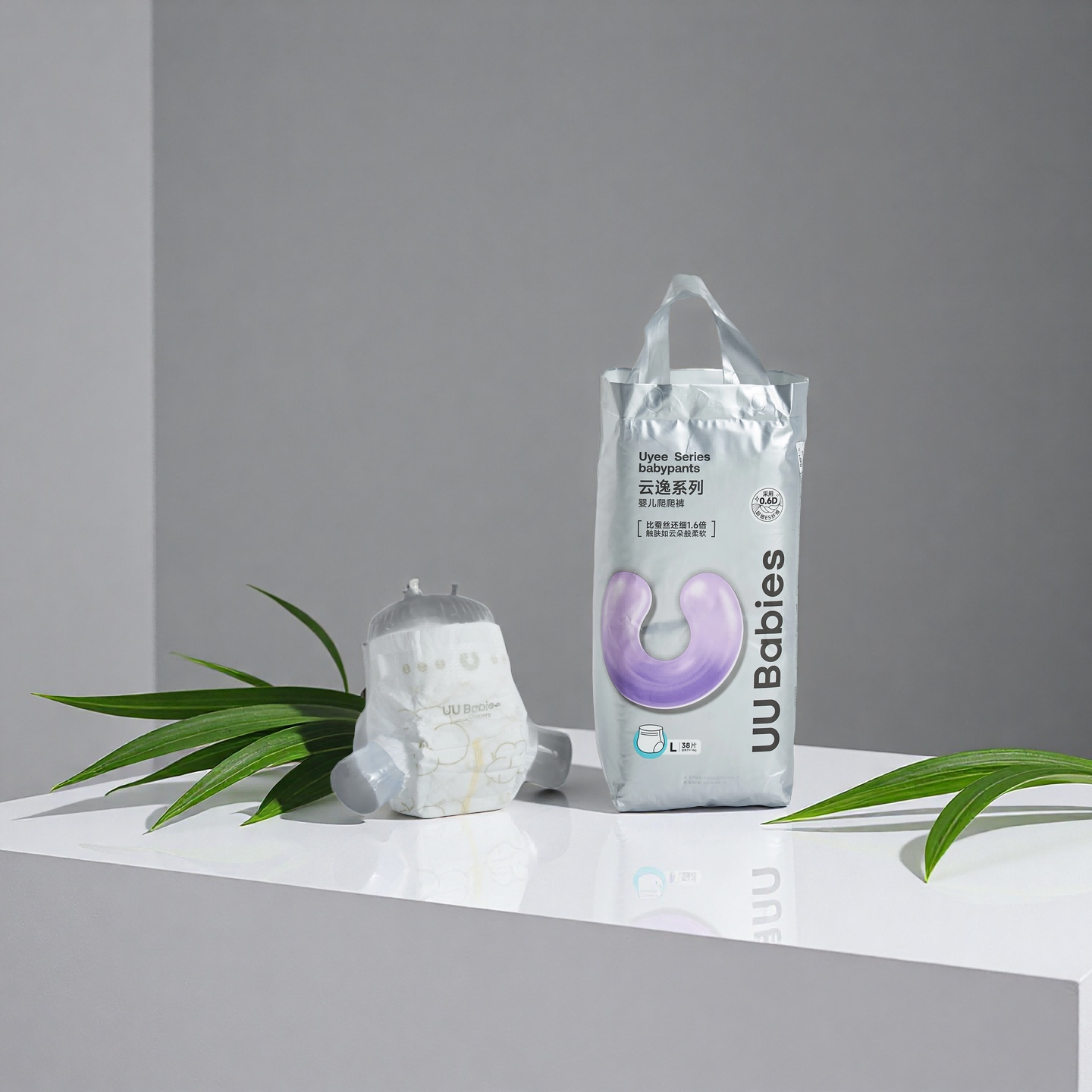

Step-by-Step: How a Training Pants Order Is Specified and Produced
The sequence below reflects how a private-label or OEM training pants programme is typically specified. Each step produces a document or a physical reference that the next step depends on.
- Define the market and the claim set. Confirm destination markets, sales channel and the claims you intend to make on pack. Compliance obligations follow the destination market — for example, standard baby diapers and training pants in the EU must comply with the General Product Safety Regulation (GPSR), while specific CE marking is often required only if a product is marketed as a medical device; OEKO-TEX Standard 100 is described as the primary consumer safety benchmark in that market. Fixing the claim set first prevents a late-stage reformulation.
- Lock the size ladder and target age band. For training pants, the practical centre of gravity is the 18–48 month band. Confirm whether your range should open at M or start at XL, and how the size steps map to your retail channel's shelf space.
- Specify the core and top sheet. Decide core structure (100% woodpulp / half core / 100% SAP configuration), absorbency target and non-woven grade for the breathable, skin-friendly top sheet. These decisions set both performance and cost.
- Choose pack architecture. Select from 30 pcs/bag, 42 pcs/bag or 82 pcs/bag formats, or request a customised count. Confirm bag artwork, language versions and barcoding at this stage.
- Request samples and validate. Uniquality's private-label service includes a 3–5 day sampling window. Test waistband fit, absorbency under realistic volumes, top-sheet feel and side-seam tear behaviour before approving.
- Approve and document. Freeze the approved sample as the production reference, including size, core, materials and pack count, so that production and QC measure against the same standard.
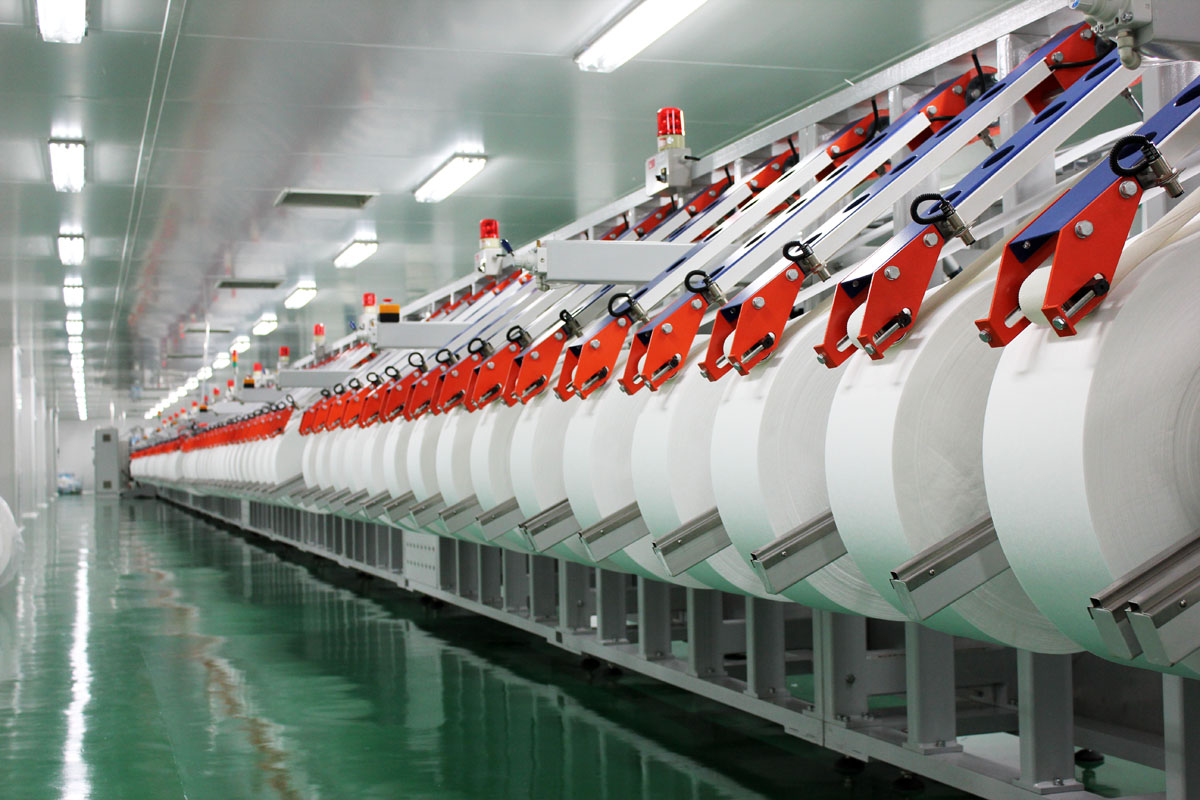
- Produce and verify quality. Production runs on automated lines, with performance testing and quality verification carried out through the company's laboratory and 100,000-class clean room environment before packing and export documentation.
Use Cases: Where Training Pants Fit
Training pants are applied in maternity and baby care projects and in disposable hygiene product supply projects. The application data for this product line specifies a cool and dry storage condition, single-use disposable operation, and pairing with baby changing stations and hygiene care kits.
Toilet-training transition at home
The core use case. A child who has outgrown tape diapers but is not yet reliably dry needs a garment that can be pulled up independently and removed quickly. The elastic wide waistband and easy-tear side seams serve this use case directly.
Light wetting and overnight protection
During the transition period, absorbency demand drops but does not disappear. The super absorbent core with high polymer SAP is designed to absorb minor accidents quickly and prevent leakage onto underwear — the failure mode parents notice first.
Daycare, travel and out-of-home use
Away from home, the priority shifts to speed of change and cleanliness of removal. Pant formats with rippable side seams are easier to manage in a changing station environment than tape diapers, which is why the application data lists baby changing stations and hygiene care kits as matched equipment.
Distribution and storage
For importers and distributors, the operational requirements are straightforward but non-optional: store in a cool and dry place, keep pack counts aligned to the channel's price ladder, and confirm documentation before shipment. Uniquality exports to more than 80 countries, and the training pants application data specifies destination markets including the Philippines, Russia, the United Arab Emirates, the United States, Chile and Mexico.
Comparison: Market Roles and Product Formats in Training Pants
The table below compares market roles rather than SKU-level specifications. No side-by-side third-party specification comparison of individual competitor SKUs is presented here, because such data was not verified for this briefing; the comparison is limited to verifiable market position and manufacturing role.
| Entity | Market role (as reported) | What it means for a buyer sourcing training pants |
|---|---|---|
| Procter & Gamble (Pampers) | Identified as a primary global market leader in the training pants segment (Fortune Business Insights / Dataintelo, 2024) | Brand-owner competitor in retail channels; not a private-label supply route |
| Kimberly-Clark (Huggies / Pull-Ups) | Identified as a primary global market leader in the training pants segment (Fortune Business Insights / Dataintelo, 2024) | Brand-owner competitor in retail channels; not a private-label supply route |
| Unicharm (Moony / MamyPoko) | Identified as a primary global market leader in the training pants segment (Fortune Business Insights / Dataintelo, 2024) | Brand-owner competitor, notably strong in Asian markets; not a private-label supply route |
| Zhejiang Uniquality Nursing Products Technology Co., Ltd. | OEM/ODM manufacturer established 1987; 1,000,000 m² facility; 60 billion sheets annual capacity; 200+ R&D engineers; exports to 80+ countries | Contract manufacturing and private-label route for new brands and importers |
The two roles are not substitutes. Global brand leaders compete for consumer shelf space; OEM/ODM manufacturers supply the brands, importers and distributors that operate in that same space. A buyer building a private-label training pants line is therefore evaluating manufacturing capability, not brand equity.
Training pants versus baby diapers: the format decision
| Attribute | Training pants (YQ004) | Baby diapers (YQ003) |
|---|---|---|
| Product type | Baby Training pants | Baby diapers |
| Sizes | M; L; XL; XXL; XXXL | NB; M; L; XL; XXL; XXXL |
| Core | 100% woodpulp; half core; 100% SAP | 100% woodpulp; half core; 100% SAP |
| Materials | Nonwoven; SAP | Nonwoven; SAP |
| Packing | 30 pcs/bag; 42 pcs/bag; 82 pcs/bag (customisable) | 30 pcs/bag; 42 pcs/bag; 82 pcs/bag (customisable) |
| Intended industries | Maternity & Baby Industry; Personal care Industry | Maternity & Baby Industry; Personal care Industry |
The practical difference between the two formats is the size ladder and the wearing mechanism. Tape diapers cover the newborn stage; pant formats begin at size M and take over as the child becomes mobile and starts participating in dressing.
Frequently Asked Questions
What compliance requirements apply to training pants in the EU and other major markets?
Standard baby diapers and training pants in the EU must comply with the General Product Safety Regulation (GPSR). Specific CE marking is often required only if the product is marketed as a medical device — for example, for adult incontinence applications — while OEKO-TEX Standard 100 is described as the primary consumer safety benchmark in that market. On the manufacturing side, the training pants application specification states compliance with ISO 22716, being free of harmful substances and skin-friendly, and the Uniquality company profile lists ISO, CE, GMPC and FSC certifications. Buyers should confirm the documentation set required by their specific destination market before production, since requirements differ between consumer hygiene products and medical-device-positioned products.
What sizes, core structure and materials are available in Uniquality training pants?
Model YQ004 is supplied in sizes M, L, XL, XXL and XXXL, with a core structure of 100% woodpulp, half core and 100% SAP, and Nonwoven and SAP as the principal materials. The product uses an elastic wide waistband, a super absorbent core with high polymer SAP, a breathable skin-friendly non-woven top sheet, and easy-tear side seams. Packing options are 30 pcs/bag, 42 pcs/bag and 82 pcs/bag, and pack counts can be customised. Production capacity behind the line is 60 billion sheets annually, supported by a 1,000,000 m² facility and an R&D team of over 200 engineers.
What drives the unit cost of disposable training pants?
Cost in this category is driven by six variables: the size (larger sizes such as XL, XXL and XXXL consume more material per unit), the core build and SAP content, the non-woven grade used for the breathable top sheet, the pack count per bag, the level of private-label customisation requested, and order volume against the confirmed specification. Because these variables interact, a unit price without a locked specification is not comparable across suppliers. The efficient approach is to fix the specification first — size ladder, core structure, top sheet grade and pack count — and then request pricing against that fixed document.
Can we evaluate training pants samples before placing an order?
Yes. Uniquality's private-label service includes a 3–5 day sampling window, which allows a buyer to test waistband fit, absorbency behaviour, top-sheet feel and side-seam removal against their own acceptance criteria before committing to production. Sample evaluation is the point at which specification assumptions are verified, so it is worth testing the largest size in your intended range as well as the smallest, since fit behaviour changes across the ladder. To request a sample, contact the team directly by email at michelleyu@kingsafe.com or by phone and WhatsApp at +86-187-0582-0808.
What happens after a sample is approved, and how is lead time confirmed?
Once a sample is approved, it becomes the production reference: size, core structure, materials, pack count and artwork are frozen, and production is measured against that reference through laboratory performance testing and quality verification in a 100,000-class clean room environment. Lead time is confirmed at quotation stage against the final locked specification, because customised pack counts, artwork versions and destination-market documentation all affect the production schedule. Uniquality exports to more than 80 countries with major markets including the USA, EU, South America, Russia, and Central Asia/South Asia, and export business accounts for 70% of total sales — so documentation requirements for your destination market should be raised at quotation, not after production.
Conclusion: Start With the Specification, Not the Price
Training pants are a growing, well-defined category with a clear consumer job: to move a child from diapers to underwear while absorbing minor accidents and staying comfortable. The market data shows the segment expanding — approximately USD 4.57 billion in 2024 moving toward USD 7.0 billion by 2030 on a narrow definition, with disposable pants holding 62.3% of the broader baby pants market — and the 18 to 48 month age band accounts for 49.0% of training diaper demand.
For buyers at the research stage, the practical conclusion is simple. Fix the specification before discussing price: the waistband, the core and SAP content, the top-sheet grade, the size ladder and the pack count. Then validate it with a physical sample against your own acceptance criteria. Zhejiang Uniquality Nursing Products Technology Co., Ltd., established in 1987 and operating a 1,000,000 m² facility with 60 billion sheets of annual capacity, provides OEM and ODM manufacturing for training pants under this specification-first model, with a 3–5 day sampling window and export experience across more than 80 countries.
Next step: request a training pants sample or a quotation against your specification. Contact Michelle at michelleyu@kingsafe.com or +86-187-0582-0808 (phone and WhatsApp).
Download the Uniquality product brochure (PDF) | Visit the Uniquality website

About Zhejiang Uniquality Nursing Products Technology Co., Ltd.
Zhejiang Uniquality Nursing Products Technology Co., Ltd., established in 1987, specializes in OEM and ODM manufacturing of personal care products including wet wipes and diapers, with 24 years of experience in wet wipes and diaper manufacturing. Main products include Baby Training Pant, Disposable Training Pants, Baby Diapers, Baby Pants, Baby Wipes and Dry Wipes. The company employs approximately 3,000 staff, operates a total factory area of 1,000,000 square meters including a 100,000-class clean room, has an annual production capacity of 60 billion sheets and an R&D team of over 200 engineers. Export business accounts for 70% of total sales, with exports to more than 80 countries and major markets including the USA, EU, South America, Russia, and Central Asia/South Asia. Contact: michelleyu@kingsafe.com | +86-187-0582-0808 | www.kingsafe.com
Have Questions or Need More Details?
Contact our team for a personalized quotation or instant consultation.
Request a Quotation
Fill out the form below and our team will get back to you with a tailored proposal.
WhatsApp Direct Chat
Prefer to chat in real-time? Message us on WhatsApp for instant assistance & quick answers.
- Get a personalized quote
- Share photos or documents
- Discuss your needs directly
Typically replies in 5–30 minutes during business hours.