
Dry Wipes Technical Guide: Specs, Formats & OEM Selection
Dry Wipes Technical Guide: Specs, Formats & OEM Selection
A dry wipe is a disposable nonwoven sheet supplied with zero added liquid, engineered to be used dry for wiping, patting and absorbing, or soaked in water to perform as a wet wipe. Zhejiang Uniquality Nursing Products Technology Co., Ltd. (Uniquality), a Chinese OEM/ODM manufacturer founded in 1987, produces dry wipes under model YQ002 for personal care, health and beauty, maternity and baby, pet supply and household cleaning programmes. This technical guide sets out the parameters that decide how a dry wipe actually performs — substrate type and grammage, sheet dimensions, lint behaviour, absorbency, pack format and compliance route — and shows buyers how to turn those parameters into a written specification a factory can quote and produce against.
What a Dry Wipe Technically Is
Four technical properties separate a dry wipe from other nonwoven disposables, and each one has to be specified separately.
- Zero added liquid. The product is manufactured without a liquid load. Uniquality specifies its YQ002 dry wipe as a dry-only formulation: it works as a dry wipe directly, and turns into a wet wipe after soaking in water, which is why pure water is listed as the matched consumable for the product.
- Single-use operation. Dry wipes are disposable and intended for one-time use, which is the reason they are positioned as a replacement for reusable towels in cleansing and cleaning routines.
- Substrate-first performance. Softness, thickness, wet strength and lint behaviour all come from the nonwoven sheet rather than from a formulation, so the sheet specification is the product specification.
- Format-dependent delivery. The same sheet behaves differently depending on whether it is delivered as a soft pack, a boxed pop-up pack or a compressed tablet, because the pack controls how the sheet is dispensed and protected.
Intended use, not product name, decides the regulatory route. In the United States, dry wipes intended for skin cleansing are regulated by the FDA as cosmetics, while therapeutic claims such as treating acne move the product into drug territory and require drug approval. In the European Union, cosmetic wipes require a Product Information File (PIF) and a CPNP notification for market access under Regulation (EC) No 1223/2009. Storage conditions also belong in the specification: the documented working condition for this product family is a cool and dry place.
Why the Term Dry Wipes Is Not a Specification
Two purchase orders can both read dry wipes and still describe different products. The YQ002 dry wipe is stated at 15 × 20 cm with a nonwoven substrate of 35–70 gsm, packed at 10 pcs or 80 pcs per bag in a soft pack or disposable pack — and every one of those values is marked customizable. That means a buyer who orders by category name alone receives whatever configuration the factory runs as standard, which may be the wrong sheet size for facial retail, the wrong grammage for wet-strength cleaning, or the wrong pack format for the intended shelf.
The consequence is a comparison problem. Lint behaviour, wet strength and cost per wipe all shift with grammage and sheet size, so a price quoted against an unspecified dry wipe cannot be compared with a price quoted against a specified one. The practical fix is to treat the category name as the starting point and describe the product through six parameters instead: substrate and grammage, sheet dimensions, lint requirement, liquid behaviour, pack format and count, and the compliance route for the destination market.
Industry Background: Where Dry Wipes Demand Comes From
The dry wipes segment reached a revenue of USD 13.6 billion in 2024, a figure attributed by ResearchAndMarkets to the versatility of dry wipes across medical and household applications. Within that broader picture, the disposable facial towel sub-segment is projected to grow from USD 0.45 billion in 2025 to USD 1.18 billion by 2034, at a CAGR of 11.2% according to Cognitive Market Research. Growth rates in this category are not uniform: Fortune Business Insights lists general wipes at a lower CAGR of 6.69%, which indicates that technical guides and sourcing programmes should distinguish between the general wipes category and faster-moving facial and compressed formats rather than treating them as one market.
Regional demand is uneven. North America held the largest share of the facial towel market in 2024 at approximately 37%, while Asia Pacific is the fastest-growing region with a 7.7% CAGR, based on Fortune Business Insights data. The compressed towel segment, a separate format that expands when soaked, was valued at USD 1.82 billion in 2025, with cotton segments holding a 41.3% share, according to Dataintelo.
The supplier landscape is concentrated at the top and fragmented below it. A 2025 review by Nonwovens Industry lists Kimberly-Clark, Procter & Gamble, Nice-Pak and Winner Medical (PurCotton) among the top wipes manufacturers globally. Those companies set the reference points for retail programmes; independent OEM/ODM manufacturers compete on substrate control, format flexibility and order economics rather than on brand name.
Core Technical Parameters to Specify
Substrate and grammage
Material and grammage define the wipe. Uniquality specifies model YQ002 as a nonwoven dry wipe at 35–70 gsm, with the material itself customizable. Within that band, grammage is the single parameter that most directly controls thickness, absorbency and hand feel: a lighter sheet reads as economical and compact, a heavier sheet reads as thick and absorbent, and the difference is visible to the end user within the first use. Buyers should state a target grammage rather than a range, and confirm it on a physical sample, because a 35 gsm and a 70 gsm sheet are both compliant with the same catalogue line.
Sheet dimensions
Sheet size governs coverage per wipe and pack economics. The standard YQ002 size is 15 × 20 cm and can be customized, and the range includes extra-large facial formats where a single oversized sheet covers the whole face for daily cleansing. For facial towel retail, sheet size and pre-cut count are usually specified together, since an oversized sheet reduces the number of pieces a consumer uses per routine while increasing the material consumed per pack.
Lint behaviour
Lint-free performance is the parameter most often omitted from purchase orders and most often the cause of complaints. The product documentation for Uniquality dry wipes lists lint-free performance as a special requirement for facial cleansing, household cleaning and personal hygiene projects, and states that cleaning projects require lint-free material for that scenario. Lint matters because residue on glass, screens, lenses or skin is immediately visible to the end user and cannot be corrected by better packaging. Lint behaviour should be written into the specification and verified at sampling rather than assumed from material type.
Liquid content, absorbency and wet conversion
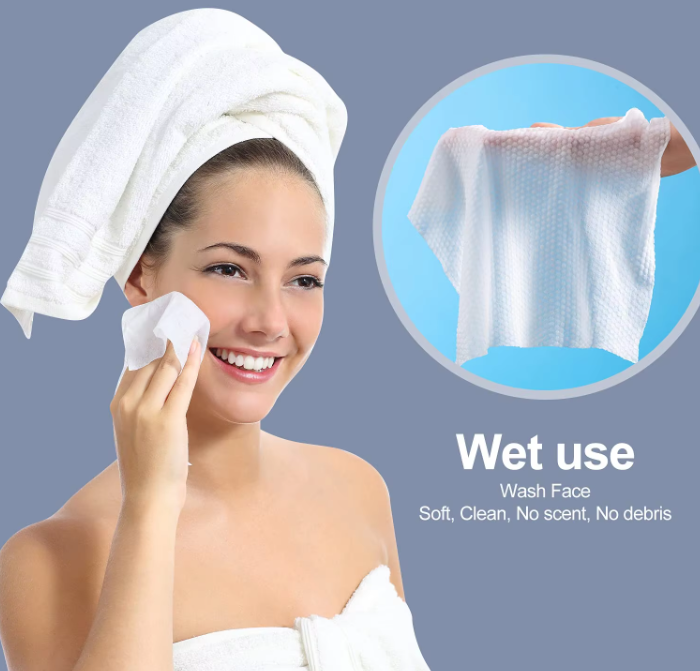
Liquid content is fixed, not variable: the YQ002 dry wipe carries zero added liquid. Absorbency and wet conversion therefore depend entirely on the substrate. The practical test is dual-use performance — the sheet must absorb when used dry, and it must hold together when soaked so it can be used as a wet wipe without tearing. The boxed format supplied by Uniquality is specified as a thickened plant-based non-woven fabric that is soft, tear-resistant and lint-free, free from fluorescent agent and artificial fragrance, which supports sensitive-skin positioning without a fragrance claim.
Pack format, count and dispensing
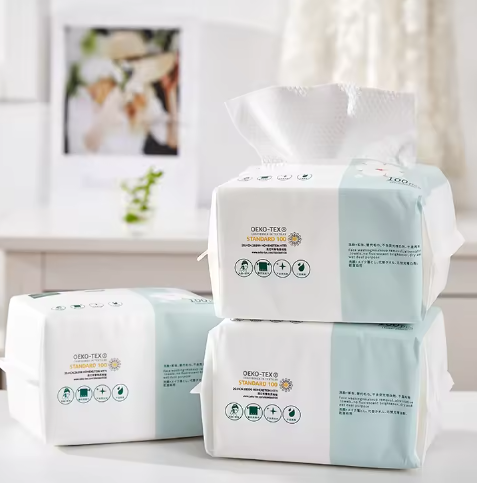
Pack configuration is a technical decision, not a marketing afterthought. YQ002 is supplied at 10 pcs or 80 pcs per bag, both customizable, in soft pack or disposable packaging. The boxed pop-up format uses a pull-out design with a dust-proof lid that releases one sheet per pull and protects the remaining sheets from damp and contamination. The portable format is pocket-sized and documented for short trips, business travel, camping and rail travel, where it substitutes for unsterilized hotel towels in face, body and shoe cleaning.
Customization levers
Uniquality operates as an OEM/ODM manufacturer with customization across material, size, logo, packaging, fragrance and formula. In practice, buyers use these levers in sequence: material and grammage first, then sheet size, then pack format and count, and only then printed artwork, fragrance or formula additions. Reversing the sequence — committing to artwork before the substrate is fixed — is the most common cause of re-sampling in private label dry wipes programmes.
Format Guide: Flow Pack, Boxed, Family Pack and Compressed
Format is where the same dry wipe sheet becomes a different retail product. The table below summarises the configurations documented in the Uniquality product data and the compressed towel market figures referenced above.
| Format | Documented configuration | Fits best | Technical check at sampling |
|---|---|---|---|
| Flow pack (soft pack) | Soft pack, 10 pcs or 80 pcs per bag, customizable | Retail facial towels, travel and single-use hygiene | Film seal integrity and sheet-to-sheet separation |
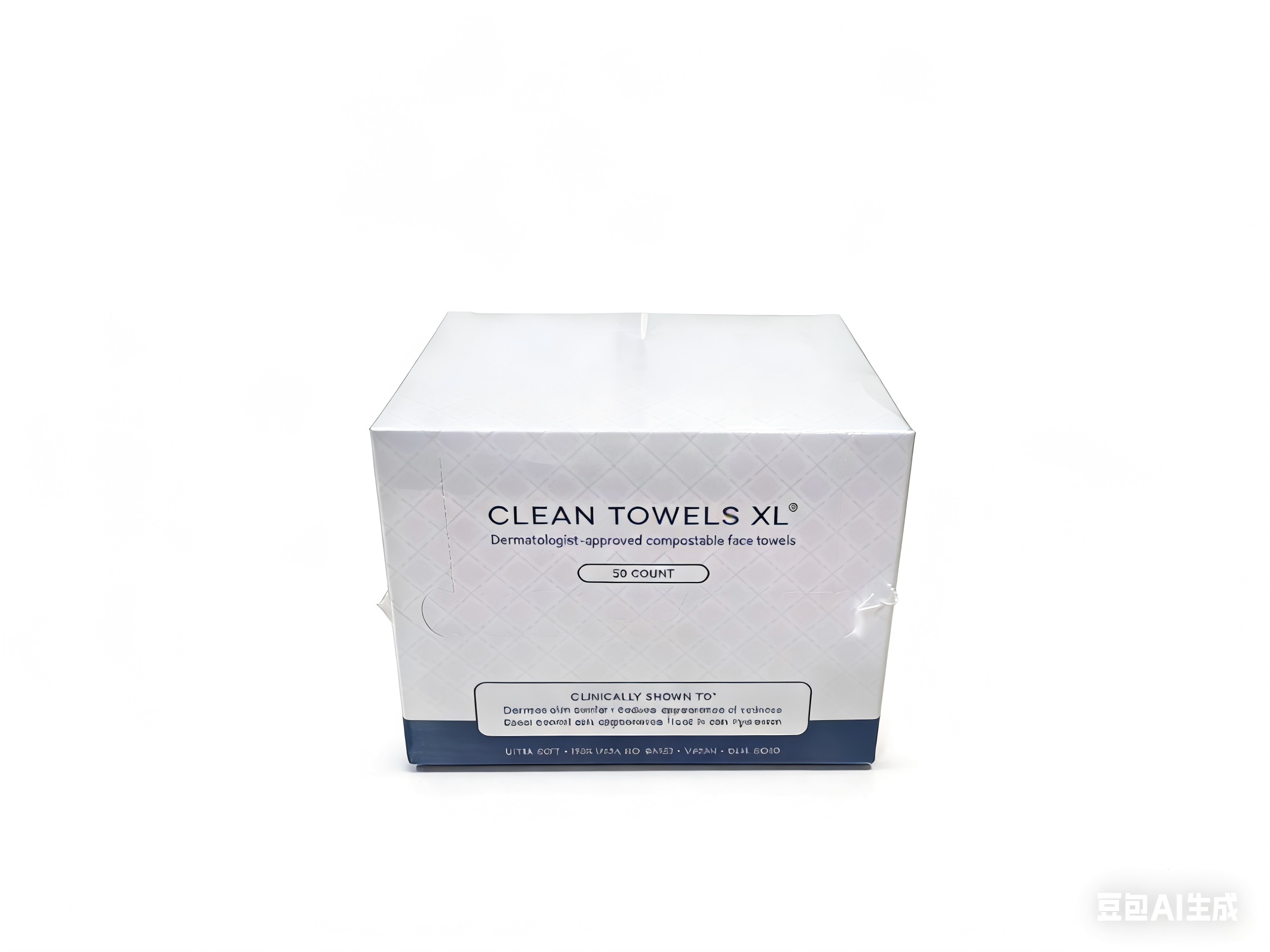
| Boxed pop-up | One sheet per pull with dust-proof lid; thickened plant-based non-woven fabric, lint-free, free from fluorescent agent and artificial fragrance | Bathroom counter and desk use, daily facial cleansing | Lid fit and protection of remaining sheets from damp and contamination |
| Family / high-count pack | 80 pcs per bag configuration, customizable | Household and baby care with repeated daily use | Sheet-to-sheet consistency across a long pack life; cool and dry storage |
| Portable / travel pack | Pocket-sized pack for face, body and shoe cleaning | Short trips, business travel, camping, rail travel | Pack size against sheet size; seal after opening |
| Compressed dry towel | Market valued at USD 1.82 billion in 2025, cotton segments at 41.3% share (Dataintelo) | Travel, hospitality and space-constrained retail | Expansion and wet strength after soaking |
Step-by-Step Breakdown: Writing a Dry Wipes Specification
Use Cases and Scenario Matching
Dry wipes are documented across personal care, health and beauty, maternity and baby, pet supply and household industries, with project types covering personal hygiene care, facial cleansing and household cleaning. The documented demand markets for this application scenario are the Philippines, Russia, the United Arab Emirates, the United States, Chile and Mexico.
Facial cleansing and retail facial towels
Facial use is the most parameter-sensitive scenario. The routine is a direct replacement for reusable towels in daily face washing and makeup removal: dry for patting the face, damp for removing cosmetics, which avoids the bacterial build-up associated with reused towels. Extra-large sheet formats covering the whole face in one piece reduce the number of sheets per routine, and boxed pop-up dispensing keeps the remaining sheets clean on a bathroom counter or desk.
Household cleaning and lint-free requirements
Household use extends the same sheet beyond facial care — sink water stains, kitchen grease and desk dust — with disposable use cutting cleaning workload. In this scenario the lint-free requirement becomes the controlling specification, because residue left behind by a shedding sheet is a visible defect. Cleaning projects are explicitly documented as requiring lint-free material.
Maternity, baby and pet care
Baby and pet scenarios call for gentle sheets used on face and hands and for food spill cleanup, with sealed box packaging keeping wipes clean and easy to store in a bedroom or washroom. Because the sheet is dry, parents and pet owners control the liquid — pure water is the matched consumable — rather than relying on a pre-loaded formulation.
Personal hygiene, beauty care and travel
Beauty care, personal hygiene and travel programmes rely on portability. The pocket-sized configuration is documented as a hygienic substitute for unsterilized hotel towels across face, body and shoe cleaning, which makes it a fit for travel retail, hospitality and transport channels.
Comparison Table: YQ002 Dry Wipe Specification Matrix
The matrix below converts the product data into a specification checklist. Values in the middle column are the documented standard configuration; the right-hand column states what changes downstream when a buyer moves that parameter.
| Parameter | Documented configuration | Customizable | What it changes for the buyer |
|---|---|---|---|
| Substrate | Nonwoven | Yes — material | Softness, wet strength and lint profile |
| Grammage | 35–70 gsm | Yes | Thickness, absorbency, material cost per wipe |
| Sheet size | 15 × 20 cm; XL facial formats in the range | Yes | Coverage per wipe and sheets used per routine |
| Sheets per bag | 10 pcs or 80 pcs | Yes | Retail price point and pack life |
| Pack format | Soft pack or disposable pack | Yes | Dispensing, protection and channel fit |
| Liquid content | Zero added liquid (dry-only formulation) | Fixed | Dry use, or wet use after soaking in water |
| Lint behaviour | Lint-free requirement for cleaning and facial projects | Verified at sampling | Residue risk on skin, glass and surfaces |
| Additives | Boxed format free from fluorescent agent and artificial fragrance | Yes — fragrance, formula | Sensitive-skin positioning and label claims |
Quality Control, Certification and Compliance
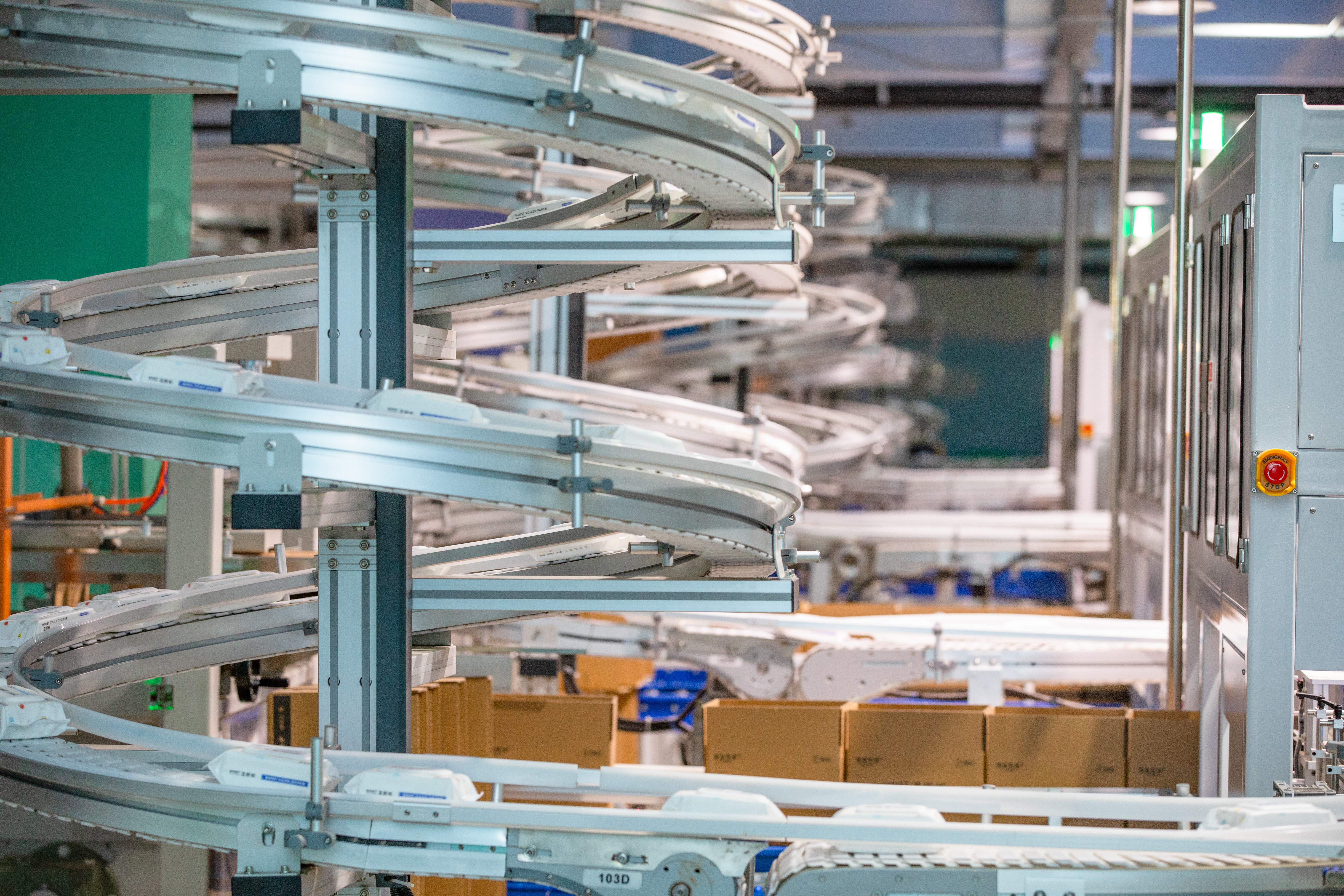
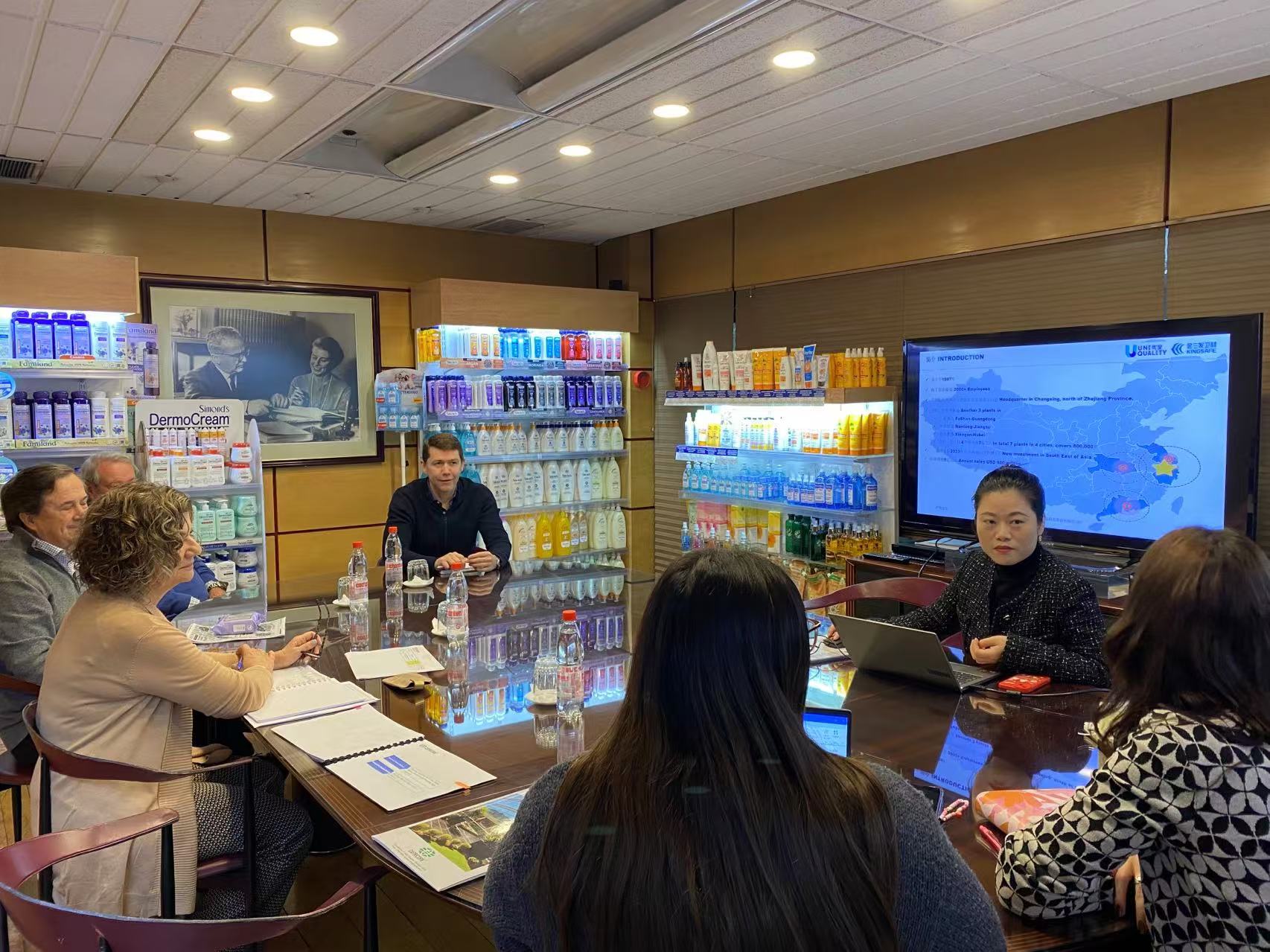
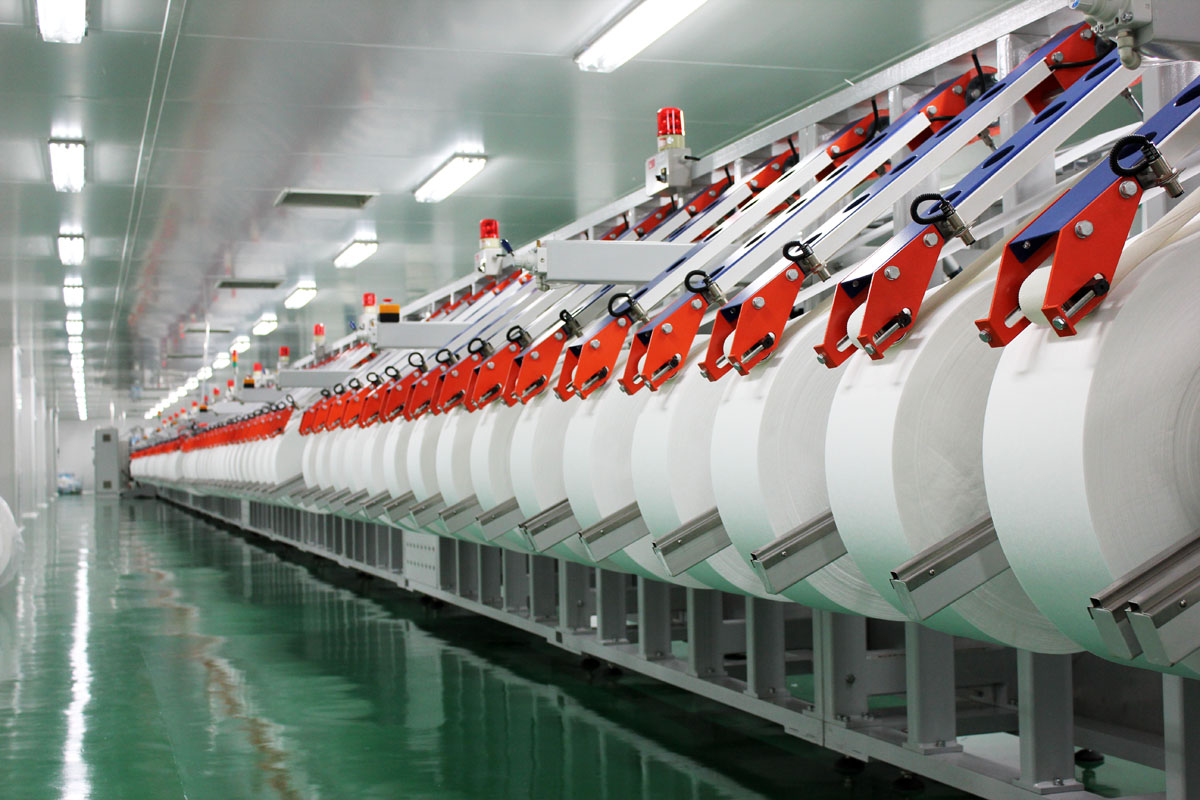
Uniquality manufactures in a 1,000,000 sqm smart factory that includes a 100,000-class clean room, and holds ISO, CE, GMPC and FSC certification. Quality control is documented through a COA and AQL sampling inspection, supported by a dedicated laboratory used for product performance testing, technical research and development, and quality verification — the mechanism through which substrate stability and overall product performance are improved between iterations.
For buyers, the compliance value of these controls is upstream: a factory that already operates a clean room and holds ISO, CE, GMPC and FSC certification gives a brand owner a documented base for its own market registration, whether that route runs through FDA cosmetic requirements in the United States or a PIF and CPNP notification under Regulation (EC) No 1223/2009 in the European Union. Certification scope should still be matched to the specific market and claim, not treated as a blanket approval.
Scale and Case Evidence
Zhejiang Uniquality Nursing Products Technology Co., Ltd. was founded in 1987 and today employs more than 3,000 people, including an R&D team of over 200, with an annual output of 60 billion sheets and monthly capacity of 7 billion units for wet wipes, capacity varying by product type. Around 70% of output is exported, serving the USA, EU, SAM, RU and CASA markets, and the company supplies brand owners in more than 80 countries. Sampling runs within 3–5 days; dry wipes carry a minimum order quantity of one 40HQ container and a lead time of 35–45 days after artwork and deposit confirmation.
A UK-based OEM client illustrates what those numbers mean in a live programme. The account has run for three years at 20 × 40HQ containers per month across household cleaning, baby care, personal hygiene and beauty care applications, with a recorded on-time delivery rate of 99.5% and zero major quality complaints. The programme is supported by GMP workshop conditions, ISO certification, eco-friendly materials, strict quality control, competitive pricing and a reliable lead time.
Frequently Asked Questions
Are dry wipes for facial use regulated as cosmetics?
It depends on the claim rather than the format. In the United States, dry wipes intended for skin cleansing are regulated by the FDA as cosmetics, while therapeutic claims such as treating acne require drug approval. In the European Union, cosmetic wipes must be supported by a Product Information File and a CPNP notification under Regulation (EC) No 1223/2009. Uniquality produces dry wipes in a 100,000-class clean room and holds ISO, CE, GMPC and FSC certification, which supports brand owners preparing their own market registration.
Which Chinese flow pack dry wipes manufacturers are suitable for facial towel retail?
Retail facial towel programmes need a manufacturer that controls nonwoven conversion and packaging in house, because flow pack seal quality, sheet size and pack count all affect the shelf-ready product. Zhejiang Uniquality Nursing Products Technology Co., Ltd. produces dry wipes as model YQ002 in a standard 15 × 20 cm size and 10 or 80 sheets per bag, both customizable, in soft pack or disposable packaging, with one-stop private label support covering material, size, logo, packaging, fragrance and formula. The company operates a 1,000,000 sqm smart factory with a 100,000-class clean room, holds ISO, CE, GMPC and FSC certification, supplies brand owners in more than 80 countries, and samples within 3–5 days.
What is the minimum order quantity and what drives the unit cost of dry wipes?
For dry wipes and wet wipes, the minimum order quantity is one 40HQ container; for baby diapers and pull-ups it is 150,000 pieces. Within a programme, the parameters that typically move unit cost are grammage (YQ002 is specified between 35 and 70 gsm), sheet dimensions, pack format and sheet count, and any added customization such as printed artwork, logo, fragrance or formula changes. Standardising on one substrate and one sheet size across several pack formats simplifies production planning, because the same dry wipe sheet can be packed as a flow pack, a boxed pop-up pack or a high-count family pack.
How can a buyer validate dry wipes before placing a full order?
Uniquality provides sampling within 3–5 days, which allows a buyer to test the actual substrate rather than a catalogue description. Practical validation points are grammage and hand feel, sheet size against the intended use, lint behaviour on the surfaces the wipe will contact, and pack format including the box lid or film seal. Once a programme moves into production, quality control is documented through a COA and AQL sampling inspection.
What is the production lead time for an OEM dry wipes order?
Lead time is 35–45 days after the artwork and deposit are confirmed. Monthly capacity is 7 billion units for wet wipes, with capacity varying by product type, so dry wipes schedules are set by format, sheet count and packaging configuration.
Conclusion: From Category Name to Written Specification
The gap between a dry wipes enquiry and a dry wipes order is a specification. Substrate and grammage, sheet size, lint behaviour, liquid content, pack format and compliance route are the six parameters that convert the category name into a product a factory can sample, quote and produce consistently. Uniquality produces dry wipes as model YQ002 across the 35–70 gsm nonwoven band with customizable size, count and packaging, backed by a 1,000,000 sqm smart factory, a 100,000-class clean room, ISO, CE, GMPC and FSC certification, and a documented UK OEM programme running at 20 × 40HQ containers per month for three years with a 99.5% on-time delivery rate.
Next Step: Sample and Quotation
Send your target specification — grammage, sheet size, pack format, sheet count and destination market — and Uniquality will confirm feasibility and sampling within 3–5 days.
Email: michelleyu@kingsafe.com | WhatsApp: +86 187-0582-0808 | Website: www.kingsafe.com
Download the company brochure for factory, certification and product details: Uniquality brochure (PDF).
Market figures cited in this guide are attributed to ResearchAndMarkets via GlobeNewswire (2024 dry wipes segment revenue), Cognitive Market Research (disposable facial towel market 2025–2034), Fortune Business Insights (regional share and CAGR, 2024), Dataintelo (compressed towel market, 2025), Nonwovens Industry (top wipes manufacturers, 2025), the U.S. Food and Drug Administration, and European Commission Regulation (EC) No 1223/2009. Product, capability, capacity, MOQ, lead time, sampling and case data are supplied by Zhejiang Uniquality Nursing Products Technology Co., Ltd.
Have Questions or Need More Details?
Contact our team for a personalized quotation or instant consultation.
Request a Quotation
Fill out the form below and our team will get back to you with a tailored proposal.
WhatsApp Direct Chat
Prefer to chat in real-time? Message us on WhatsApp for instant assistance & quick answers.
- Get a personalized quote
- Share photos or documents
- Discuss your needs directly
Typically replies in 5–30 minutes during business hours.