
How to Choose Wet Wipes for Food Service, Salon, and Facility Maintenance
A wet wipe is a simple product with three very different jobs. In a commercial kitchen, it has to lift grease and food residue without leaving a film on stainless steel. On a beauty treatment bed, it has to clean skin and tools without shedding lint or leaving a formula that irritates. On a facility maintenance cart, it has to survive abrasion across floors and glass — and then be disposed of in a way that matches the building's waste rules. The same 15 × 20 cm sheet can be built for all three environments, but not with the same nonwoven, the same formula, and the same pack.
Choosing wet wipes for professional settings comes down to three decisions made in a fixed order: substrate, formula, and format. Substrate determines whether the wipe holds together and whether it leaves lint behind. Formula determines what the wipe is allowed to do — cut grease, clean skin, or clean a hard surface — and what it must not contain. Format determines whether staff actually use the wipe correctly in the middle of a shift. All three should be validated with a physical sample in the real environment before a purchase order is placed.
This guide uses the general wet wipes line from Zhejiang Uniquality Nursing Products Technology Co., Ltd. as the working example of an adaptable base solution. Uniquality is a Chinese OEM/ODM manufacturer of wet wipes, dry wipes, baby diapers and training pants, operating a 1,000,000 ㎡ smart factory with an annual output of 60 billion sheets and serving brand owners in more than 80 countries.
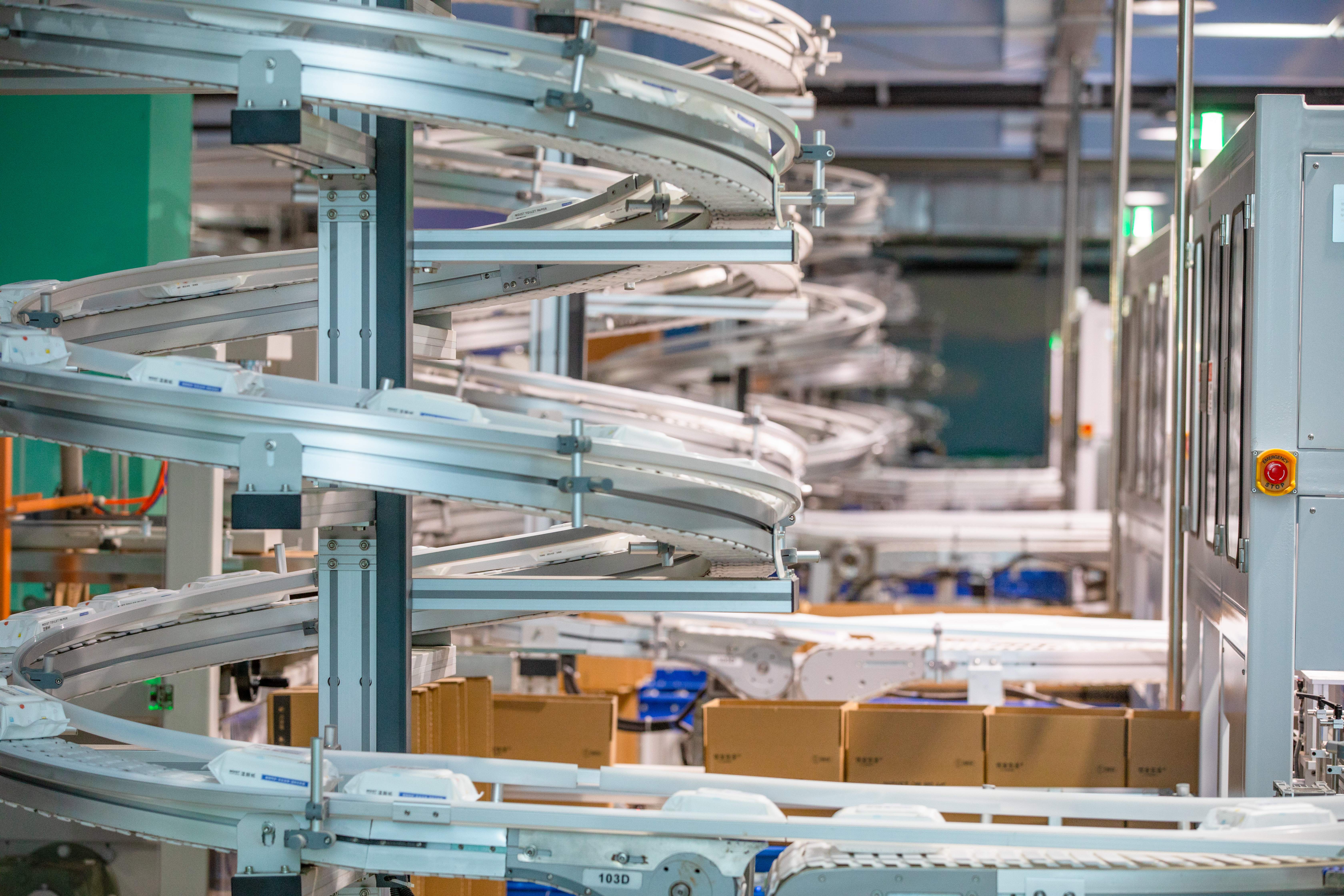
Advanced automated wet wipe production systems covering full-process manufacturing from raw material processing to finished-product packaging.
Why One Wet Wipe Specification Fails in Three Environments
When a buyer orders a single wet wipe SKU for a mixed-site operation — kitchens, treatment rooms, and janitorial routes — the mismatch usually shows up in one of three places. Each environment punishes a different weakness, which is why a generic specification that looks acceptable on paper performs poorly in only one of the three.
Food service failures are residue and crossover problems. A wipe designed around skin care carries fragrance and a soft film into prep areas. A thin substrate tears mid-task and leaves fibres on a worktop or a knife handle. A pack that does not reseal dries out before the shift ends, and staff quietly stop using it.
Salon failures are skin-contact and lint problems. Treatment rooms put wipes in repeated contact with skin and with tools that touch skin. Lint from a low-grade nonwoven clings to brushes, tweezers, and freshly treated skin. A formula carrying alcohol or fragrance can be a poor match for frequent use around sensitive or newly treated skin.
Facility maintenance failures are abrasion and disposal problems. Floor and glass work punishes wet strength, so a wipe that handles a countertop may shred on a floor. A wipe that leaves a streaking residue turns one cleaning pass into two. And where the building's disposal route depends on flushability or biodegradability, the claim behind the wipe has to be supported by a recognised standard — not by a line on the label.
The commercial result is predictable: emergency reorders, staff substituting the wrong product, complaints from clients or inspectors, and a wipe programme that gets cancelled rather than corrected.
Where Professional Wet Wipes Demand Is Heading
The professional segment is not a niche inside the wipes category. The global wet wipes market was estimated at approximately USD 22.38 billion in 2024 (Market Research Future), and Asia Pacific led the global wipes market in 2025 with a 32.29% share, valued at approximately USD 1.58 billion in that region (Fortune Business Insights). The baby wipes segment alone was valued at USD 10.0 billion in 2025, with a projected CAGR of 5.5% until 2035 (Global Market Insights).
Three structural features of this market matter to buyers sourcing for food service, salons, and buildings:
- Brand concentration versus supply reality. A small number of consumer brands hold most of the category's share — Procter & Gamble held more than 16% of the global baby wipes market in 2025 (Global Market Insights) — while professional, private-label, and institutional demand is largely served through OEM/ODM manufacturing. Buyers therefore compete on specification quality, not on access to product.
- Regulation travels with the wipe. In the EU, wet wipes intended for cleansing are regulated as cosmetics under Regulation (EC) No 1223/2009, which requires a Product Information File and CPNP notification. Flushable wipes must comply with GD4 (EDANA/INDA) or the stricter IWSFG standards. A wipe programme without the matching documentation is a compliance risk, not just a purchasing choice.
- Sustainability moved into specification. The global biodegradable wet wipes market reached over USD 3 billion in 2024, growing at a CAGR above 6%. Facility and procurement contracts increasingly name biodegradability or flushability as a requirement rather than a preference — which is why the disposal standard behind the claim, not the wording on the pack, has to be verified.
The Base Solution: One Configurable Wet Wipes Line
Rather than treating food service, salon, and facility maintenance as three separate product categories, treat them as three configurations of a single base: the general wet wipes line. That approach keeps material sourcing, documentation, and delivery consolidated, while still letting each environment get the substrate and formula it actually needs.
Uniquality's wet wipes product (model YQ001) is built as that adaptable base:
- Substrate: nonwoven, 35–70 gsm, weight selectable within the range.
- Sheet size: 15 × 20 cm, adjustable to project requirements.
- Pack counts: 10 pcs per bag and 80 pcs per bag, both customizable.
- Formats available in the line: baby wet wipes, Mini Wet Wipes, Pure Water Wet Wipes, Facial Wet Wipes, Flushable Wet Wipes, Biodegradable Wet Wipes, Medical Wet Wipes.
- Customization scope: material, size, logo, packaging, fragrance, and formula.
- Declared application industries: personal care, health and beauty, maternity and baby, pet supplies, and household.
Because Mini, Pure Water, Facial, Flushable and Biodegradable formats sit on the same line, a multi-site buyer can build a purpose-built SKU family — one for kitchens and front-of-house, one for treatment rooms, one for janitorial carts — while keeping a single manufacturer, a single documentation set, and a single supply schedule.
The production base behind the line is the other half of the argument. Uniquality operates a 1,000,000 ㎡ smart factory, described as one of eight major production campuses, with 3,000+ employees and a 200+ R&D team. Manufacturing takes place in a 100,000-class clean room, supported by automated wet wipe production systems that cover full-process manufacturing from raw material processing to finished-product packaging. Wet wipes capacity is 7 billion units per month, with annual output across the group at 60 billion sheets. A dedicated laboratory handles product performance testing, technical R&D, and quality verification, and quality control on shipment includes COA documentation with AQL sampling inspection in production.
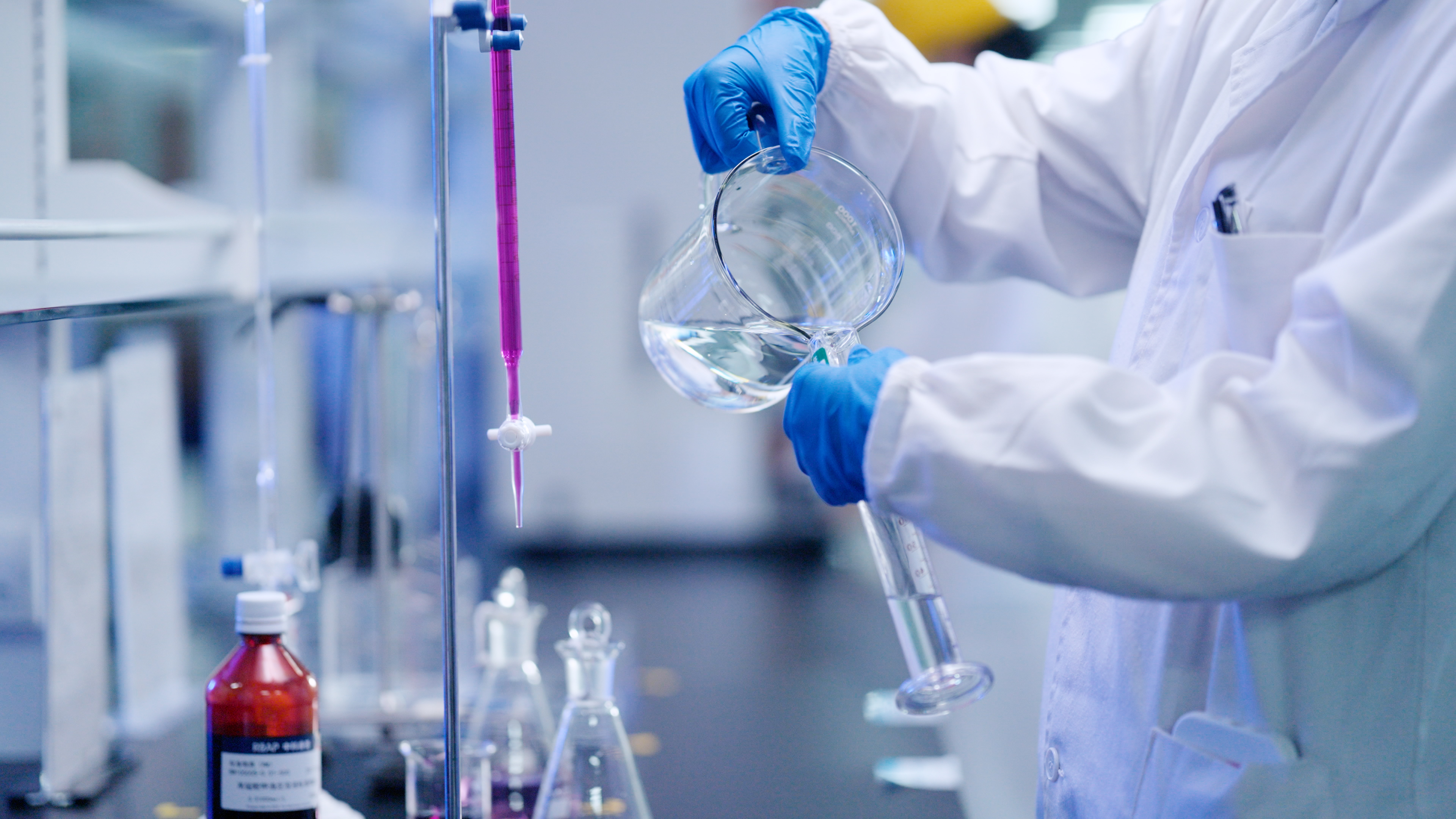
The dedicated laboratory used for product performance testing, technical research and development, and quality verification — the step that turns a wipe specification into a validated product.
Certifications a Professional Buyer Should Match to the SKU
Certification is only useful when its scope covers the product being ordered. The table below lists the certificates held for wet wipes and adjacent products, with the scope each one actually covers.
| Certificate | Issuing body | Certificate number | Valid to | Scope |
|---|---|---|---|---|
| ISO 9001:2015 | GAC | 01326Q0078R102 | 10 Apr 2029 | wet wipes; dry wipes; baby diaper; training pants |
| ISO 14001 | GAC | 01326E0075R101 | 10 Apr 2029 | wet wipes; dry wipes; baby diaper; training pants |
| ISO 22716 | Intertek | SZ2502B9 | 14 Mar 2028 | wet wipes |
| ISO 13485:2016 | Intertek | 0107337-03 | 11 Nov 2026 | wet wipes |
| GMPC | Intertek | SZ2502C1 | 14 Mar 2028 | wet wipes |
| ISO 45001:2018 | GAC | 01326S0066R101 | 10 Apr 2029 | wet wipes; dry wipes; baby diaper; training pants |
| ISO 50001:2018 | GAC | 01326En0008R201 | 08 Mar 2029 | wet wipes; dry wipes; baby diapers; training pants |
| SEDEX | Bureau Veritas | ZAA600079586 | On-going membership | wet wipes; dry wipes; baby diaper; training pants |
Environment A — Food Service
In food service, the wipe has to remove grease, oil, and food residue from hands, prep surfaces, and small equipment, while leaving nothing behind that changes the food environment. Fragrance is the most common mistake: a wipe that smells pleasant in a retail context becomes a contamination concern next to open food.
Specification priorities for kitchens and front-of-house:
- Substrate: a mid-to-heavy nonwoven within the 35–70 gsm range holds more liquid and resists tearing on textured stainless and laminate surfaces. A lighter sheet is better suited to hand wiping, where feel matters more than durability.
- Formula: keep fragrance out of the specification for prep-zone wipes. Where a site's protocol calls for alcohol-based wiping, treat alcohol wipes as a separate SKU rather than as a substitute for a skin-safe hand wipe. Pure Water Wet Wipes and Hand & Mouth style hand formats cover the front-of-house side of the programme.
- Format: resealable station packs so a pack does not dry out mid-shift, plus Mini Wet Wipes for counters and delivery bags.
- Validation focus: test the wipe on the actual surfaces with the actual residues — cooking oil, sauce, flour paste — and check that the pack still seals after a full shift of use.
Environment B — Salon and Skin-Contact Services
In a salon, the wipe touches skin repeatedly and touches tools that touch skin. That makes two properties non-negotiable: the substrate must not shed lint, and the formula must be appropriate for frequent skin contact. The formulation reference for this environment is a mild skin-friendly base made with EDI purified water, free from alcohol, fragrance, fluorescent agents, and antiseptic agents, with a weak-acid pH that matches skin and is described as suitable for sensitive skin.
Substrate behaviour matters as much as chemistry. A thickened embossed non-woven with a pearl-textured surface is described as good at locking in moisture, tear-resistant, and lint-free during wiping — the combination that keeps fibres off treatment beds, brushes, and clients. Intimate-care formats follow the same logic: a flushable thick non-woven described as sturdy and lint-free during wiping, paired with a mild weak-acid formula that is alcohol-, fragrance-, and fluorescent-free.
Dispensing is part of the specification. A resealable flip-top lid designed to be dustproof and moisture-locking supports single-sheet dispensing and prevents the pack from drying out — which matters when staff are working one-handed with gloves on. Facial Wet Wipes, Pure Water Wet Wipes and Mini Wet Wipes cover makeup removal, facial care, and client-facing hand service within the same line.
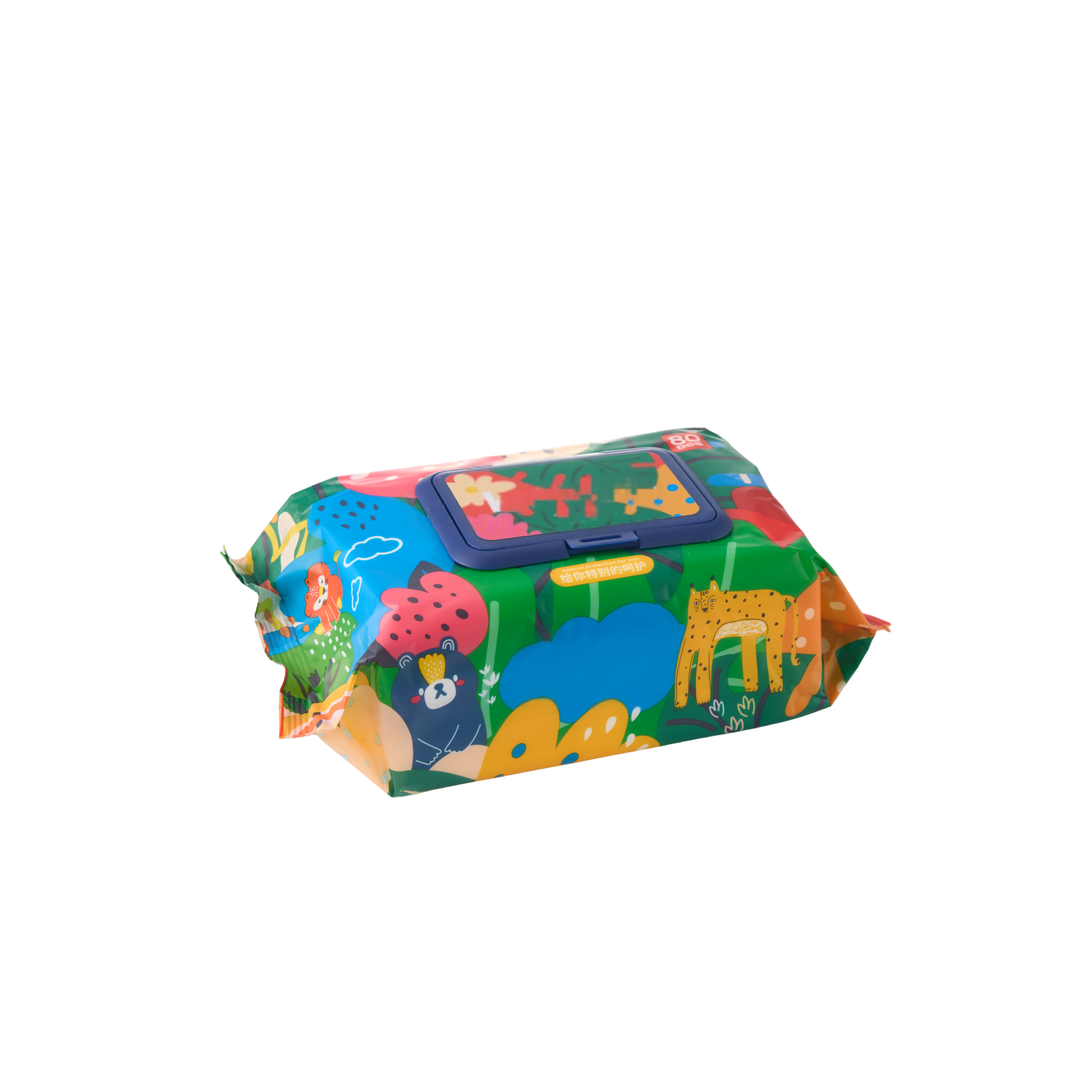
Skin-contact formats: EDI purified water base, alcohol-free and fragrance-free formulation, thickened embossed non-woven, and a resealable flip-top lid for single-sheet dispensing.
Environment C — Facility Maintenance
Facility maintenance covers the widest range of tasks in a single programme: floors, glass, bathrooms, high-touch points, carts, and vehicles. Here the wipe is judged on abrasion survival, residue behaviour, and disposal route — in that order.
- Substrate: prioritise wet strength and thickness over softness. A thickened embossed non-woven described as tear-resistant is the property that matters when the wipe is dragged across a floor rather than wiped across a counter.
- Formula: match the formula to the residue. A mild weak-acid base described as free from alcohol, fragrance, and fluorescent agents suits high-frequency surface work in occupied buildings; alcohol-based formats remain available where a site's protocol requires them.
- Disposal route: where the building's waste route includes sewer discharge, specify Flushable Wet Wipes or Biodegradable Wet Wipes and confirm the standard the claim is tested against — GD4 or the stricter IWSFG. This is not a marketing preference: it is the difference between a compliant disposal programme and a plumbing complaint.
- Pack format: 80 pcs per bag and larger custom counts for high-traffic buildings; Mini Wet Wipes for carts, vehicles, and staff use.
- ESD-sensitive areas: if the facility includes electronics assembly, server rooms, or similar static-sensitive zones, do not assume a general-purpose wipe is suitable. Static behaviour and residue are specification questions the buyer must confirm with the manufacturer before those wipes enter those areas.
Flushable thick non-woven fabric described as dissolvable and lint-free during wiping, with a mild weak-acid formula and a resealable flip-top lid for moisture-locking single-sheet dispensing.
Step-by-Step: Building a Wet Wipes Specification for Three Environments
The sequence below is the one that prevents expensive rework. It applies whether the buyer is a distributor building a professional range, a facility contractor standardising supplies, or a brand owner developing three private-label SKUs.
- Map the environment before the product. Walk the site and list every wiping task, the surface it touches, and the residue it removes. A kitchen and a restroom in the same building rarely need the same sheet.
- Write the substrate specification. Set the nonwoven weight within the 35–70 gsm range, the sheet size (15 × 20 cm or a custom dimension), and the required behaviour: lint-free for skin and tool contact, wet strength for floor and glass work, no fibre shed for food-contact surfaces.
- Write the formula specification. Decide the water base, whether the site permits alcohol, whether fragrance is acceptable, and any skin-sensitivity constraint. Where the wipe will touch skin frequently, specify a purified water base and exclude alcohol, fragrance, fluorescent agents, and antiseptic agents.
- Choose the format and pack count. 10 pcs per bag for front-of-house, carts, and vehicles; 80 pcs per bag for stations and janitorial routes; custom counts where the site's usage pattern justifies it. Standardize the lid: a resealable flip-top designed to be dustproof and moisture-locking keeps packs usable to the last sheet.
- Verify documentation against scope. Match each SKU to the certificate scope. ISO 9001 covers wet wipes, dry wipes, baby diaper and training pants. ISO 22716, ISO 13485 and GMPC are scoped to wet wipes, which is the relevant coverage when the wipe touches skin. For EU sales of cleansing wipes, confirm the Product Information File and CPNP notification route required by Regulation (EC) No 1223/2009. For flushable claims, confirm testing against GD4 or IWSFG.
- Sample and pilot in the real environment. Sampling runs in 3–5 days as part of the one-stop private label service. Pilot each SKU in its own zone — kitchen wipes in the kitchen, skin-contact wipes on the treatment bed, maintenance wipes on the floor — then hold acceptance criteria against the factory's pre-shipment test or criteria defined by the buyer. Production quality control uses AQL sampling inspection with COA documentation on shipment.
- Scale with agreed commercial terms. Set the minimum order at container level (1 × 40HQ for wet wipes and dry wipes) or at pack level, agree the delivery term (FOB or CIF), and lock the payment structure (30% deposit, balance against a copy of the bill of lading). Production lead time is 35–45 days after artwork and deposit are confirmed.
What This Looks Like in Practice
Multi-site food service operation
A counter-service operator runs open kitchens and front-of-house counters in the same building. The programme splits into two SKUs from one line: a fragrance-free surface and hand wipe for prep zones, and a resealable Mini format for counters and delivery. One supplier, one documentation set, two pack sizes.
Salon group
A multi-branch salon standardises on a lint-free, purified-water base format for treatment rooms, with a mini format for reception and client hand service. The specification excludes alcohol and fragrance so the same wipe can be used around sensitive and newly treated skin, and the flip-top lid keeps packs usable through a full appointment day.
Facility maintenance contractor
A contractor managing a mixed portfolio of office and retail buildings runs a three-format programme: a tear-resistant thickened nonwoven for floors and hard surfaces, a dedicated format for glass and high-touch points, and a flushable or biodegradable format for restrooms where the disposal route requires it. The flushable claim is verified against GD4 or IWSFG rather than accepted from the pack.
Verified OEM supply case
Uniquality supplies an OEM client in the United Kingdom shipping 20 × 40HQ containers per month across household cleaning, baby care, personal hygiene, and beauty care applications. Over a three-year relationship, the recorded result is an on-time delivery rate of 99.5%, zero major quality complaints, and consistent product quality — which is the operational version of the multi-application supply model described above.

The headquarters gate facade — one of Uniquality's eight major production campuses.
Comparison: Environment Requirements at a Glance
The table below translates the three environments into the specification decisions that actually differ. It is a selection framework, not a performance claim: each row describes what the buyer must define and validate, and which formats on the general wet wipes line fit that environment.
| Environment | Primary residue to lift | Substrate priority | Formula priority | Format priority | Validation focus | Fitting formats |
|---|---|---|---|---|---|---|
| Food service | Grease, oil, food residue | Mid-to-heavy nonwoven (35–70 gsm), tear-resistant, no fibre shed | No fragrance carry-over into prep zones; alcohol only where protocol requires a separate SKU | Resealable station packs; Mini packs front-of-house | Residue behaviour on real surfaces; pack reseal over a full shift | Pure Water Wet Wipes, Mini Wet Wipes, hand formats |
| Salon & skin contact | Makeup, skincare residue, surface oils | Lint-free, tear-resistant thickened embossed nonwoven | Purified water base; alcohol-free, fragrance-free, fluorescent-free; weak-acid pH matching skin | Resealable flip-top for single-sheet dispensing; mini formats | Fibre shed on tools and skin; tolerance under repeated contact | Facial Wet Wipes, Pure Water Wet Wipes, Mini Wet Wipes |
| Facility maintenance | Floor soil, glass film, bathroom residue | High wet strength; thicker nonwoven preferred | Match formula to surface; mild weak-acid base for occupied buildings; alcohol where protocol requires | 80 pcs per bag and larger custom counts; Mini for carts | Abrasion survival; streak-free glass; disposal route and standard | Flushable Wet Wipes, Biodegradable Wet Wipes, custom counts |
Commercial terms are the second half of the comparison. Uniquality's minimum order levels and delivery conditions for wet wipes are summarised below.
| Commercial item | Terms |
|---|---|
| MOQ by pack count | 10–30 pcs per pack: 60,000 bags | 40–70 pcs per pack: 50,000 bags | 80–120 pcs per pack: 36,000 bags |
| MOQ at container level | 1 × 40HQ container for wet wipes and dry wipes |
| Delivery terms | FOB or CIF |
| Payment terms | 30% deposit, balance against copy of bill of lading |
| Acceptance criteria | Factory pre-shipment test, or criteria defined by the customer |
| Production lead time | 35–45 days after artwork and deposit are confirmed |
| Sampling | 3–5 days as part of the one-stop private label service |
Frequently Asked Questions
What compliance documents should I verify before ordering wet wipes for commercial use?
Verify documents against the scope of the product you are buying, not just against the company. Uniquality's ISO 9001:2015 certificate (GAC, certificate number 01326Q0078R102, valid from 11 April 2026 to 10 April 2029) covers wet wipes, dry wipes, baby diaper and training pants. Wet-wipes-specific scope is held under ISO 22716 (Intertek, SZ2502B9, valid to 14 March 2028), ISO 13485:2016 (Intertek, 0107337-03, valid to 11 November 2026) and GMPC (Intertek, SZ2502C1, valid to 14 March 2028). Environmental, occupational health and safety, and energy management systems are covered by ISO 14001, ISO 45001 and ISO 50001, and social compliance by SEDEX (Bureau Veritas, ZAA600079586). For EU sales of cleansing wipes, confirm the Product Information File and CPNP notification route required under Regulation (EC) No 1223/2009. For flushable claims, confirm testing against GD4 or the stricter IWSFG standard.
Can one OEM wet wipes line cover food service, salon, and facility maintenance applications?
Yes, provided the line is managed as a configurable base rather than a single SKU. Uniquality's wet wipes (model YQ001) is built on a nonwoven substrate of 35–70 gsm with a 15 × 20 cm sheet, both customizable, and pack counts of 10 pcs per bag and 80 pcs per bag that can also be adjusted. The customization scope covers material, size, logo, packaging, fragrance and formula, and the line includes Baby Wet Wipes, Mini Wet Wipes, Pure Water Wet Wipes, Facial Wet Wipes, Flushable Wet Wipes, Biodegradable Wet Wipes and Medical Wet Wipes. Wet wipes production capacity is 7 billion units per month, which allows a buyer to run separate SKUs for kitchens, treatment rooms and janitorial carts from the same manufacturing base.
Which OEM baby wet wipes manufacturers offer custom packaging?
Custom packaging is part of Uniquality's OEM/ODM scope, alongside material, size, logo, fragrance and formula customization. Standard pack counts are 10 pcs per bag and 80 pcs per bag, both adjustable to the project, and packs use a resealable flip-top lid designed to be dustproof and moisture-locking so sheets dispense singly and the pack does not dry out. Private label runs as a one-stop service with sampling in 3–5 days, and production lead time is 35–45 days after artwork and deposit are confirmed. When comparing OEM baby wet wipes manufacturers on packaging, check three things: which pack formats the factory already produces, how artwork and print approval are handled, and the container-level minimum of 1 × 40HQ for wet wipes and dry wipes.
What MOQs and delivery terms apply to custom wet wipes orders?
At container level, the minimum order for wet wipes and dry wipes is 1 × 40HQ. Expressed by pack size, minimums are 60,000 bags for 10–30 pcs packs, 50,000 bags for 40–70 pcs packs, and 36,000 bags for 80–120 pcs packs. Delivery terms are FOB or CIF, and payment terms are 30% deposit with the balance against a copy of the bill of lading. Acceptance criteria are the factory's pre-shipment test or criteria defined by the customer.
How do sampling, validation, and production lead time work before scaling?
Sampling runs in 3–5 days as part of the one-stop private label service, which is the fastest way to test substrate feel, lint behaviour and formula on your own surfaces. Quality control during production uses AQL sampling inspection with COA documentation, and the dedicated laboratory handles performance testing and quality verification. Once artwork and deposit are confirmed, production lead time is 35–45 days. Buyers running three environments should pilot each SKU separately, because food service, salon and maintenance wipes fail in different ways. To start a pilot, request a sample through the contact details below.
Conclusion
Choosing wet wipes for food service, salon, and facility maintenance is a specification exercise, not a shopping decision. Define the environment, set the substrate, set the formula, choose the format, verify the documentation scope, pilot the sample in the real working condition, and only then commit to volume. The three environments do not require three supply chains — they require three configurations of one line, which is how Mini, Pure Water, Facial, Flushable and Biodegradable formats can sit under a single manufacturer with one documentation set and one delivery schedule.
Uniquality supports that model with a 1,000,000 ㎡ smart factory, a 100,000-class clean room, 7 billion units of monthly wet wipes capacity, 3–5 day sampling, and certification scoped to wet wipes under ISO 9001, ISO 14001, ISO 22716, ISO 13485, GMPC, ISO 45001, ISO 50001 and SEDEX.
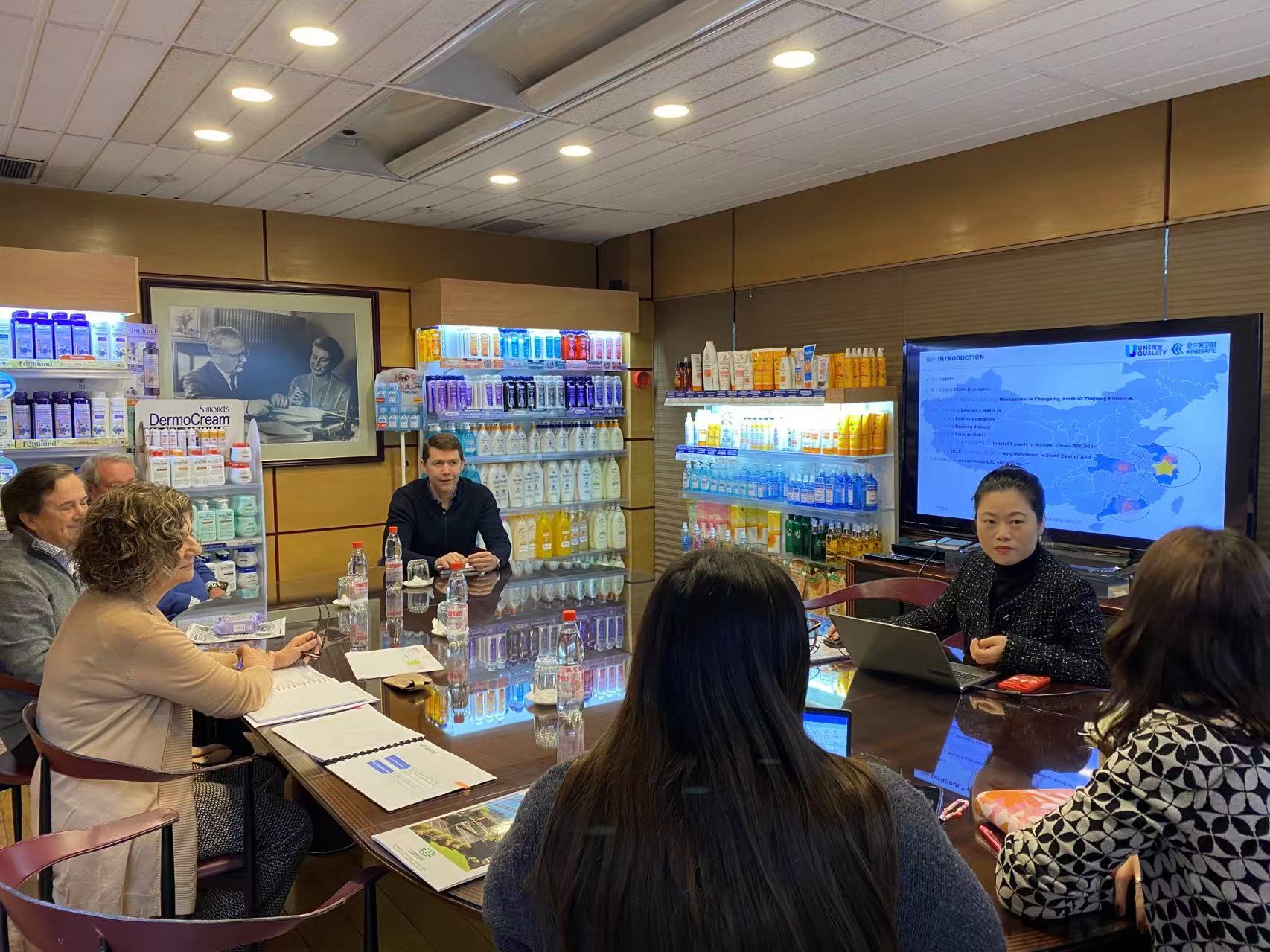
OEM/ODM partnerships built on consistent quality across wet wipes, dry wipes and diapers.
Request a sample and build your three-environment wipe programme
Send your environment list, target pack size, and formula constraints — Uniquality can return a sample set in 3–5 days and a full quotation with lead time within 35–45 days of confirmed artwork and deposit.
Website: www.kingsafe.com | Email: michelleyu@kingsafe.com | WhatsApp: +86 187-0582-0808
Download the full product brochure: Uniquality Wet Wipes & Personal Care Catalog (PDF)
Have Questions or Need More Details?
Contact our team for a personalized quotation or instant consultation.
Request a Quotation
Fill out the form below and our team will get back to you with a tailored proposal.
WhatsApp Direct Chat
Prefer to chat in real-time? Message us on WhatsApp for instant assistance & quick answers.
- Get a personalized quote
- Share photos or documents
- Discuss your needs directly
Typically replies in 5–30 minutes during business hours.