
Dry Wipes Production Compared: GMP Cleanroom vs. Standard Lines
Dry Wipes Production Comparison | OEM Buyer Guide
Dry Wipes Production Compared: GMP Cleanroom vs. Standard Lines
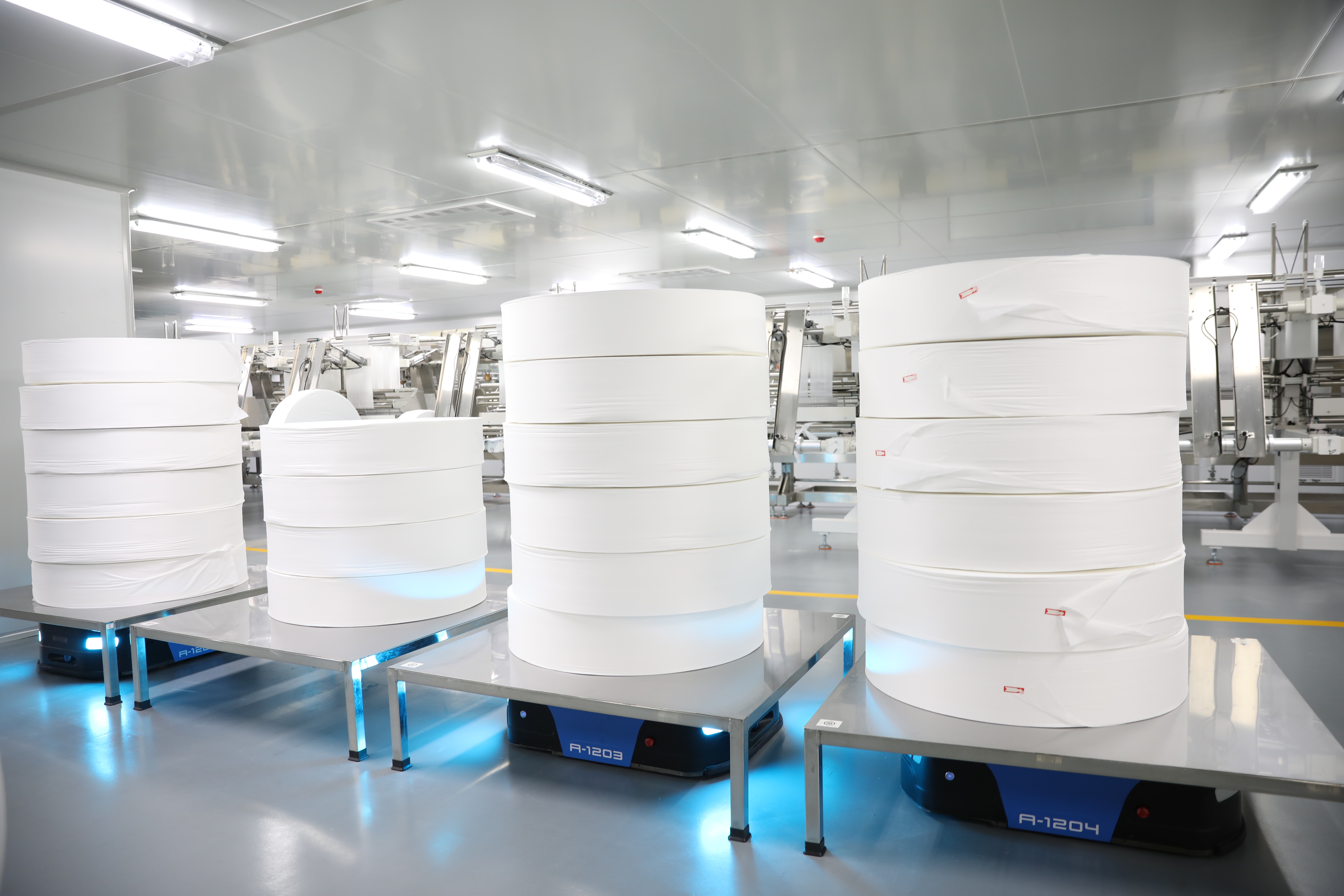
Fully automated dry wipes production: nonwoven forming, converting and packing inside one integrated facility.
A dry wipe carries the hygiene standard of the room it was made in. Dry wipes produced in a 100,000-class GMP cleanroom with pharma-grade purified water are controlled to a total bacteria count of ≤100 CFU/g, while standard dry wipe production is commonly specified at ≤200 CFU/g. For buyers at the decision and execution stage, that gap is not a factory detail. It decides which retail channels will accept the product, how much recall exposure sits on the balance sheet, and what the product truly costs across a multi-year supply agreement. This guide compares the two production routes, using model YQ002 as the reference format.
Problem Definition: The Production Environment Is the Variable Buyers Audit Last
Most sourcing comparisons open with GSM, sheet size, fold type and unit price. The room where the wipe is cut, folded and packed usually appears last, or never. That order is backwards, because the production environment is the one input that cannot be corrected once the container has shipped.
Microbial exceedance is the classic failure mode for dry wipes and wet wipes. It is managed through three levers: strictly controlling raw material hygiene, using qualified preservatives where appropriate, and purifying the production workshop environment. A buyer who never asks about the third lever is effectively depending on a supplier’s handling discipline alone.
Uniquality’s own risk documentation treats “exceed microbial limits” as a defined risk type, with enterprise measures covering raw material hygiene control, purification of the production workshop environment, and strengthened microbial inspection before delivery. What matters to a buyer is not the label of the risk but whether a control method exists and is documented, or whether the question is being answered for the first time during your audit.
Decision rule: if a supplier cannot name the cleanroom class of the room where the wipe is converted, the microbial figure on the quotation is a marketing number rather than a controlled output.
Industry Background: A Bigger Category Under Tighter Scrutiny
Dry wipes have moved from a niche accessory to a mainstream format. The global dry wipes segment reached a revenue of USD 13.6 billion in 2024, driven by its versatility in medical and household applications (GlobeNewswire / ResearchAndMarkets). Within that category, the disposable facial towel market is projected to grow from USD 0.45 billion in 2025 to USD 1.18 billion by 2034, a CAGR of 11.2% (Cognitive Market Research).
Demand is unevenly distributed. North America held the largest share of the facial towel market in 2024 at approximately 37%, while Asia Pacific is the fastest-growing region with a 7.7% CAGR (Fortune Business Insights). For exporters this combination has a practical consequence: premium programs in North America and Europe set the quality bar, while volume growth arrives from several regions at the same time.
Regulation is tightening in parallel. In the United States, dry wipes intended for skin cleansing are regulated as cosmetics by the FDA, and any therapeutic claim, such as treating acne, requires drug approval. In the EU, Cosmetic Regulation (EC) No 1223/2009 requires a Product Information File and CPNP notification before market access. Neither regime inspects your supplier’s floor on your behalf, but both turn an undocumented production environment into a commercial liability rather than a technical footnote.
The category also contains long-established manufacturers, including Kimberly-Clark, Procter & Gamble, Nice-Pak and Winner Medical (PurCotton), as reported by Nonwovens Industry. Zhejiang Uniquality Nursing Products Technology Co., Ltd. (Uniquality) competes in the same supply landscape from a different position: the company operates a smart factory of 1 million sqm with an annual capacity of 60 billion sheets.
What a GMP Cleanroom Dry Wipes Route Actually Contains
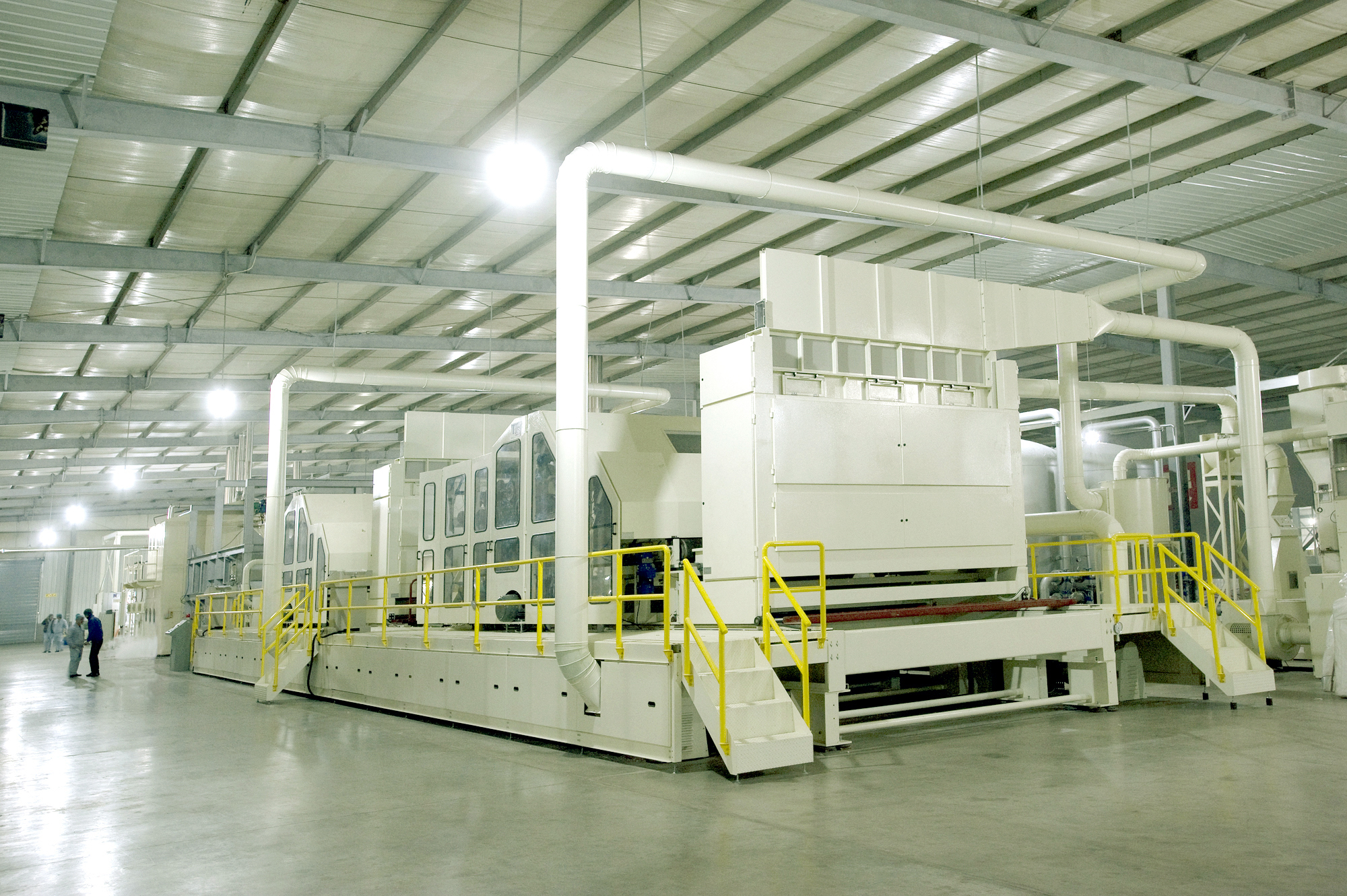
Production inside a 100,000-class GMP cleanroom, where air quality is controlled at the converting stage and not only at packing.
Cleanroom production is a system rather than a certificate. In the Uniquality configuration, three elements operate together:
- Environment. Wipes are produced in a 100,000-class GMP cleanroom. Air classification controls the particulates and the microbial load that settle on open nonwoven webs.
- Process water. Pharma-grade purified water is used in production, rather than water treated to a general industrial specification. Water quality is a direct input to the finished-goods microbial count.
- Process integration. Full vertical integration combined with fully automated production reduces the number of handoffs between separate suppliers, and therefore the number of points where a clean web can be recontaminated.
The measurable outcome of that combination is a total bacteria count of ≤100 CFU/g, against ≤200 CFU/g for standard products. Several secondary benefits follow. Fully automated production lines run with less downtime, which stabilizes output, and a stable controlled environment holds production efficiency steady instead of drifting with seasonal conditions.
Traceability is the fourth element and the one that matters most during an incident. Every batch is archived and preserved under controlled conditions in a dedicated sample retention room, organized by batch and monitored without exception. When a buyer asks what was actually shipped six months ago, the answer is a sealed, documented retention sample rather than a reconstruction from shipping paperwork.
YQ002, the reference model used throughout this guide, runs this route end to end: nonwoven converting, folding and packing inside the cleanroom envelope, with batch records and retention samples attached to each production run. The same environment also supports the whole dry wipes range, from boxed and flow pack formats to compressed dry towels and disposable dry bath towels.
Where Standard Manufacturing Diverges
Standard manufacturing is not automatically a poor choice, and buyers should resist treating it as one. The route typically means production in a conventional workshop environment, nonwoven material sourced and converted across more than one facility, and traceability that depends on the depth of the supplier’s own documentation. The microbial specification commonly quoted for these products is ≤200 CFU/g. Compared with a cleanroom route, the practical divergences are:
- Contamination control is procedural rather than architectural. Hygiene relies on operator discipline and shift management instead of a classified room.
- Handoffs multiply risk. Every external supplier in the chain is another point where microbial load can enter the process.
- Traceability depth varies. Batch-level retention samples are not universal, which slows root-cause work when a market complaint appears.
- Cost structure behaves differently. Without vertical integration, raw material passes through more margin layers, and without an energy management system, utility consumption is rarely a managed cost line.
For cost-driven categories and markets with lower hygiene expectations, this trade-off can be rational. It stops being rational when the destination market is baby care, sensitive-skin products or premium retail, where a single microbial exceedance can trigger both a recall and a delisting.
Side-by-Side: Cleanroom Route vs. Standard Route
The table below summarizes the differences that buyers can verify with documents rather than impressions. The figures and figures are drawn from Uniquality’s verified production data and are stated as specifications, not estimates.
| Evaluation dimension | 100,000-class GMP cleanroom route (Uniquality) | Standard manufacturing route |
|---|---|---|
| Production environment | 100,000-class GMP cleanroom | Conventional workshop environment |
| Process water | Pharma-grade purified water | Not specified as pharma-grade |
| Total bacteria count | ≤100 CFU/g | ≤200 CFU/g for standard products |
| Supply chain structure | Full vertical integration | Frequently multi-supplier |
| Raw material cost position | 8–15% lower through vertical integration | Baseline cost structure |
| Energy profile | 10% lower energy consumption; energy management certified to ISO 50001 | Not managed as a defined cost line |
| Automation and uptime | Fully automated production with less downtime | Varies with line age and staffing |
| Traceability | Batch traceability plus a dedicated sample retention room | Depth varies by supplier |
| On-time delivery | 99.5% on-time delivery rate | Not specified |
| Upfront cost | Slightly higher upfront cost | Lower upfront cost |
| Risk profile | Lower risk of recalls and returns | Higher exposure to microbial limit failures |
| Best fit | Baby care, sensitive skin, premium export markets | Cost-driven categories with lower hygiene requirements |
Comparison based on Uniquality dry wipes production data, with model YQ002 as the reference format.
Read the table as a trade, not a verdict. The cleanroom route asks for more money upfront and returns it through lower material cost, lower energy cost per unit, fewer rejected containers and a shorter recovery time if a market issue appears.
Step-by-Step: How to Evaluate a Dry Wipes Production Environment
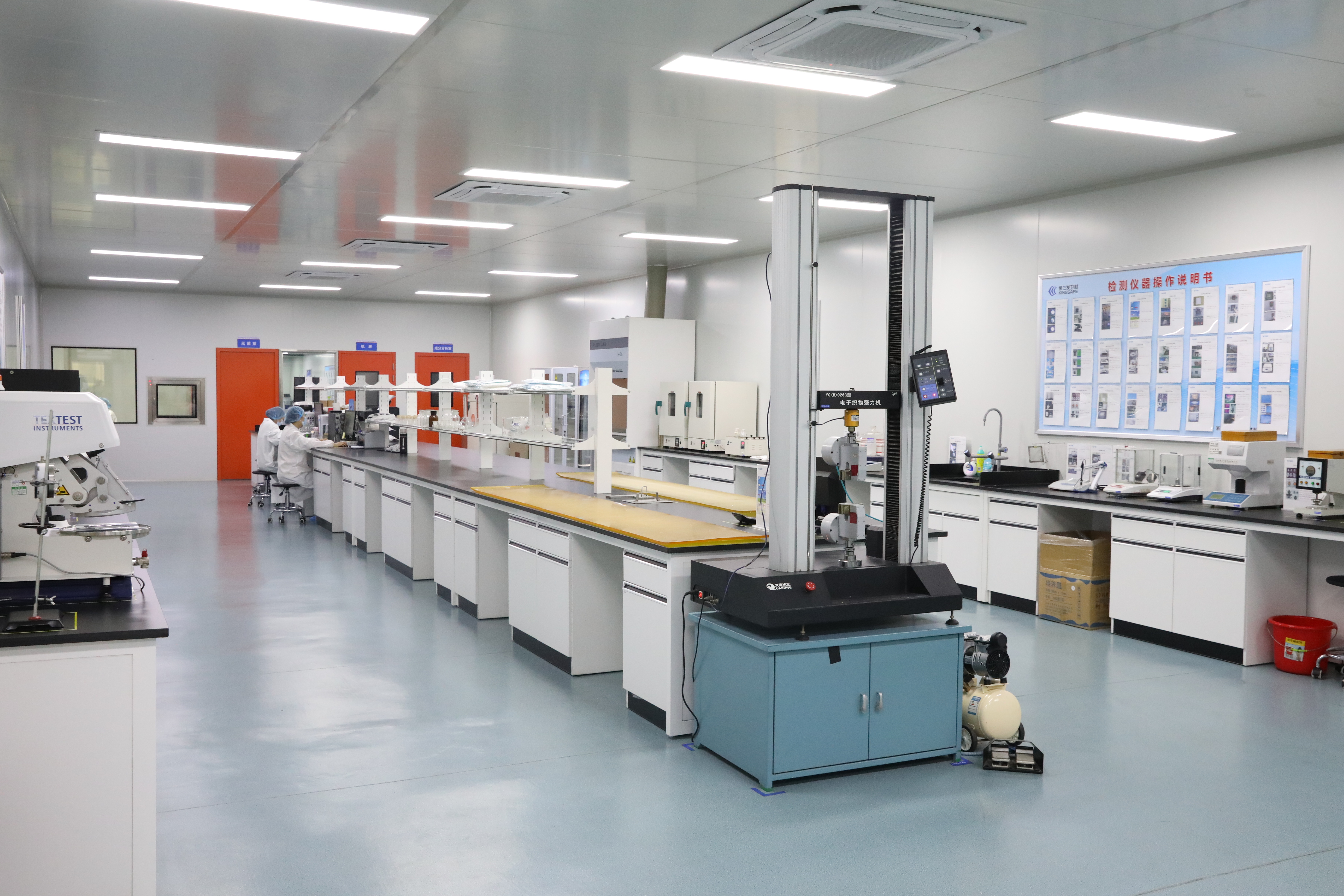
In-house laboratory used for product performance testing, technical research and development, and quality verification.
Buyers rarely get a second chance to ask these questions once tooling and artwork are approved. Work through the following seven steps in order, and keep the answers in the supplier file.
- Step 1 — Fix the room. Ask for the environmental classification of the room where the wipe is cut, folded and packed. Warehouse classification is not the answer you need.
- Step 2 — Fix the water. Request the process water specification. Pharma-grade purified water and general industrial water produce different microbial outcomes from identical nonwoven input.
- Step 3 — Fix the microbial target and the method. A claim of ≤100 CFU/g is only usable if it is tied to a test method and a stated inspection point, such as strengthened microbial inspection before delivery.
- Step 4 — Map the handoffs. Ask which production stages are in-house. Full vertical integration means fewer transfers between facilities and fewer recontamination windows.
- Step 5 — Test traceability with a real question. Ask what the supplier shipped six months ago and how they would prove it. Batch-level retention samples answer that question; general documentation does not.
- Step 6 — Compare the energy and utility profile. Energy consumption of 10% below alternatives is a recurring cost advantage, and ISO 50001 energy management indicates that consumption is measured rather than assumed.
- Step 7 — Run a pilot before the first container. Validate a sample batch, define pre-shipment test criteria, then scale to volume once the specification is confirmed on physical product.
A supplier that performs well on steps 1, 3 and 5 is usually safe to scale with. A supplier that performs well only on price is a different risk category.
Use Cases: Where the Cleanroom Route Pays Back
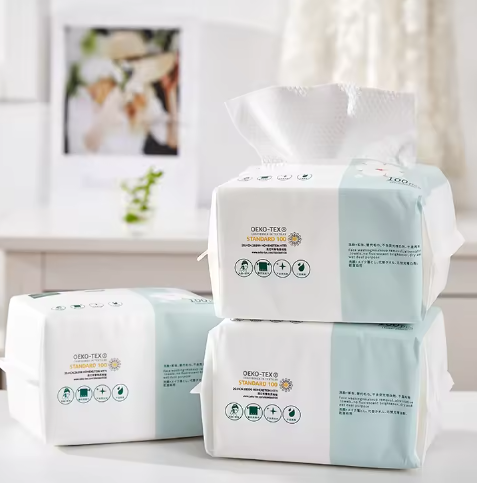
Boxed dry wipes format: pop-up pull-out design with a dust-proof lid that protects remaining sheets from damp and contamination.
Baby care. Infant skin contact is the least forgiving application in the category, and parents read the label before they read the price. A wipe produced at ≤100 CFU/g in a classified room, with batch retention samples behind it, gives a brand owner something concrete to stand on during retail audits and consumer complaints.
Sensitive skin. Products positioned for reactive skin are usually specified without added fragrance and without fluorescent agents, and the nonwoven is expected to be soft, tear-resistant and lint-free. Production environment and material choice work together here: a low-lint fabric produced in a controlled room is a different product from the same fabric produced in an open workshop.
Premium export markets. North American and European listings increasingly arrive with documentation requests that map to FDA cosmetic expectations and to the EU requirement for a Product Information File and CPNP notification. Uniquality’s certifications cover ISO, CE, GMPC and FSC, which shortens the documentation cycle when a retail program asks for evidence.
Format coverage. The same controlled route feeds boxed dry wipes, flow pack dry wipes, family pack and portable formats, compressed dry towels, disposable dry bath towels and facial towels, as well as industrial dry wipes and industrial cleansing dry wipes used for surface and equipment wiping. Because the classification applies to the converting room rather than to a single SKU, switching formats does not change the hygiene basis of the product.
Total Cost of Ownership and Long-Term Supply
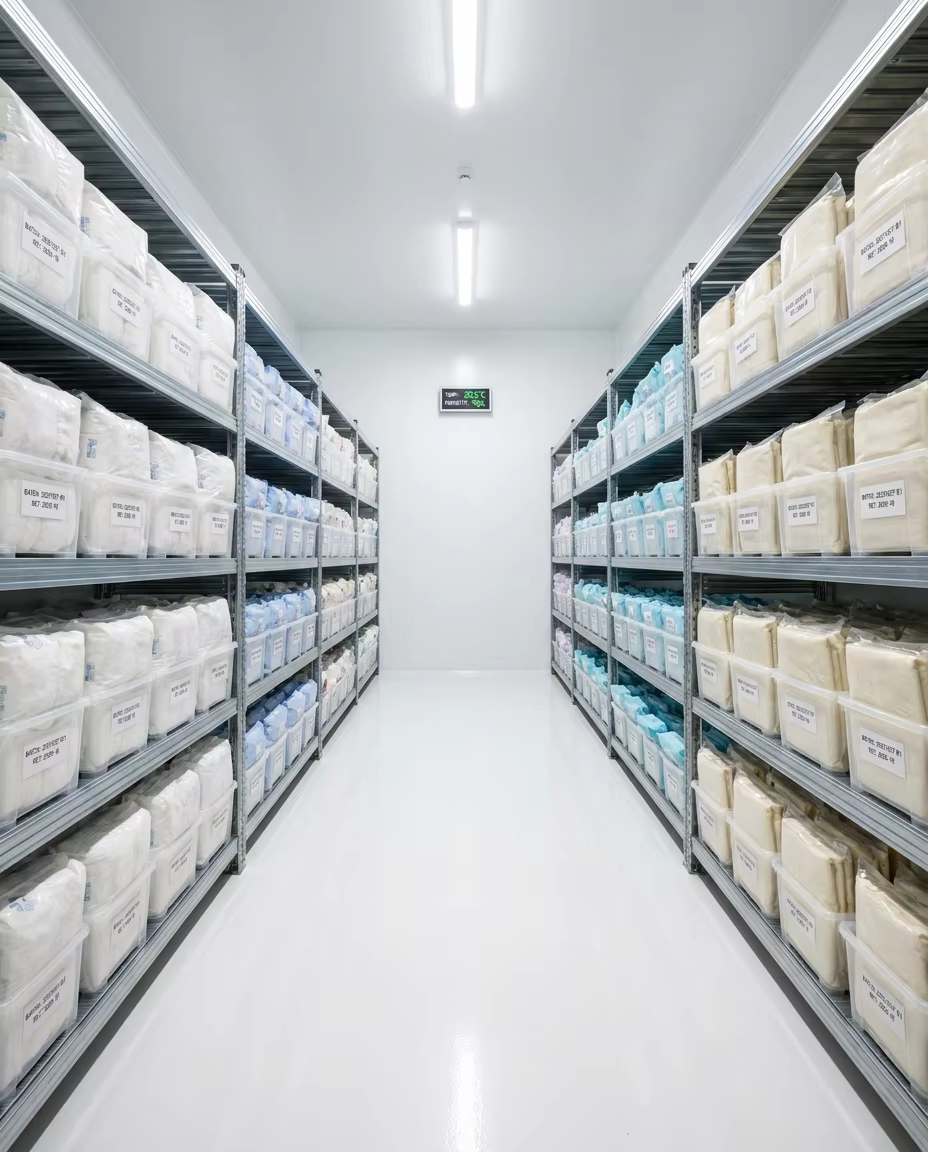
The sample retention room: every batch archived, organized by batch, and preserved for years after shipment.
Cleanroom production carries a slightly higher upfront cost. The reason it usually wins on total cost of ownership is that the savings sit in lines that never appear on a quotation: raw material cost, energy cost, delivery reliability and incident cost.
- Material. Vertical integration supports raw material costs 8–15% lower than the comparison baseline.
- Energy. Consumption runs 10% below alternatives, backed by ISO 50001 certified energy management — a line item that compounds over a multi-year agreement.
- Delivery reliability. A 99.5% on-time delivery rate reduces expedited freight, buffer stock and the production planning noise that distributors absorb.
- Incident cost. Batch traceability and retention samples shorten the time needed to investigate a complaint, and a lower microbial starting point reduces the probability of a recall or a return in the first place.
Long-term supply planning also depends on raw capacity. Monthly production capacity for wet wipes is 7 billion units, with capacity varying by product, and the group’s annual output reaches 60 billion sheets across a 1 million sqm smart factory with 3,000+ employees and an R&D team of 200+. Products reach brand owners in 80+ countries, with an export ratio of 70% and established markets across the USA, EU, SAM, RU and CASA. For a distributor, capacity of that scale is what makes a multi-year commitment realistic rather than aspirational — the supplier can absorb growth without reallocating your line to someone else.
Commercial Terms for the First Order and Beyond
Terms are usually the point where a cleanroom comparison becomes a real decision. The verified commercial framework for Uniquality dry wipes is straightforward:
- Minimum order quantity. 1 x 40HQ container for dry wipes. Pack-count tiers are 60,000 bags for 10–30 pcs packs, 50,000 bags for 40–70 pcs packs, and 36,000 bags for 80–120 pcs packs. Baby diapers and pull-ups carry a minimum of 150,000 pieces.
- Lead time. 35–45 days after artwork and deposit confirmation.
- Sampling. 3–5 days for private label sample development.
- Delivery terms. FOB or CIF.
- Payment terms. 30% deposit, balance against BL copy.
- Acceptance criteria. Factory pre-shipment test, or criteria customized to the buyer’s own protocol.
For a brand owner or distributor comparing a cleanroom supplier against a standard manufacturer, the comparison should be run on landed cost per accepted unit over at least two production cycles, not on the first quoted price. That is the only basis on which the microbial specification, the traceability system and the energy profile convert into a number.
FAQ: GMP Cleanroom vs. Standard Dry Wipes Production
1. What compliance documents should a buyer request before ordering dry wipes?
At minimum, request environmental certification for the converting room, the process water specification, and the manufacturer’s quality and social compliance certificates. Uniquality holds ISO, CE, GMPC and FSC certification. Market-specific requirements sit on top of that: in the United States, dry wipes for skin cleansing are regulated as cosmetics by the FDA and therapeutic claims require drug approval; in the EU, Cosmetic Regulation (EC) No 1223/2009 requires a Product Information File and CPNP notification before the product can be placed on the market.
2. How much difference does a 100,000-class GMP cleanroom actually make?
It changes the controlled microbial outcome. Dry wipes produced in a 100,000-class GMP cleanroom with pharma-grade purified water are controlled to a total bacteria count of ≤100 CFU/g, compared with ≤200 CFU/g for standard products. The environment is supported by full vertical integration and fully automated production, which reduce handoffs and downtime, and by batch traceability with retained samples for every production run.
3. Is cleanroom production more expensive?
Upfront cost is slightly higher, but total cost of ownership usually runs lower. Vertical integration supports raw material costs 8–15% below the comparison baseline, energy consumption is 10% lower with ISO 50001 certified energy management, and the on-time delivery rate is 99.5%. The larger financial difference sits in risk: a lower microbial starting point reduces the risk of recalls and returns, which are the costliest events in this category.
4. Can we validate the product before committing to volume?
Yes. Private label sampling takes 3–5 days, and pre-shipment testing can be performed at the factory or against criteria customized to your own protocol. Buyers evaluating model YQ002 typically use the sample stage to confirm sheet feel, format and packing, and to verify the microbial and traceability documentation, before converting the trial into a container-level order. Samples can be requested through the contact details below.
5. What are the MOQ, lead time and payment terms?
The minimum order quantity for dry wipes is 1 x 40HQ container, with pack-count tiers of 60,000 bags for 10–30 pcs packs, 50,000 bags for 40–70 pcs packs and 36,000 bags for 80–120 pcs packs; baby diapers and pull-ups start at 150,000 pieces. Production lead time is 35–45 days after artwork and deposit confirmation, with FOB or CIF delivery and payment of 30% deposit, balance against BL copy. To discuss a first order, a sample request or a distributor program, contact Michelle at michelleyu@kingsafe.com or on WhatsApp at +86 187-0582-0808.
Conclusion
The production environment is not a hidden factory detail — it is the specification that determines which markets a dry wipe can enter, how a brand responds when a complaint arrives, and what the product costs per accepted unit over the length of a supply agreement. Comparing a 100,000-class GMP cleanroom route with standard manufacturing comes down to four verifiable points: a controlled room, pharma-grade purified water, batch-level traceability, and a cost structure supported by vertical integration and certified energy management.
For baby care, sensitive skin and premium export programs, those four points justify the slightly higher upfront cost through lower material and energy consumption, a 99.5% on-time delivery rate and materially reduced recall exposure. For cost-driven categories with lower hygiene requirements, a standard route remains a legitimate commercial choice — as long as the buyer knows which of the two routes they are buying.
Uniquality manufactures dry wipes, wet wipes, baby diapers and training pants as an OEM/ODM partner, with model YQ002 as a reference format for the cleanroom dry wipes line.
Evaluate YQ002 Against Your Current Specification
Request a sample, the full specification sheet or the company brochure before your next sourcing round.
Download the Uniquality brochure (PDF)
Website: www.kingsafe.com | Email: michelleyu@kingsafe.com | WhatsApp: +86 187-0582-0808
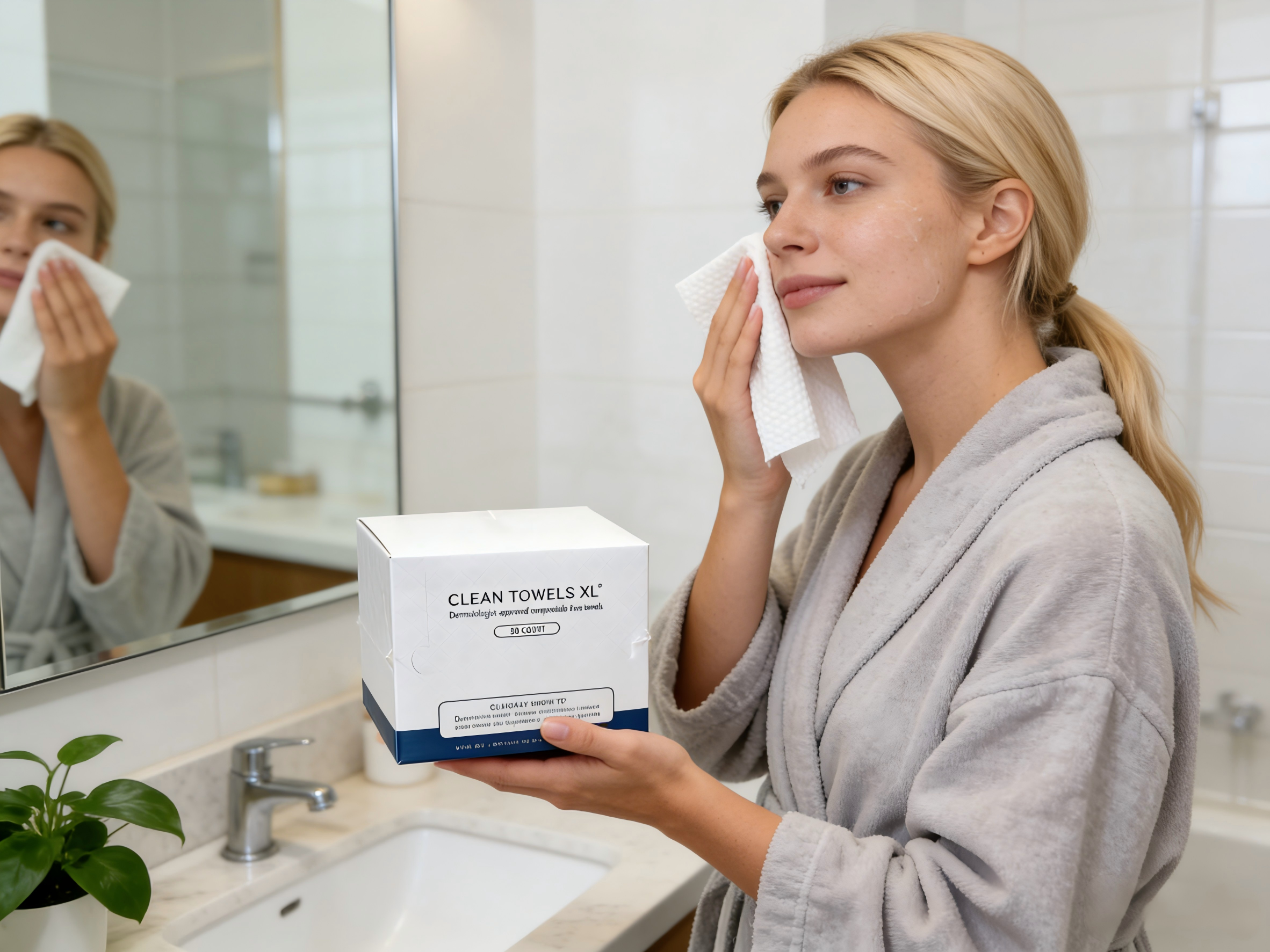
Dry wipes in everyday use: facial care, multi-purpose household cleaning and infant care from one sealed format.
Have Questions or Need More Details?
Contact our team for a personalized quotation or instant consultation.
Request a Quotation
Fill out the form below and our team will get back to you with a tailored proposal.
WhatsApp Direct Chat
Prefer to chat in real-time? Message us on WhatsApp for instant assistance & quick answers.
- Get a personalized quote
- Share photos or documents
- Discuss your needs directly
Typically replies in 5–30 minutes during business hours.