Dry Wipes OEM Manufacturing: A Complete Guide for Global Buyers
Dry Wipes OEM Manufacturing: A Complete Guide for Global Buyers
In the fast‑paced world of personal care and household hygiene, dry wipes have emerged as a versatile, convenient, and essential product category. From facial towels used in daily skincare routines to industrial cleaning wipes that handle tough grease, the demand for high‑quality, customizable dry wipes is growing rapidly. For brand owners, retailers, and distributors, finding a reliable dry wipes OEM manufacturer is the critical first step toward building a competitive product line. This guide provides an in‑depth, data‑driven look at what dry wipes are, how to evaluate suppliers, and how to execute a successful private‑label strategy.
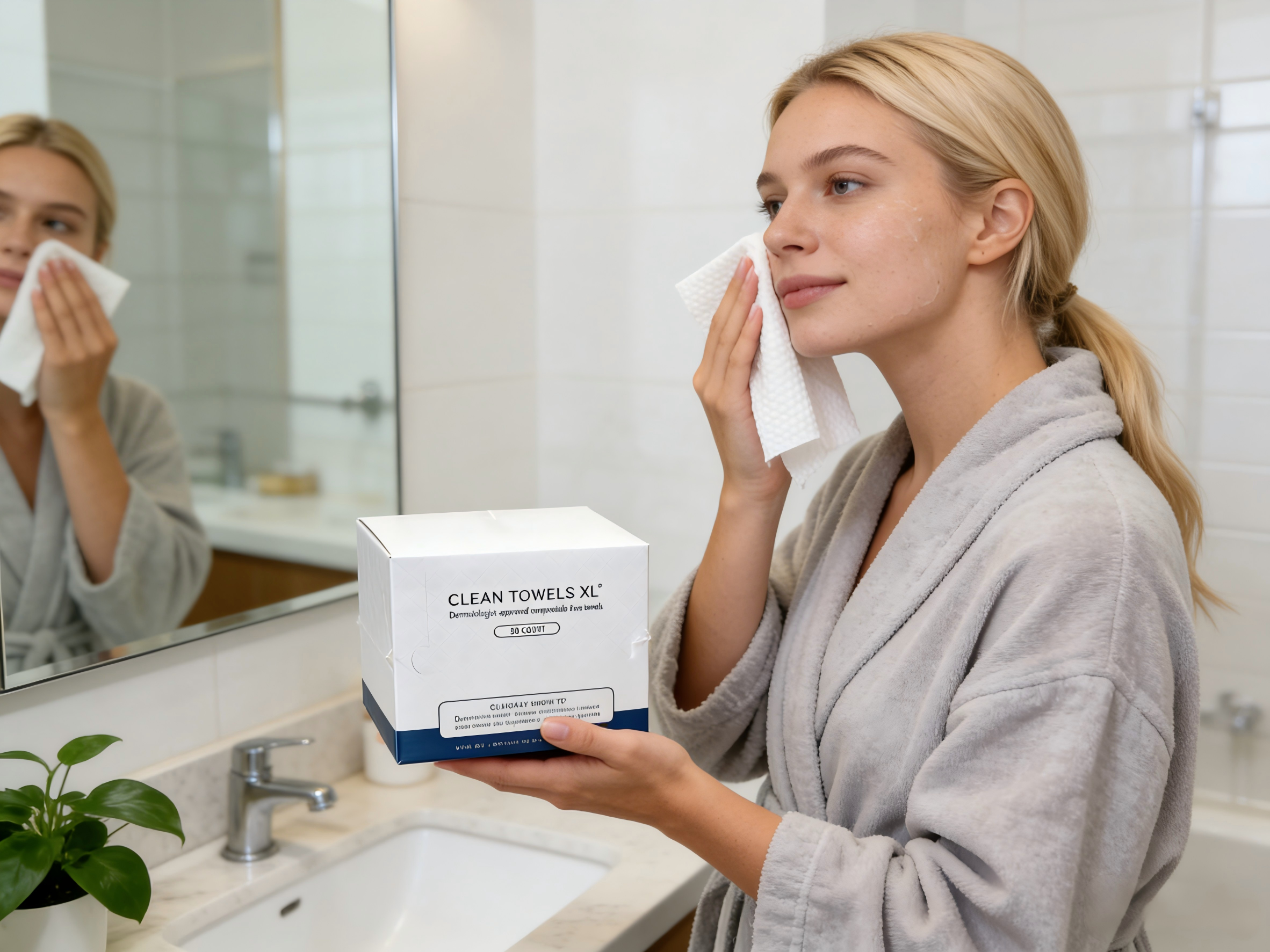
Pop‑up box dry wipes designed for daily facial care and multi‑purpose home cleaning – a core private‑label product format.
What Are Dry Wipes? Definition & Types
Dry wipes are nonwoven fabric sheets used for cleaning, drying, or wiping without any added liquid. Unlike wet wipes, they are sold “dry” and can be used as is or moistened with water by the user. Common types include flow pack dry wipes (individual sachets), boxed dry wipes (pop‑up format), family pack dry wipes (large bulk refills), and compressed dry towels (tablet form).
Key characteristics that define a quality dry wipe include:
- Material: Usually nonwoven fabrics such as spunlace, airlaid, or wetlaid, with basis weights ranging from 35 to 70 gsm.
- Softness & Absorbency: Ultra soft dry wipes and absorbent dry wipes prioritize gentle feel and high liquid retention.
- Lint‑Free: Critical for facial towels and industrial cleaning wipes to avoid residue.
- Size & Packaging: Customizable from 15×20 cm pocket packs to large 30×40 cm industrial rolls.
Why Choose Dry Wipes Over Conventional Towels?
Global buyers are shifting to disposable dry wipes for several reasons:
- Hygiene: Single‑use eliminates bacterial growth from reused towels – especially important for skin‑friendly dry wipes used on sensitive skin and babies.
- Convenience: Portable packs are ideal for travel, camping, and on‑the‑go cleaning.
- Versatility: Dry wipes can serve as cleansing dry wipes, disposable dry bath towels, or even eco‑friendly dry wipes when made from biodegradable materials.
- Cost‑Effectiveness: Compared to traditional cotton towels, nonwoven dry wipes reduce laundering costs and water consumption.
Industry Background: The Dry Wipes Market Today
The global nonwoven wipes market is projected to exceed $20 billion by 2030, with dry wipes capturing a significant share due to rising demand in personal care, baby care, and household cleaning. Key end‑use sectors include:
- Personal Care / Beauty: Facial cleansing, makeup removal (e.g., facial towels).
- Maternity & Baby: Gentle skin cleaning for infants.
- Healthcare / Industrial: Heavy‑duty industrial dry wipes and medical surface cleaning.
- Hospitality: Large size dry wipes for hotel room amenities.
Brand owners entering these markets need a partner with proven scale, certifications, and customization capabilities.
How to Select a Dry Wipes OEM Manufacturer: A Step‑by‑Step Buyer’s Guide
Step 1: Verify Manufacturing Capabilities & Certifications
A reputable dry wipes supplier should operate in a controlled manufacturing environment. Look for:
- Clean Room Standards: 100,000‑class GMP workshop ensures product hygiene.
- Certifications: ISO 9001 (quality management), ISO 14001 (environmental), ISO 50001 (energy management), FSC (sustainable sourcing), and SEDEX (social compliance).
- Scale: Monthly capacity of billions of units indicates reliability for large‑scale orders.
For example, Zhejiang Uniquality Nursing Products Technology Co., Ltd. owns a 1,000,000 m² smart factory with an annual output of 60 billion sheets. Their dry wipes product (model YQ002) is certified to ISO 50001:2018 (certificate 01326En0008R201), ISO 9001, ISO 14001, and FSC standards, covering all major global markets.
| Certification | Scope | Cert. Number | Issuing Body |
|---|---|---|---|
| ISO 9001:2015 | Wet & dry wipes, diapers, training pants | 01326Q0078R102 | GAC |
| ISO 14001:2015 | Same | 01326E0075R101 | GAC |
| ISO 50001:2018 | Same | 01326En0008R201 | GAC |
| FSC | Wet & dry wipes, diapers, training pants | BV‑CQC‑167194 | Bureau Veritas |
| SEDEX | Same | ZAA600079586 | Bureau Veritas |
Step 2: Evaluate Customization Options (OEM / ODM)
Leading manufacturers offer OEM and ODM production services with flexible customization:
- Material: Nonwoven basis weight (35–70 gsm), composition (plant‑based, biodegradable).
- Size & Shape: Custom sheet dimensions and folding patterns.
- Logo & Branding: Private label printing on packaging.
- Packaging Format: Flow pack, soft pack, pop‑up box, family pack, or bulk.
- Fragrance & Formula: For dry wipes that can be activated with water, optional additive coatings.
Uniquality provides a one‑stop private label service with sampling available within 3–5 days, enabling rapid prototyping. Their R&D team of 200+ professionals supports technical iterations.
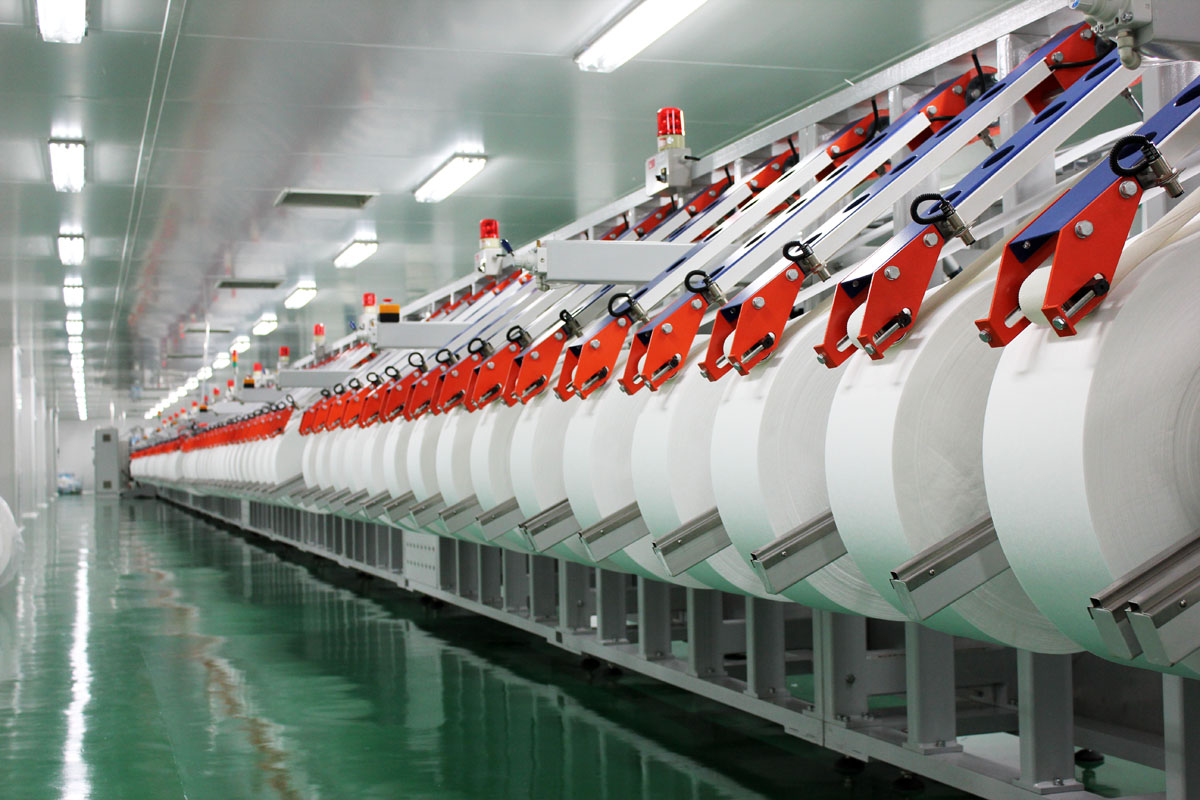
Advanced nonwoven converting lines operating under strict environmental and hygiene controls – ensuring consistent quality for OEM orders.
Step 3: Check Quality Control & Testing Protocols
To avoid costly recalls, verify that the supplier implements:
- Incoming raw material inspection – control of nonwoven roll quality.
- In‑process monitoring – automated sensors for weight, size, and seal integrity.
- Finished‑product testing – microbial limits, absorbency, tensile strength, and pH.
- Pre‑shipment inspection (AQL sampling) – typically Level II, normal.
Uniquality operates a dedicated laboratory with equipment for performance testing and stability validation (see image below). Their energy management system (ISO 50001) also reduces energy consumption by approximately 10% compared to conventional lines, delivering a sustainability advantage.

Quality lab performing product performance and safety tests, supporting batch traceability and compliance with international standards.
Step 4: Assess Production Capacity & Lead Times
Choose a manufacturer whose scale matches your order volume. For dry wipes, MOQ typically starts at one 40 HQ container (approximately 360,000–600,000 bags depending on pack count). Uniquality’s monthly capacity for wet wipes alone is 7 billion units; dry wipes share the same production base. Lead time for OEM orders is 35–45 days after artwork and deposit confirmation.
Step 5: Review Real‑World Case Studies
A proven track record adds confidence. Consider the following dry wipes case study from Uniquality’s global operations:
UK OEM Project (3‑Year Partnership)
- Product Use: Household cleaning, baby care, personal hygiene, beauty care.
- Volume: 20 × 40 HQ containers per month.
- Key Highlights: GMP workshop, ISO certifications, eco‑friendly materials, strict quality control, competitive pricing, reliable lead time.
- Results: 99.5% on‑time delivery rate; zero major quality complaints.
This demonstrates the supplier’s ability to serve demanding European importers with consistent quality at scale.
Common Buyer Concerns & How to Address Them
A: For dry wipes, MOQ varies by pack count. Typically, 10–30 sheets per bag require 60,000 bags; 40–70 sheets require 50,000 bags; 80–120 sheets require 36,000 bags. Suppliers like Uniquality can flexibility adjust within container loads.
A: Request documentation of ISO 9001, ISO 45001 (occupational health and safety), and microbial test reports. Look for products certified as skin‑friendly and free from fluorescent agents and artificial fragrances.
A: Standard lead time is 35–45 days after confirming artwork and deposit. Urgent orders may be expedited if capacity allows.
A: Yes. Leading manufacturers provide free samples within 3–5 days. Uniquality offers rapid sampling for both existing and customized designs.
How Dry Wipes Compare: Uniquality vs. Small OEM Manufacturers
When selecting a partner, understand the gaps:
| Factor | Uniquality (Large‑Scale Integrated Manufacturer) | Typical Small OEMs |
|---|---|---|
| Vertical Integration | Full – own nonwoven production, converting, and packaging lines | Often outsource raw materials, limited control |
| Clean Room | 100,000‑class GMP workshop | May not have certified cleanrooms |
| Microbial Control | ≤ 100 CFU/g total bacteria count | Often ≤ 200 CFU/g or higher |
| Energy Efficiency | 10% lower energy consumption (ISO 50001) | Not managed |
| On‑Time Delivery | 99.5% | Typically 85‑90% |
| Risk of Recalls | Very low – batch traceability, pre‑shipment testing | Higher due to inconsistent QC |
While upfront cost may be slightly higher with a premium OEM, the reduced risk of quality failures and reputational damage often makes it the more economical choice.
Conclusion: Making an Informed Dry Wipes Sourcing Decision
Selecting the right dry wipes manufacturer is not just about price – it is about long‑term partnership, quality assurance, and the ability to scale. A trusted supplier like Zhejiang Uniquality Nursing Products Technology Co., Ltd. offers the certifications, scale, and customization experience needed to bring your private‑label dry wipes to market successfully. Whether you need boxed dry wipes for retail, flow pack dry wipes for travel, or industrial dry wipes for B2B clients, a thorough evaluation of the factors outlined in this guide will help you avoid costly mistakes and secure a competitive edge.